20 Simple Sweater Storage Ideas That Are So Satisfying
- Fold Everything Using the File Method
- Use Shelf Dividers to Stop the Leaning Tower Effect
- Store Bulky Knits in Clear Bins
- Roll Lightweight Sweaters Instead of Folding
- Add Vacuum-Sealed Bags for Off-Season Storage
- Use a Hanging Sweater Organizer With Shelves
- Label Storage Bins by Season or Type
- Try Cedar Blocks Instead of Mothballs
- Use Under-Bed Storage for Extra Capacity
- Fold Sweaters Into Thirds for Drawers
- Store Sweaters by Color for a Cleaner Look
- Use Drawer Organizers to Separate Sweater Types
- Hang Heavier Knits on Padded Hangers
- Create a Sweater Shelf With Baskets
- Use a Garment Rack for Frequently Worn Sweaters
- Store Delicate Sweaters With Tissue Paper
- Use Stackable Fabric Bins for a Uniform Look
- Store Sweaters Flat in a Drawer With Dividers Instead of a Closet
- Rotate Seasonal Sweaters Between Two Storage Zones
- Use a Closet Organizer System With Built-In Sweater Cubbies
20 Simple Sweater Storage Ideas That Are So Satisfying
If your closet turns into a sweater avalanche every winter, you’re not alone. Sweaters are bulky, they lose their shape fast, and most closets just weren’t designed to handle them well. The good news is that a few smart storage habits can turn that chaotic pile into something that actually looks good every time you open the door. Here are twenty simple ways to store your sweaters that are as satisfying to look at as they are practical to use.
Fold Everything Using the File Method
Instead of stacking sweaters flat on top of each other, fold them so they stand upright like files in a drawer. This makes every sweater visible at a glance, so you’re not digging through a pile to find the one you want. It works especially well in dresser drawers and keeps wrinkling to a minimum. Once you try it, going back to flat stacking feels like a step backward.
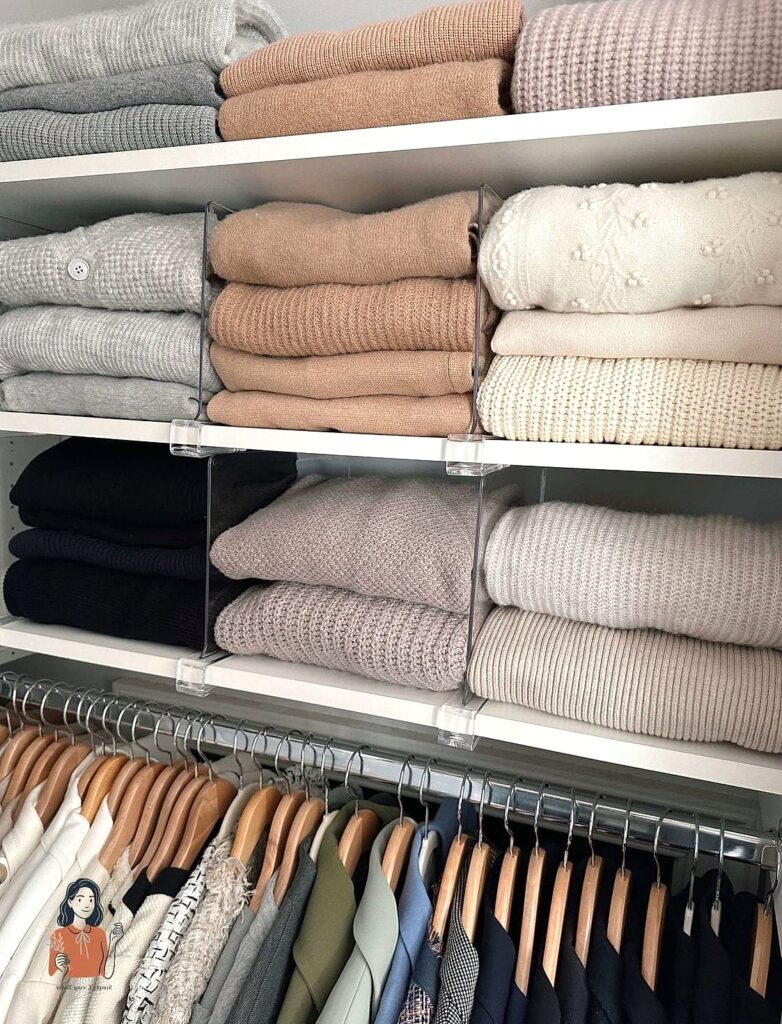
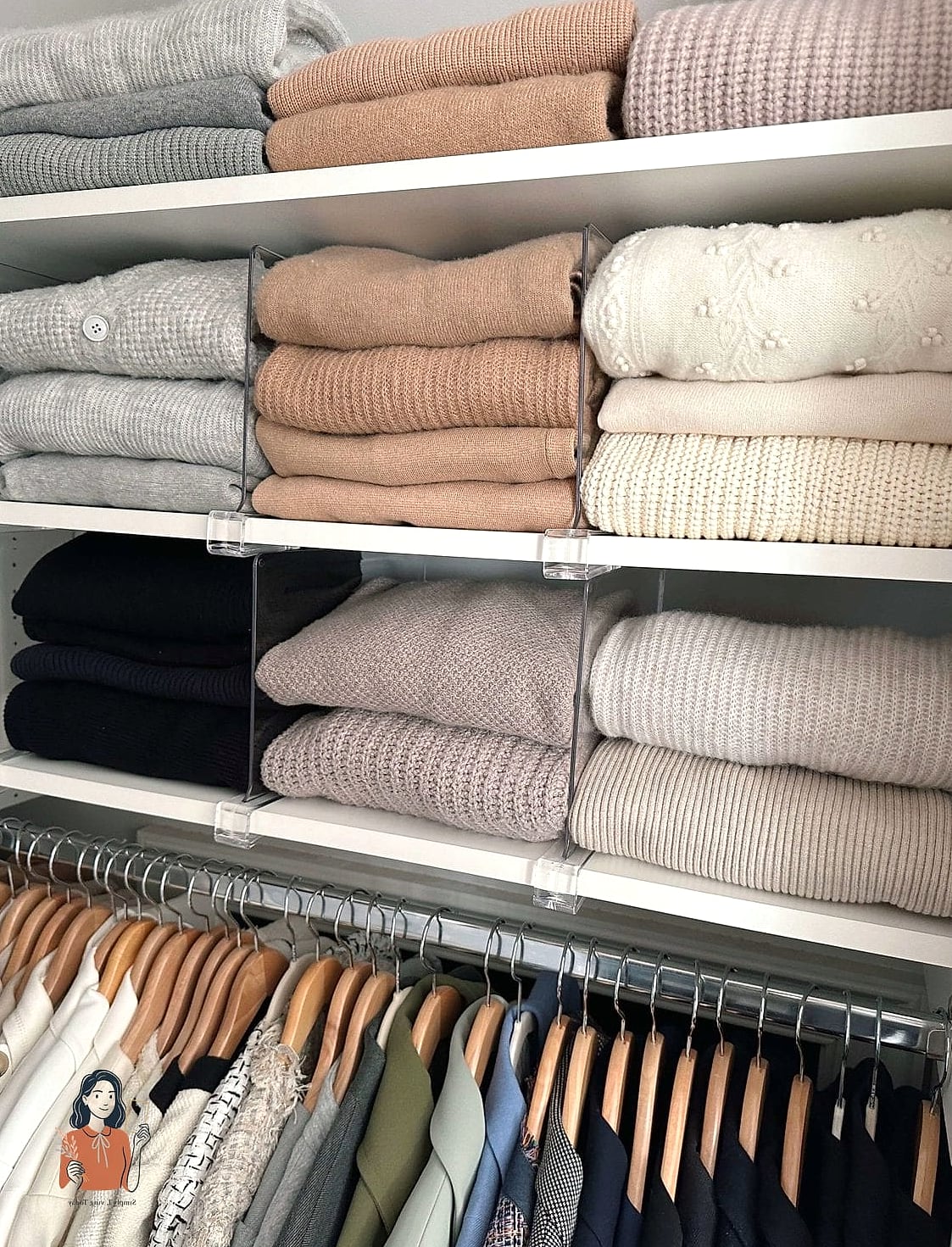
Use Shelf Dividers to Stop the Leaning Tower Effect
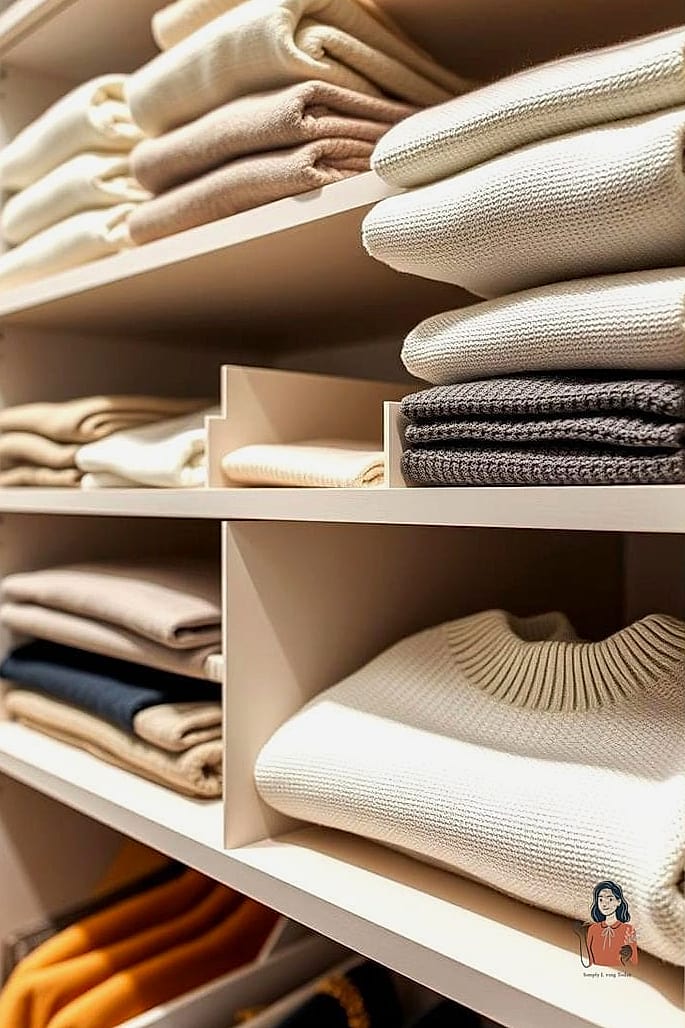
Sweater stacks have a way of toppling over the second you pull one out from the middle. Adding acrylic or wood shelf dividers to your closet shelves keeps each stack contained and upright. You only need two or three per shelf, and they’re an easy weekend fix for a closet that always looks messy no matter how many times you refold everything.
Store Bulky Knits in Clear Bins
Clear storage bins let you see exactly what’s inside without opening every single one. This is especially useful for off-season storage, like tucking away chunky cardigans in the spring. Look for bins with tight-fitting lids to keep out dust and moisture, and stick to clear plastic instead of opaque so you’re not guessing what’s inside months later.
Roll Lightweight Sweaters Instead of Folding
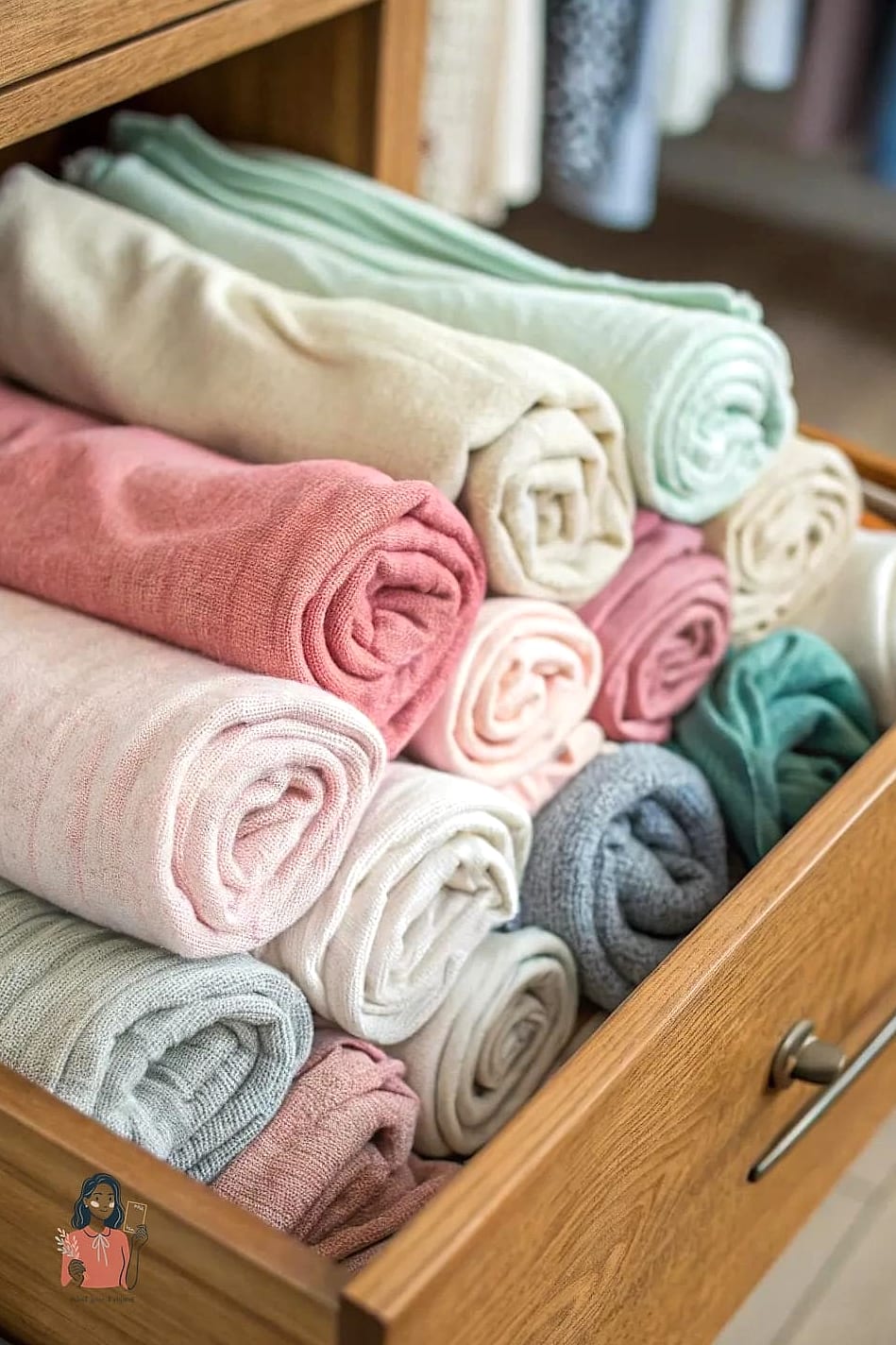
Thinner knits and fine-gauge sweaters actually do better rolled than folded, since rolling reduces the sharp crease lines that folding tends to leave behind. This method also saves drawer space, letting you fit more into a smaller area. It’s a small shift in technique, but it makes a noticeable difference for delicate or lightweight pieces.
Add Vacuum-Sealed Bags for Off-Season Storage
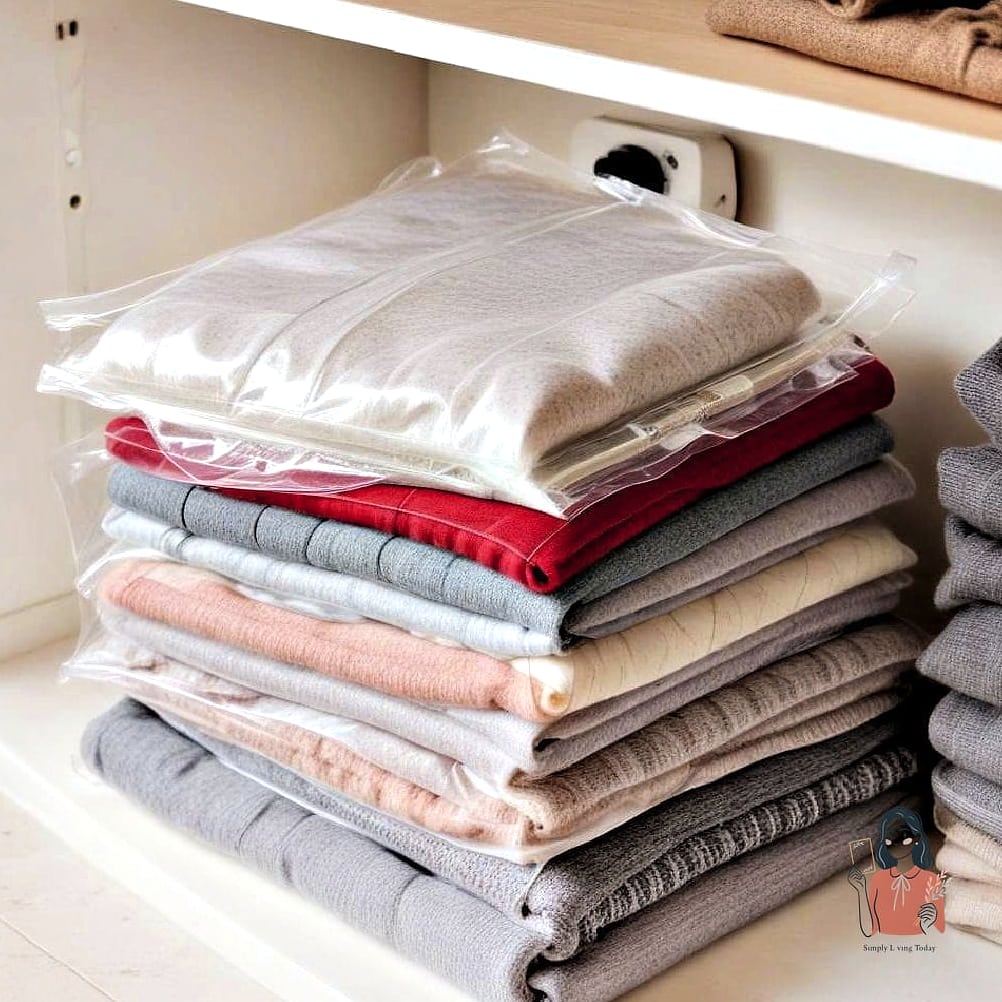
For sweaters you won’t touch again until next winter, vacuum-sealed storage bags compress everything down to a fraction of the size. This is a great option if you’re short on closet space or storing things in an attic or under-bed area. Just make sure sweaters are completely clean and dry before sealing them, since trapped moisture can cause mildew.
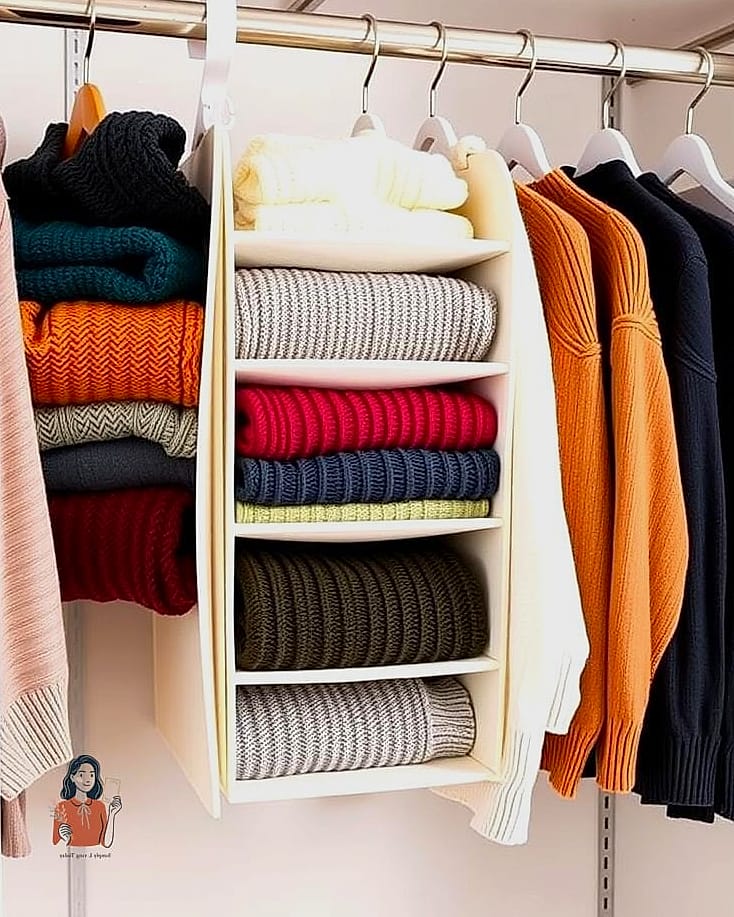
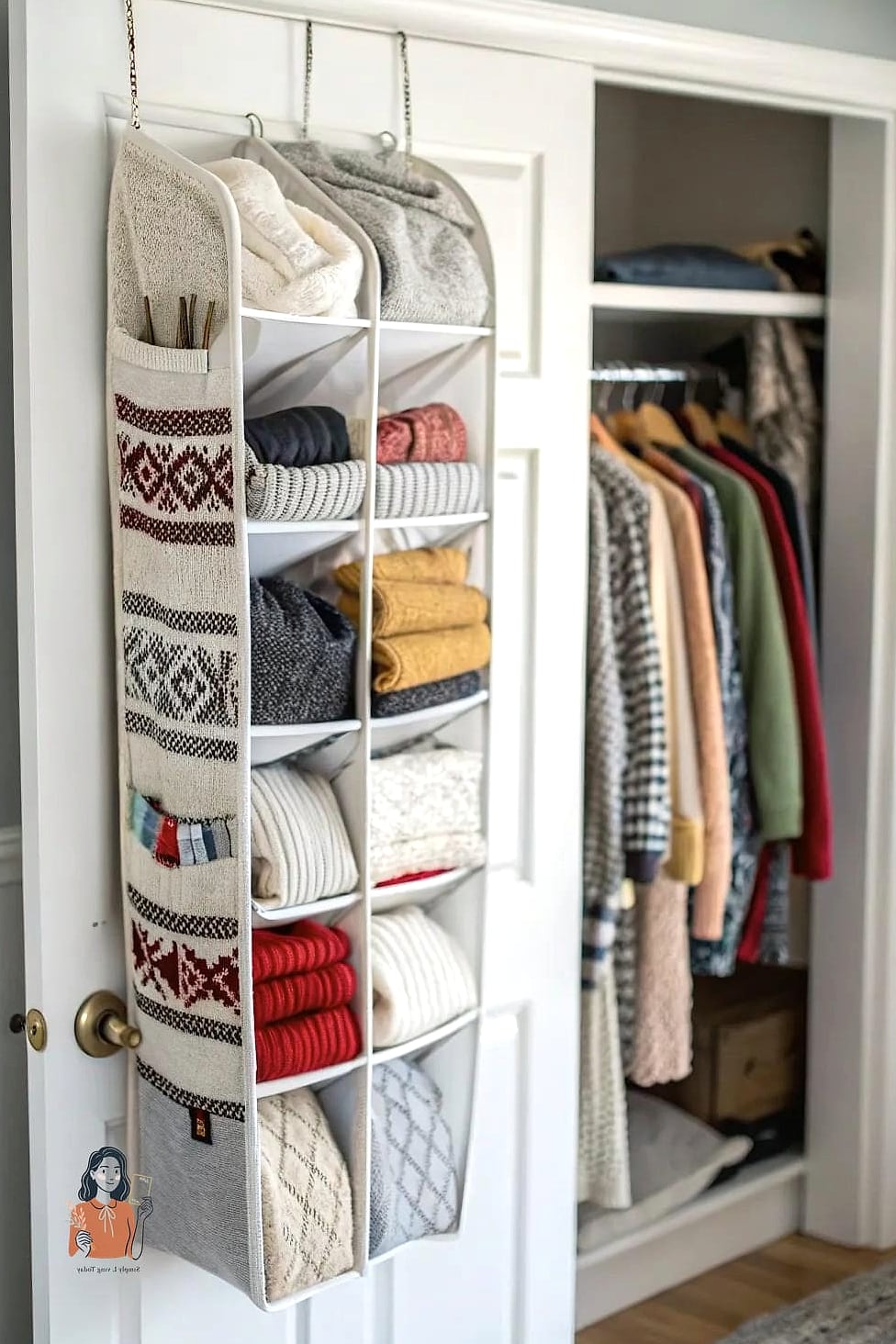
Use a Hanging Sweater Organizer With Shelves
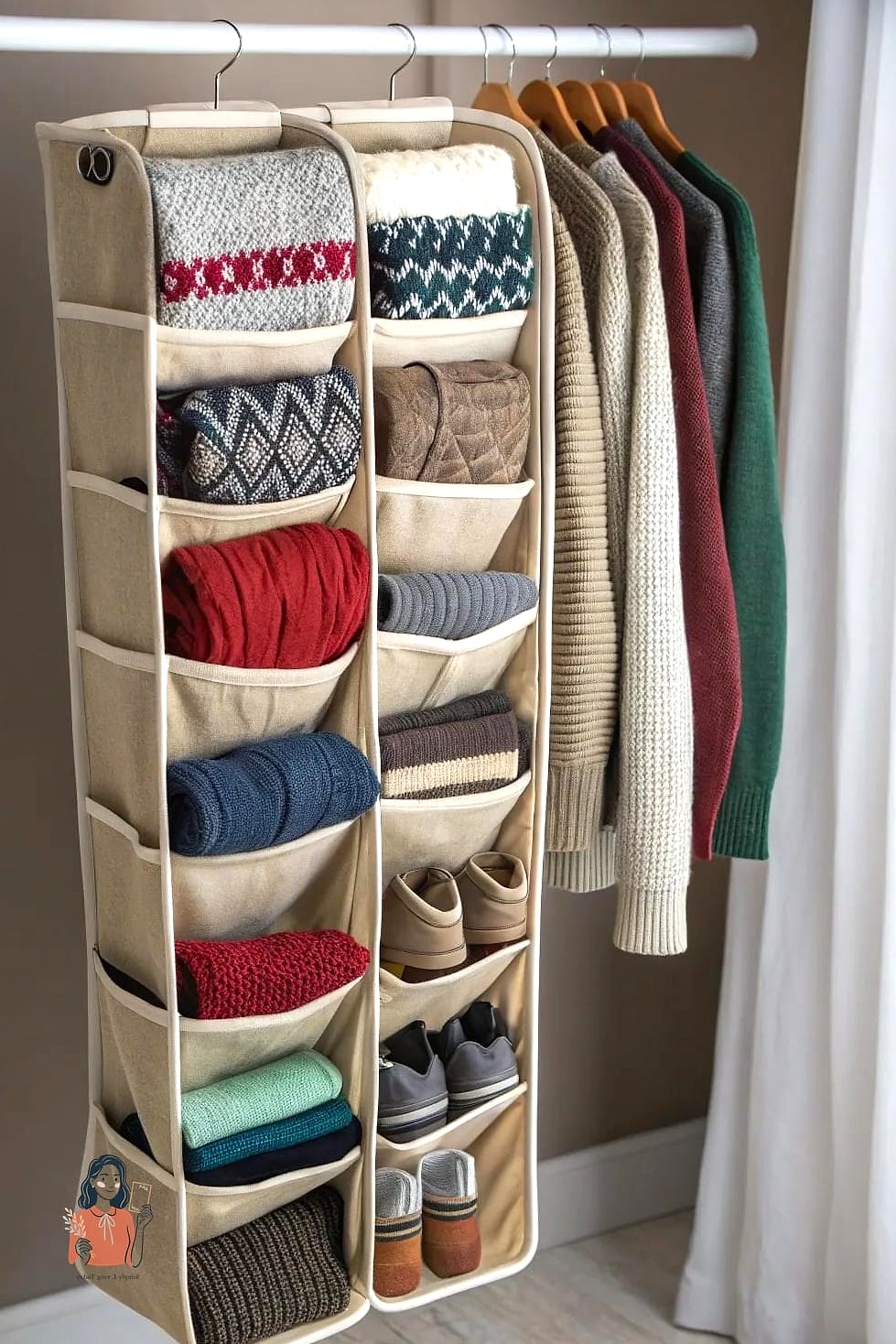
These fabric organizers hang from a closet rod and have built-in shelves, giving you several small cubbies for individual sweaters. They’re a smart way to use vertical closet space that would otherwise go to waste. Each cubby holds one or two folded sweaters, keeping everything separated and easy to grab without unfolding the ones next to it.
Label Storage Bins by Season or Type
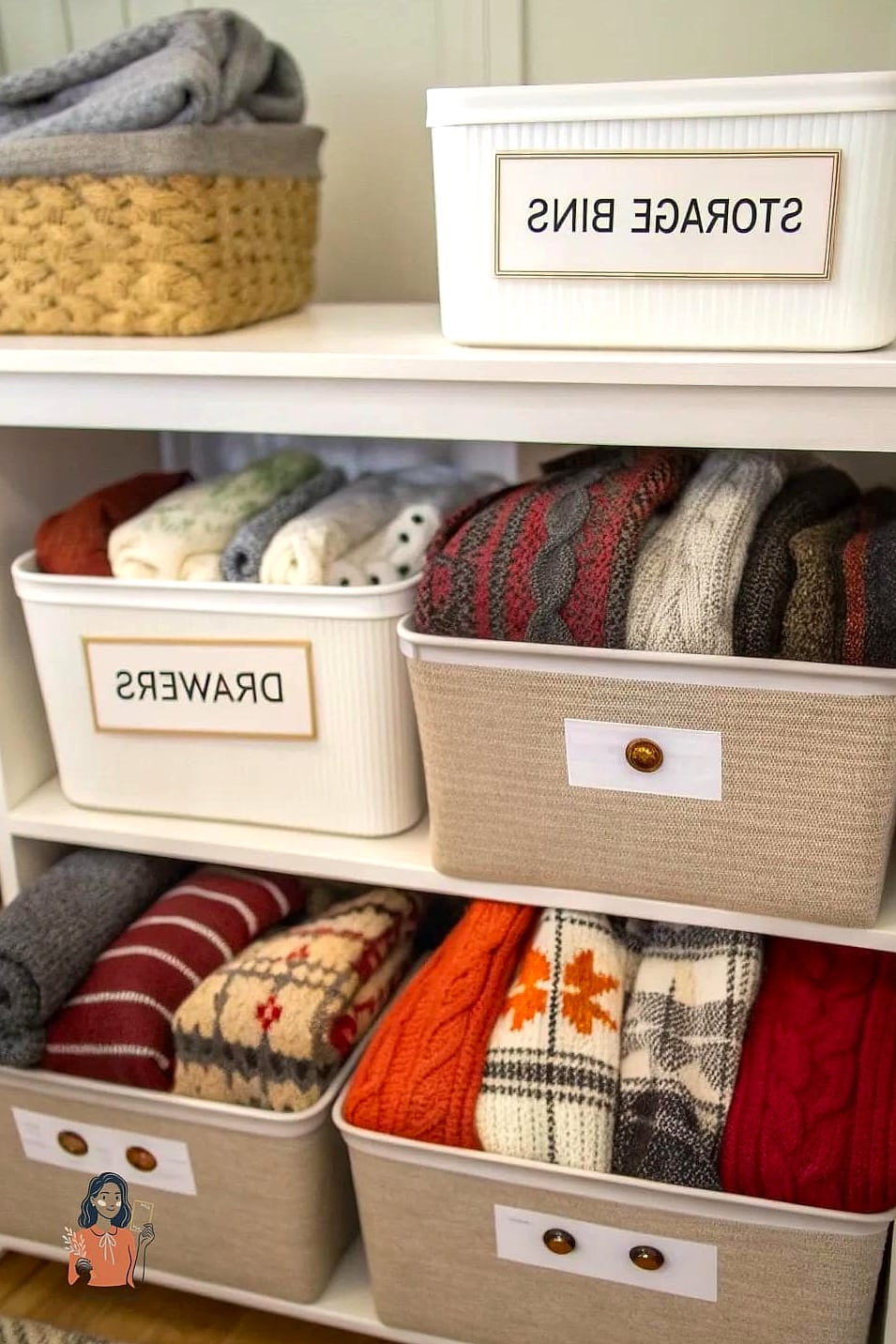
A simple label on the front of each bin, whether it says “chunky knits” or “spring cardigans,” saves you from opening every container just to find one thing. This is especially helpful if you’re storing sweaters in a garage or basement where lighting isn’t great and everything looks the same at a glance. A label maker or plain masking tape both work fine here.
Try Cedar Blocks Instead of Mothballs
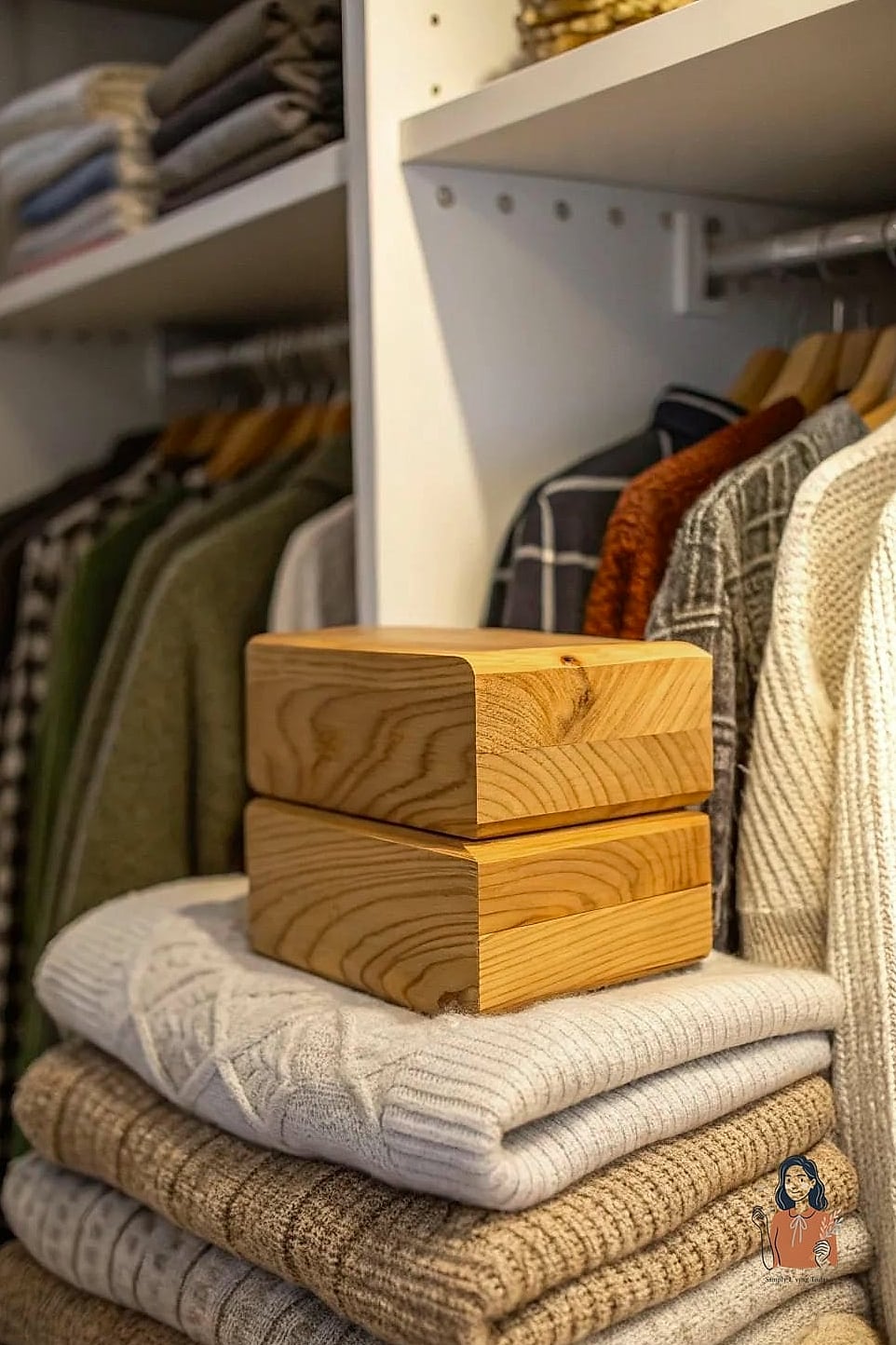
Cedar blocks or cedar rings naturally repel moths without the strong chemical smell that mothballs leave behind. Tuck a few into bins, drawers, or storage boxes, and refresh them every few months by lightly sanding the surface to release more scent. It’s a low-effort way to protect your sweaters that also happens to smell a lot better.
Use Under-Bed Storage for Extra Capacity
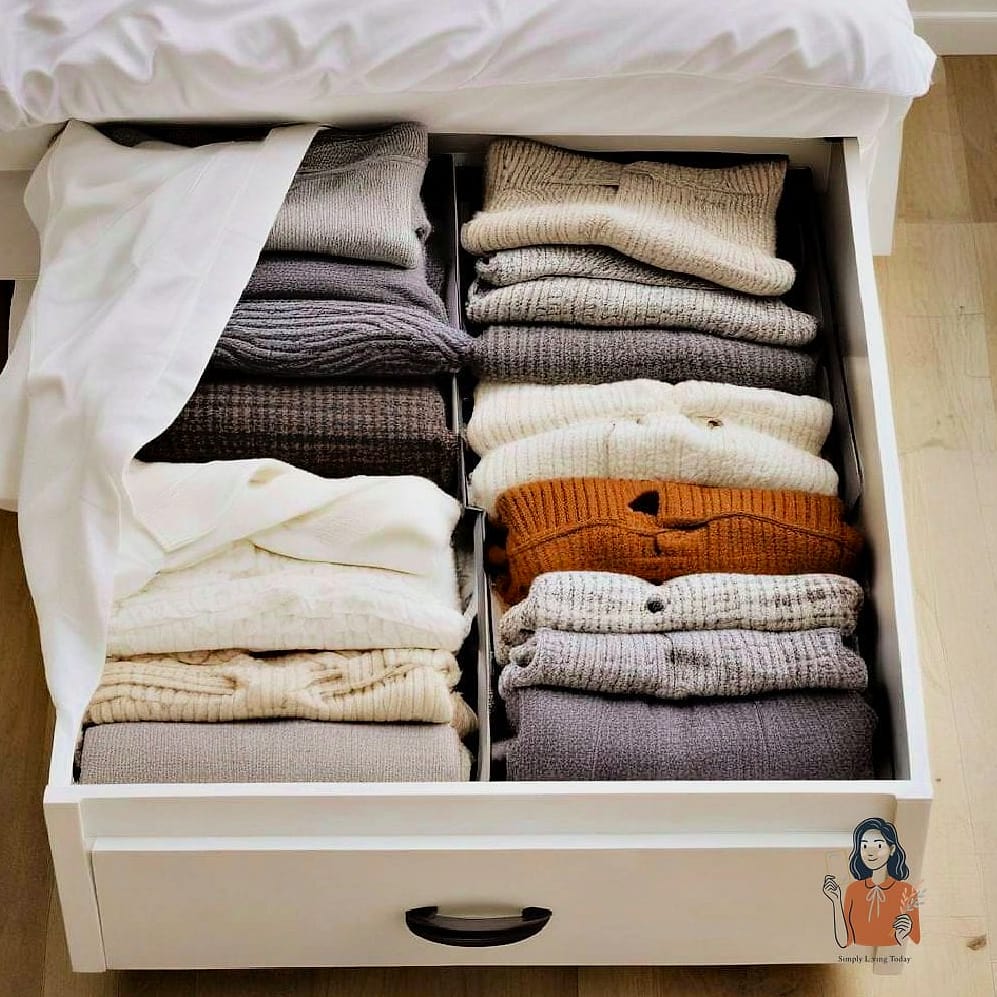
If closet space is tight, under-bed bins are an easy way to store out-of-season sweaters without giving up any visible storage. Look for low-profile bins with wheels so you can slide them in and out without wrestling with your bed frame. This works particularly well in smaller apartments where every inch of storage counts.
Fold Sweaters Into Thirds for Drawers
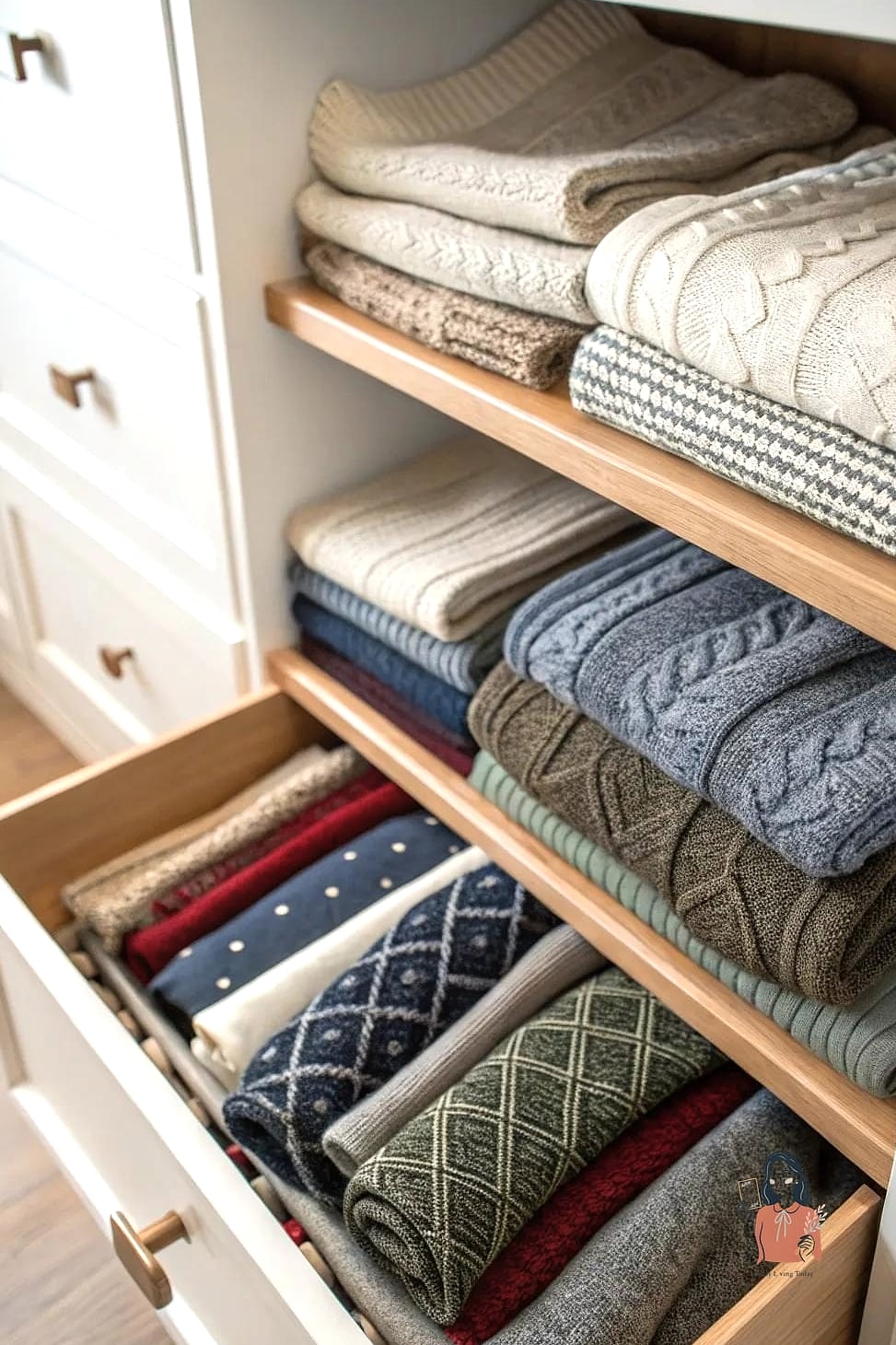
A basic three-fold method, sleeves in first, then folded into thirds, fits neatly into most drawer sizes and keeps sweaters looking tidy without much effort. It’s not fancy, but it’s fast and repeatable, which matters most on busy mornings when you’re not trying to perfect a fold.
Store Sweaters by Color for a Cleaner Look
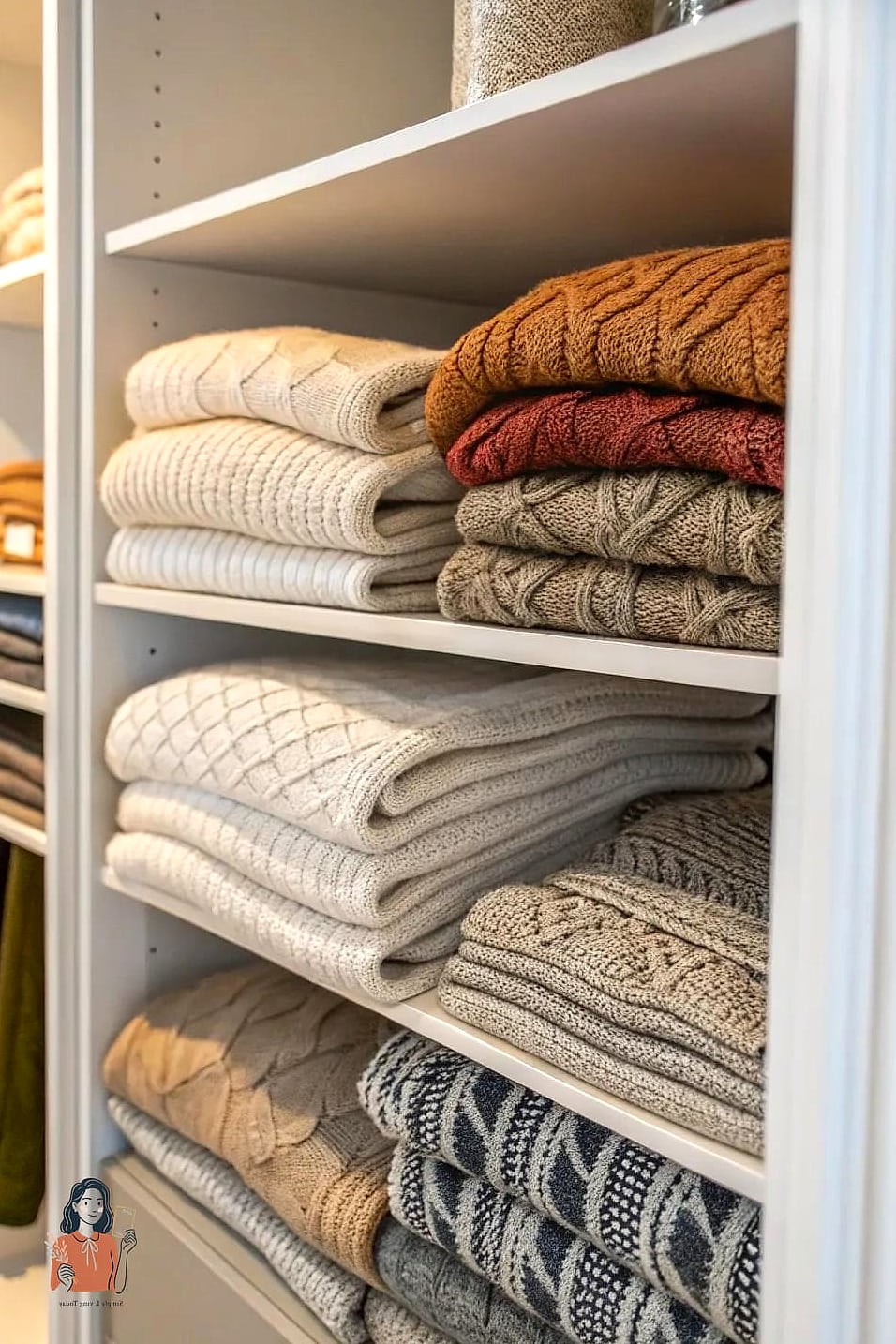
Arranging folded or hung sweaters by color turns an ordinary shelf into something that looks intentional and put together. Beyond looking nice, it also makes outfit planning quicker since you can see your full color range at once. This works well on open shelving or in a closet with glass doors where the arrangement is actually visible.
Use Drawer Organizers to Separate Sweater Types
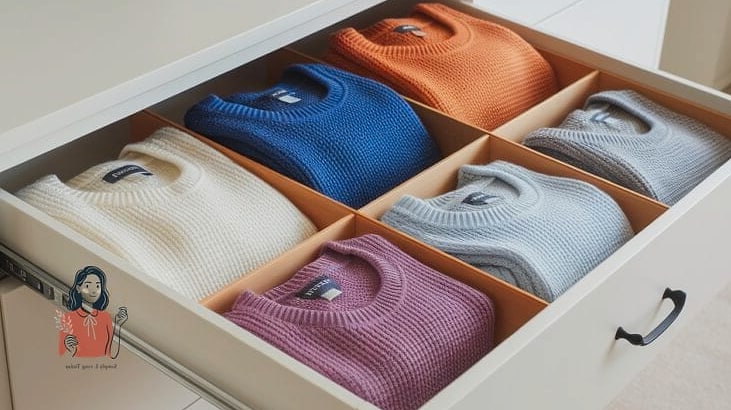
Simple fabric or wood dividers inside a drawer let you separate turtlenecks from crewnecks, or casual sweaters from your nicer ones. Without dividers, drawers tend to become one big jumbled pile again within a week. This small addition helps the folding method you choose actually hold up over time.
Hang Heavier Knits on Padded Hangers
While most sweaters do best folded, structured or heavier knits sometimes hold their shape better on padded hangers rather than being crammed into a drawer. Padded hangers prevent the shoulder bumps that thin wire hangers tend to leave behind. This works well for sweaters you wear often enough that folding and unfolding daily gets old.
Create a Sweater Shelf With Baskets
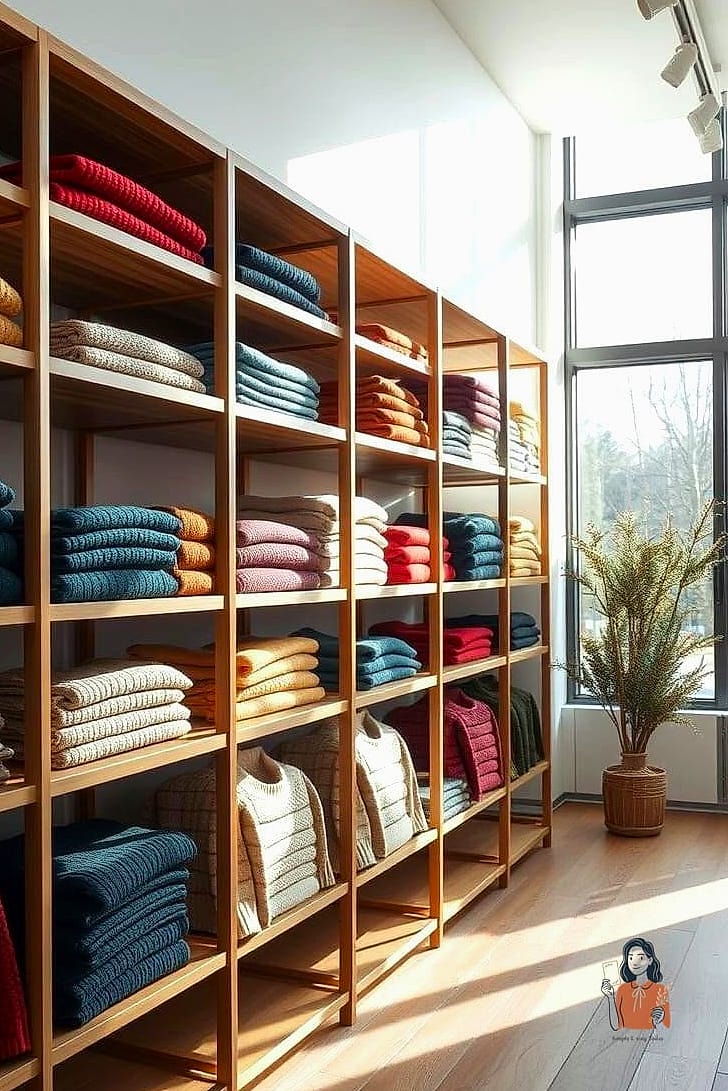
Woven baskets on open shelving give you the file-fold benefit with a softer, more decorative look than plastic bins. This is a nice option for a bedroom closet that’s partially open or visible, since baskets read as intentional decor rather than obvious storage. Group similar colors or types in each basket to keep things from feeling cluttered.
Use a Garment Rack for Frequently Worn Sweaters
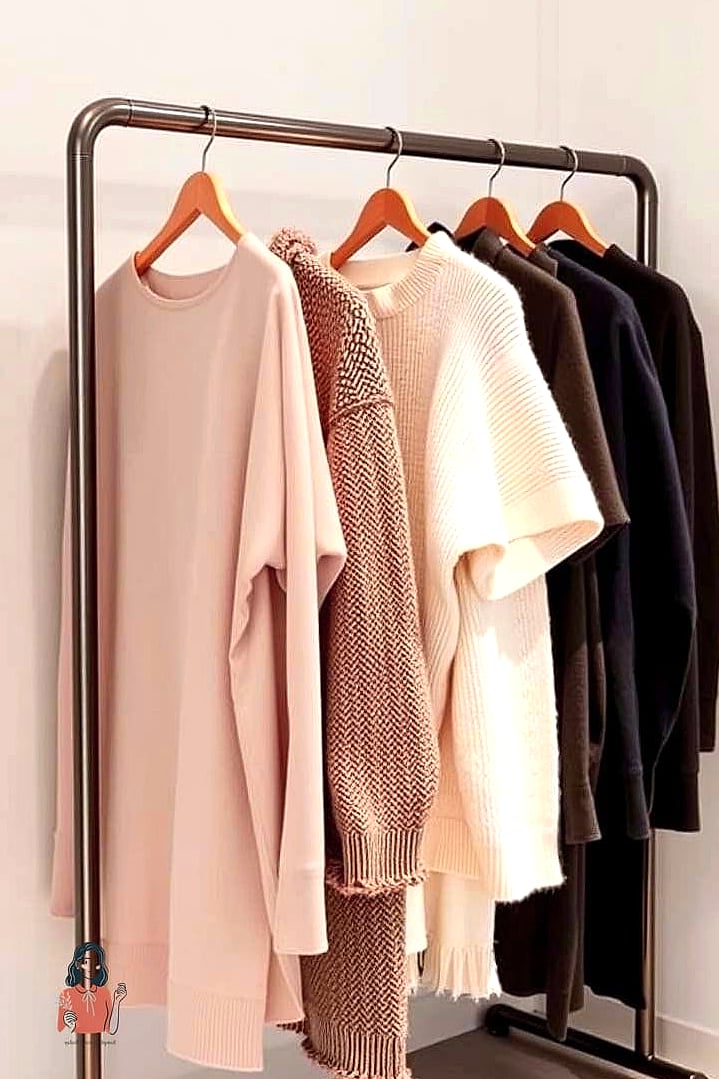
If your closet is packed and your favorite sweaters end up wrinkled at the bottom of a pile, a small garment rack outside the closet can hold your weekly rotation. This keeps your most-used pieces accessible and visible, while everything else stays properly stored. It’s a good fix for smaller closets that just can’t hold everything at once.
Store Delicate Sweaters With Tissue Paper
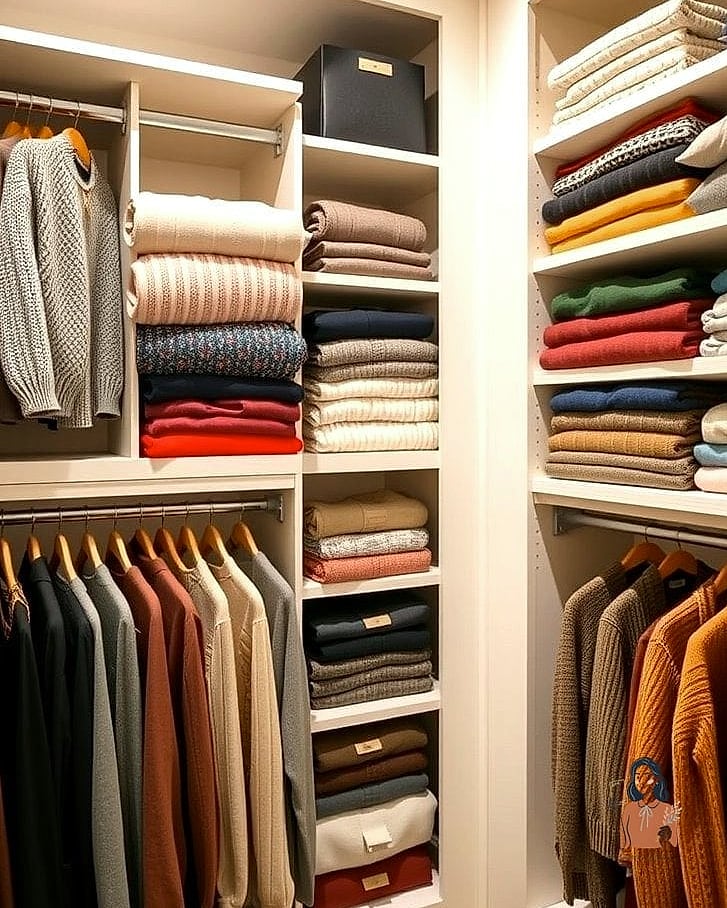
For cashmere or other delicate knits, layering acid-free tissue paper between folds helps prevent snagging and keeps the fibers from rubbing against each other in storage. This is a small extra step, but it matters for pieces you want to keep looking good for years rather than one season.
Use Stackable Fabric Bins for a Uniform Look
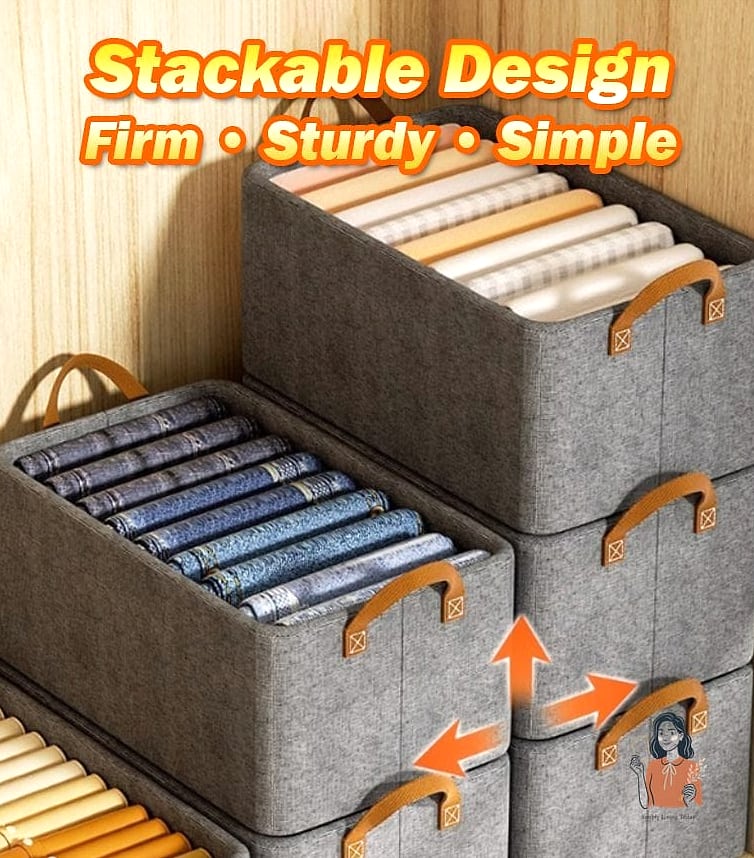
Matching fabric bins stacked on a closet shelf create a clean, uniform look while still keeping sweaters organized by category. Unlike hard plastic bins, fabric versions are easier to squeeze into slightly uneven shelf spaces. Add a small tag or label on the front so you’re not left guessing which bin holds what.
Store Sweaters Flat in a Drawer With Dividers Instead of a Closet
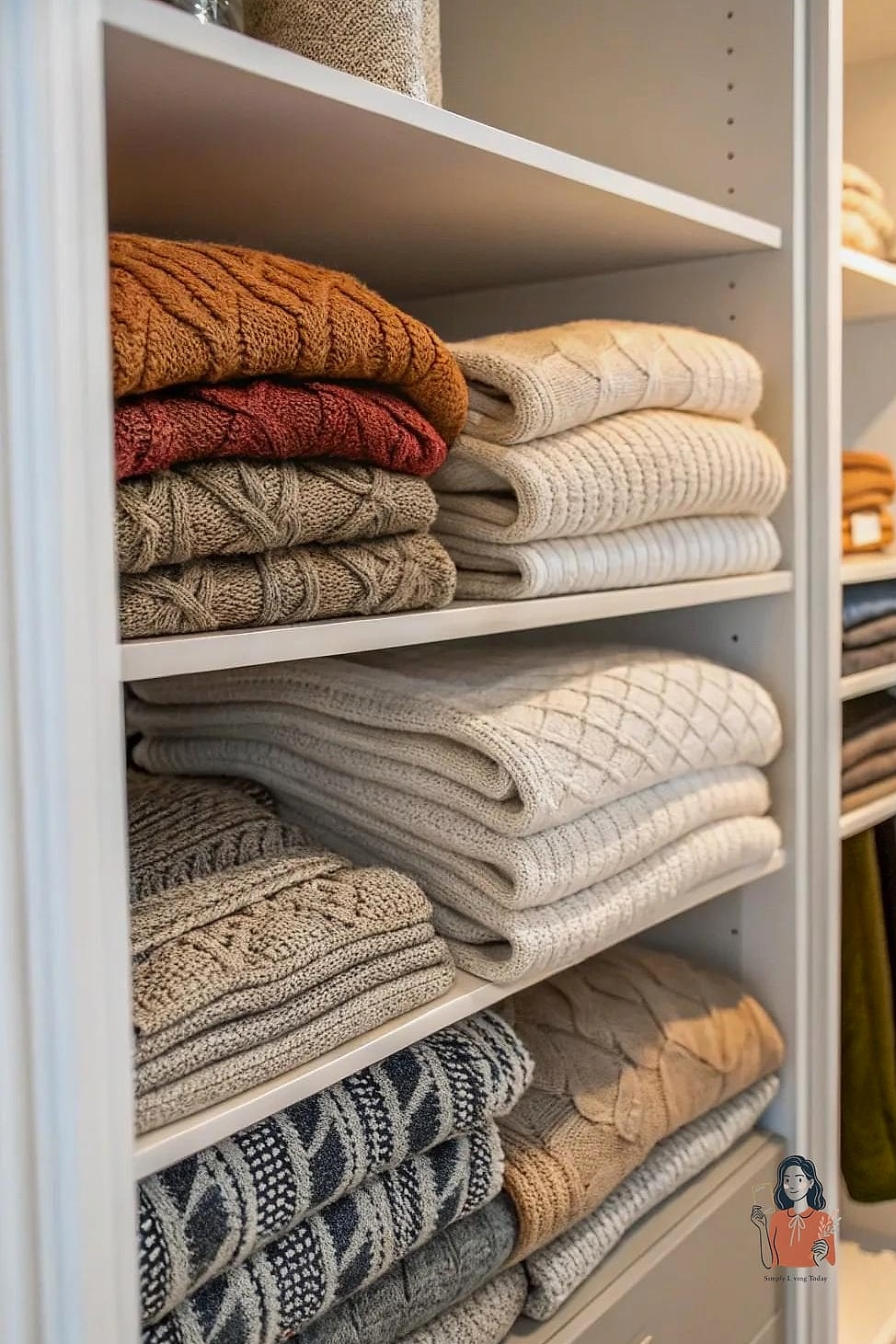
For anyone without much hanging closet space, a wide, shallow drawer fitted with dividers can hold an entire sweater collection using the flat-fold method. This setup works especially well in a guest room dresser or a repurposed sideboard, giving you dedicated sweater storage outside a crowded closet.
Rotate Seasonal Sweaters Between Two Storage Zones
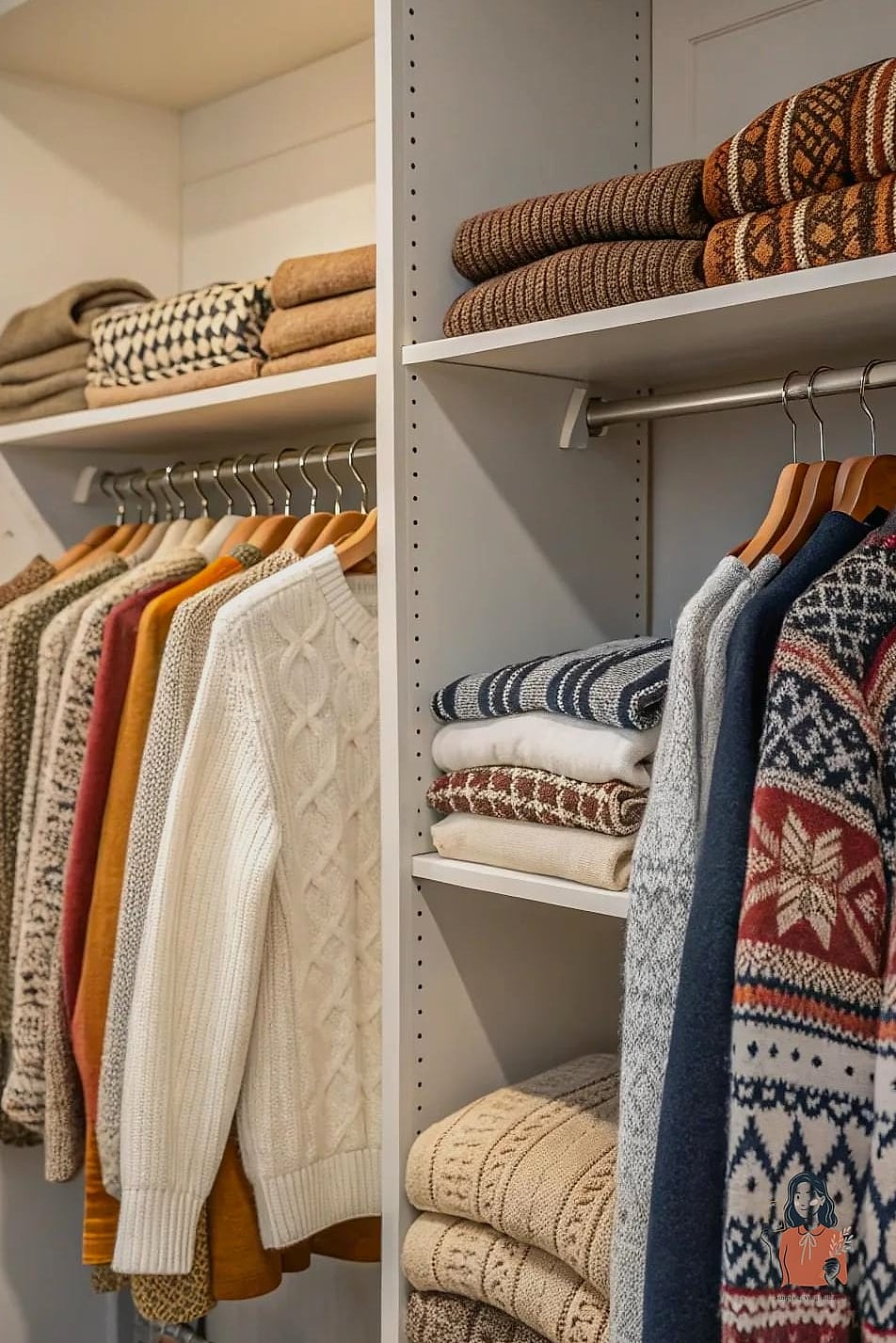
Keep a “current season” zone in your main closet and a “storage season” zone elsewhere, like a hall closet or spare room, and rotate sweaters between them twice a year. This keeps your everyday closet from being overloaded and makes each seasonal swap feel like a small refresh rather than a chore.
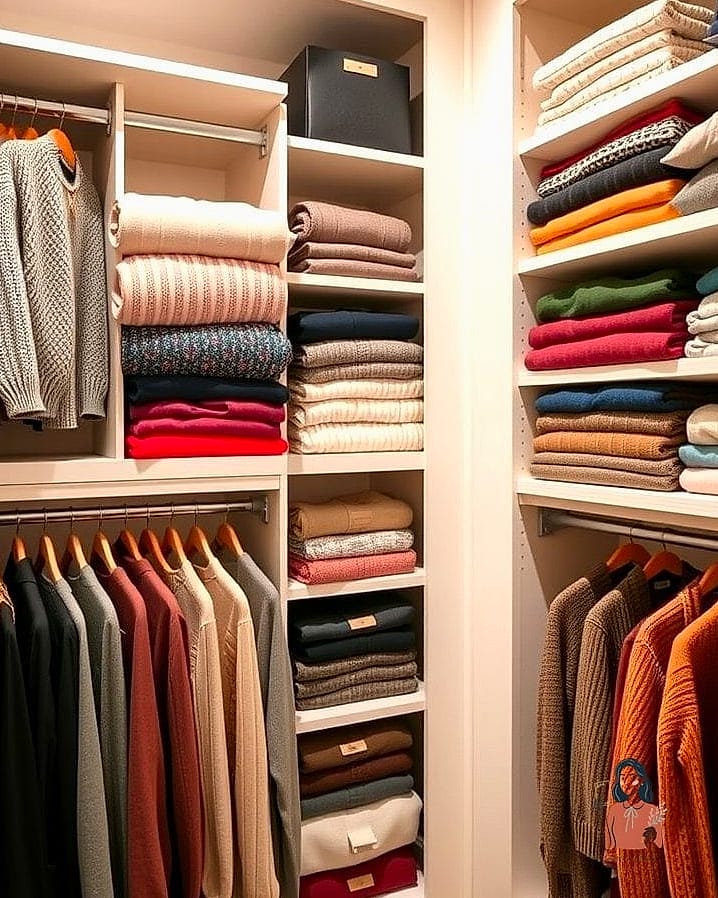
Use a Closet Organizer System With Built-In Sweater Cubbies
If you’re doing a full closet redesign, some closet organizer systems come with built-in cubby sections sized specifically for folded sweaters. This is a bigger investment than the other ideas here, but it’s worth considering if sweater storage has been a recurring problem every single season. It builds the file-fold and division methods directly into the closet structure, so you’re not adding separate organizers later.
Getting your sweaters organized doesn’t require a full closet renovation or expensive storage systems. Most of these ideas use things you probably already have, like drawers, bins, or a little bit of shelf space, arranged in a way that actually works with how sweaters are shaped. Pick two or three that fit your space best, and you’ll likely notice the difference the very next time you open your closet.