21 Game-changing Belt Storage That Actually Work
- Hanging Belt Rack With Hooks
- Over-the-Door Belt Organizer
- Rotating Belt Carousel
- Drawer Divider Inserts
- Belt Coiling and Rolling
- Clear Acrylic Belt Bins
- Tie and Belt Combo Rack
- Pegboard Belt Wall
- Belt Hangers That Clip to a Closet Rod
- Vertical Belt File System
- Hook Strip Under a Shelf
- Woven Basket With Rolled Belts
- Modular Closet Cubbies
- Belt Storage in a Repurposed Jewelry Organizer
- Belt Rack With Adjustable Arms
- Belt Roll-Up Travel Case
- Custom Built-In Belt Drawer
- Command Hook Cluster
- Belt Storage Inside a Hanging Shoe Organizer
- Freestanding Valet Stand With Belt Hook
- Belt Storage Tray on a Closet Island
Thought for 4s
21 Game-changing Belt Storage That Actually Work
Belts are one of those things that multiply in a closet without anyone noticing until you’re digging through a tangled pile just to find the brown one. If you’ve ever pulled three belts out trying to get to the one you actually wanted, you know the frustration. The good news is that belt storage doesn’t have to mean an expensive closet overhaul. Some of the smartest solutions cost almost nothing and take ten minutes to set up. Here are 21 options that genuinely solve the problem, whether you own five belts or fifty.
Hanging Belt Rack With Hooks
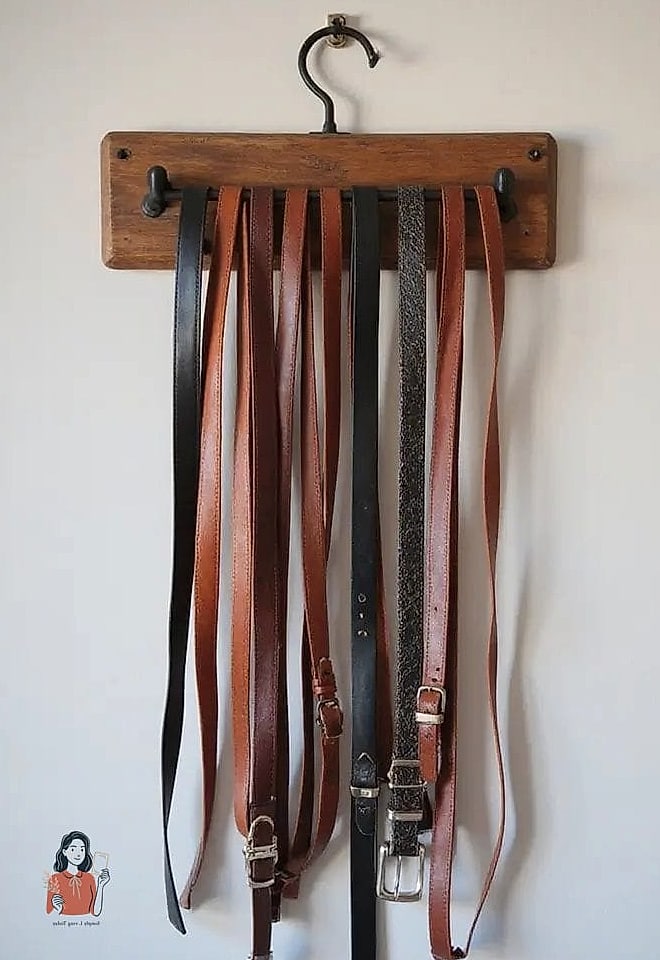
A wall-mounted rack with individual hooks keeps every belt visible and separated instead of layered in a pile. This works well for closets with a few feet of open wall space, especially near where you already keep shoes or ties. Look for one with at least a dozen hooks so buckles don’t overlap. It’s an affordable option, and installation usually only requires a couple of screws.
Over-the-Door Belt Organizer
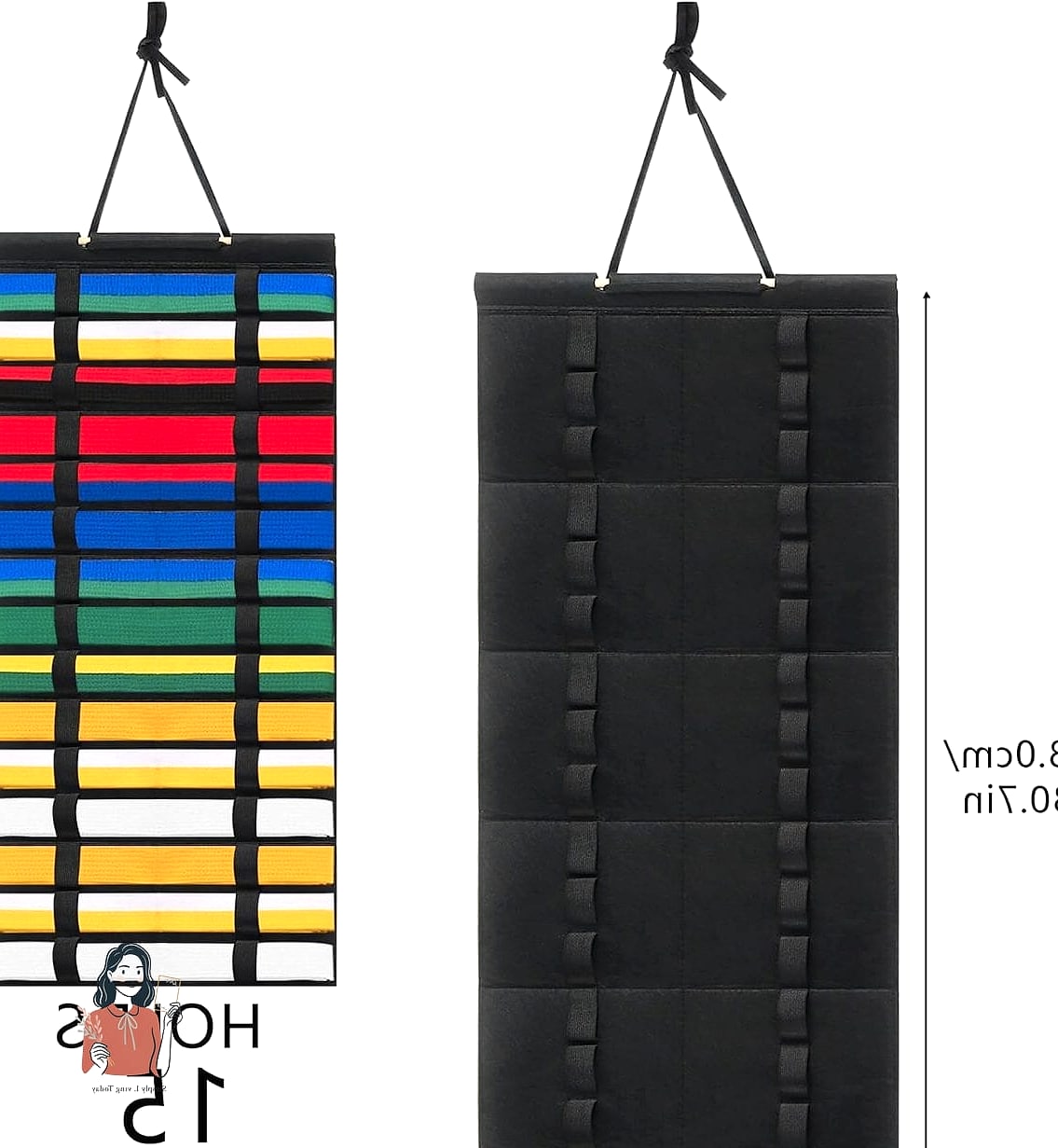
If wall space is tight, an over-the-door organizer hangs on the closet door itself and uses zero additional floor or wall space. These typically have rows of pegs or slots that let belts hang straight down without wrinkling the leather. It’s a smart pick for smaller apartments or shared closets where every inch matters. Most versions install without tools, which makes this one of the easiest upgrades on the list.
Rotating Belt Carousel
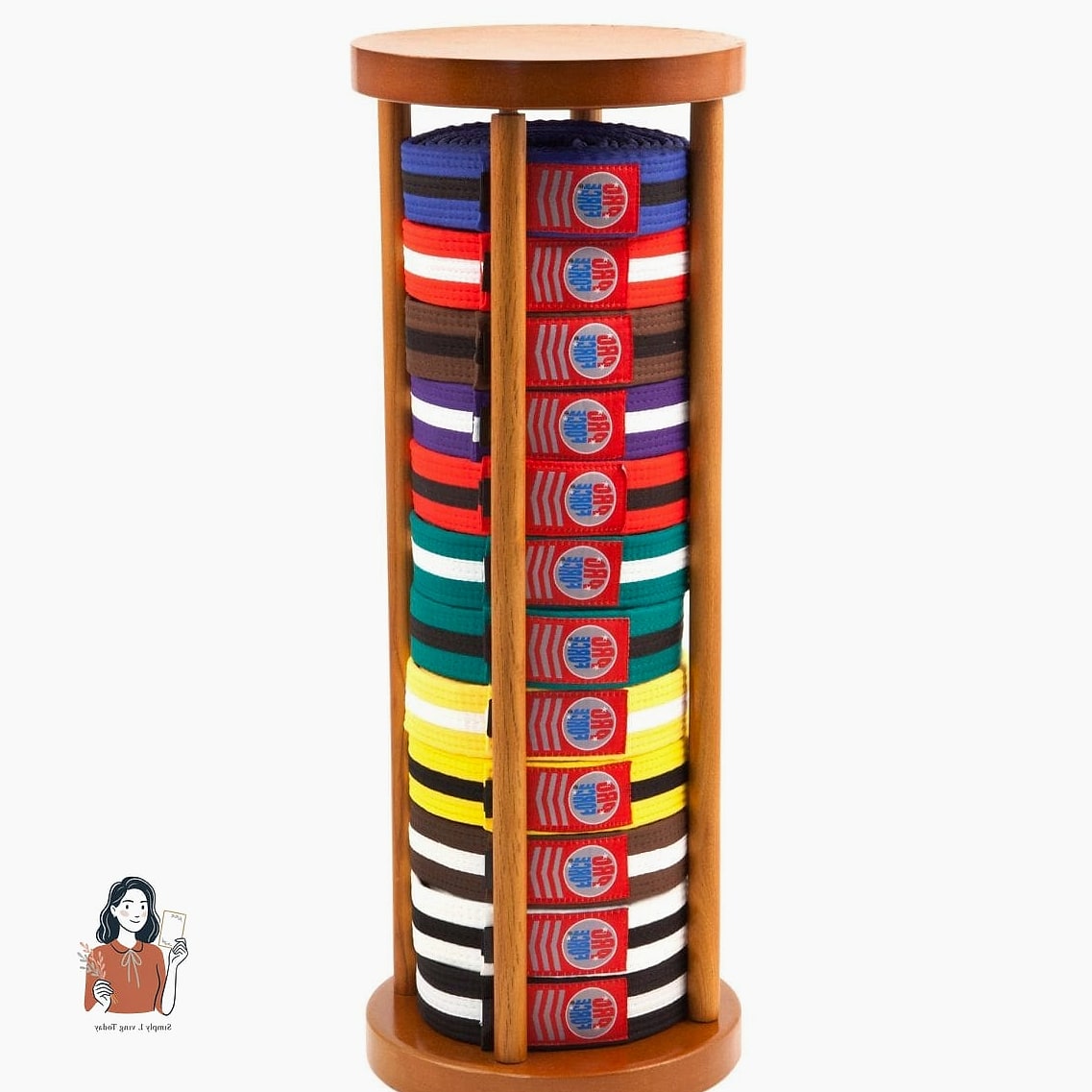
A rotating carousel mounts inside the closet and spins so you can see every belt without pulling anything out. These are especially useful if you have a large collection, since they hold significantly more than a flat rack in the same amount of space. The spinning motion also means less handling, so belts stay in better shape over time. It’s a mid-range investment, but worth it if belts are a real wardrobe staple for you.
Drawer Divider Inserts
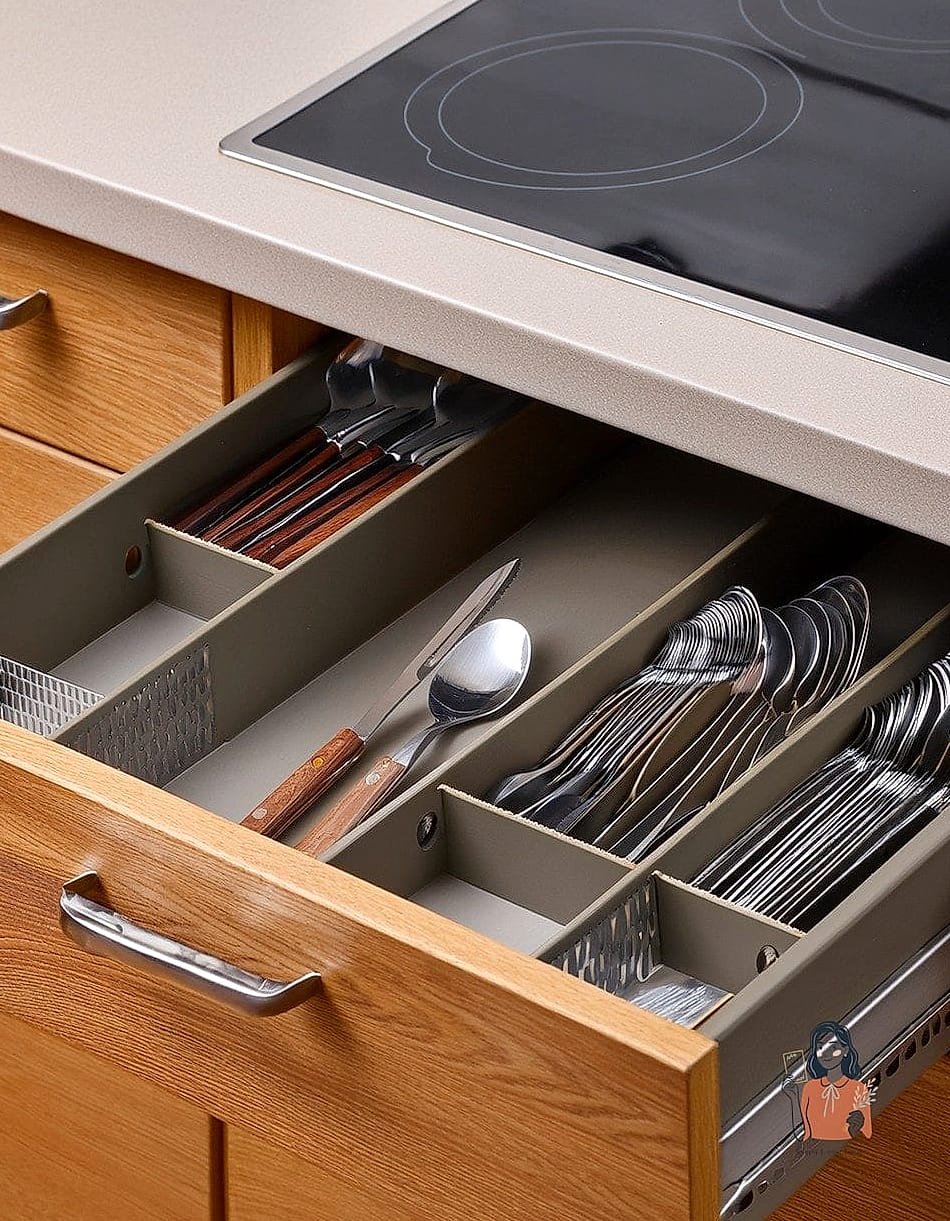
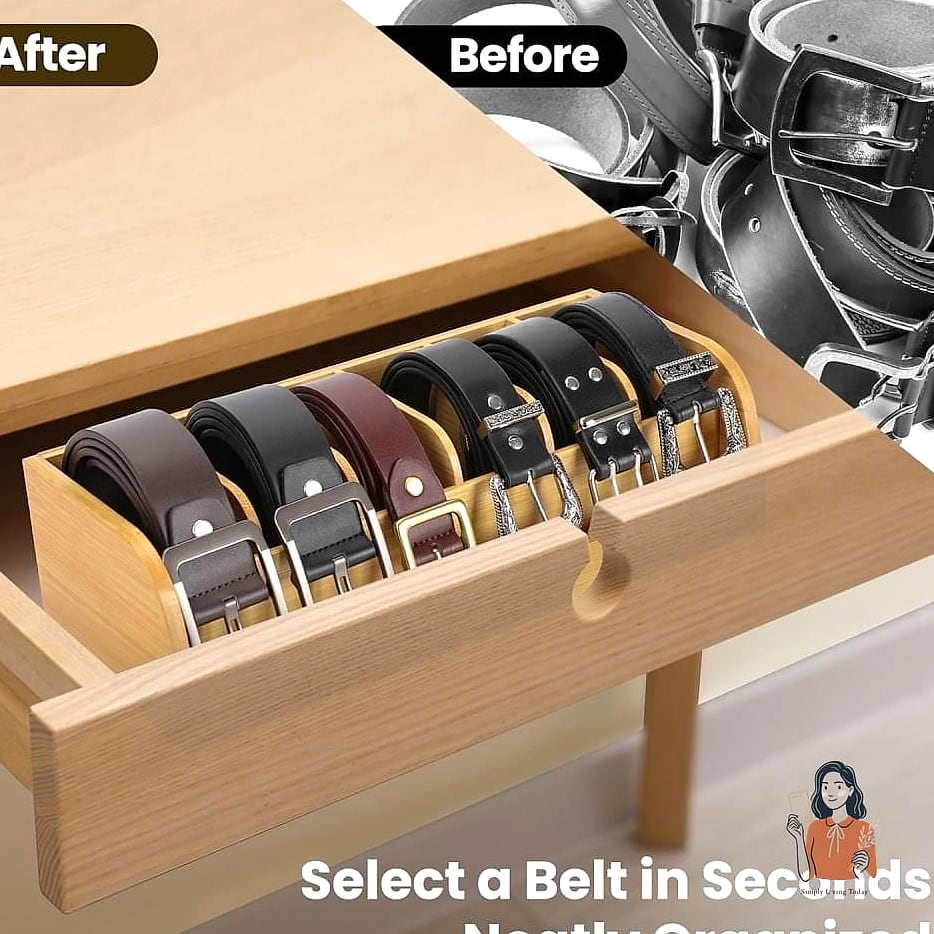
Not everyone wants belts on display, and that’s fine. Drawer dividers let you coil belts and store them flat in a dresser drawer, separated into individual compartments so they don’t tangle. This is a good fit for anyone who prefers a closed-storage look or has limited hanging space. Choose adjustable dividers so you can resize sections as your collection grows or shrinks.
Belt Coiling and Rolling
This isn’t a product so much as a technique, and it costs nothing. Rolling belts into tight coils, buckle facing out, lets you store dozens in a shallow box or bin without them unraveling everywhere. It works especially well for thinner belts and is a favorite among people who travel often, since coiled belts pack flat in a suitcase without losing shape.
Clear Acrylic Belt Bins

Clear bins let you see contents at a glance while keeping coiled belts contained and dust-free. These sit nicely on a closet shelf and stack easily if you need more than one. The transparency solves the biggest downside of bin storage, which is forgetting what’s inside. It’s an affordable, no-installation option that works in almost any closet configuration.
Tie and Belt Combo Rack

Some racks are designed specifically to hold both ties and belts on the same unit, usually with a pull-out arm that extends from the closet wall. This is ideal for anyone who dresses more formally on a regular basis and wants accessories grouped together rather than scattered across different parts of the closet. The pull-out design also means you’re not digging behind hanging clothes to find what you need.
Pegboard Belt Wall
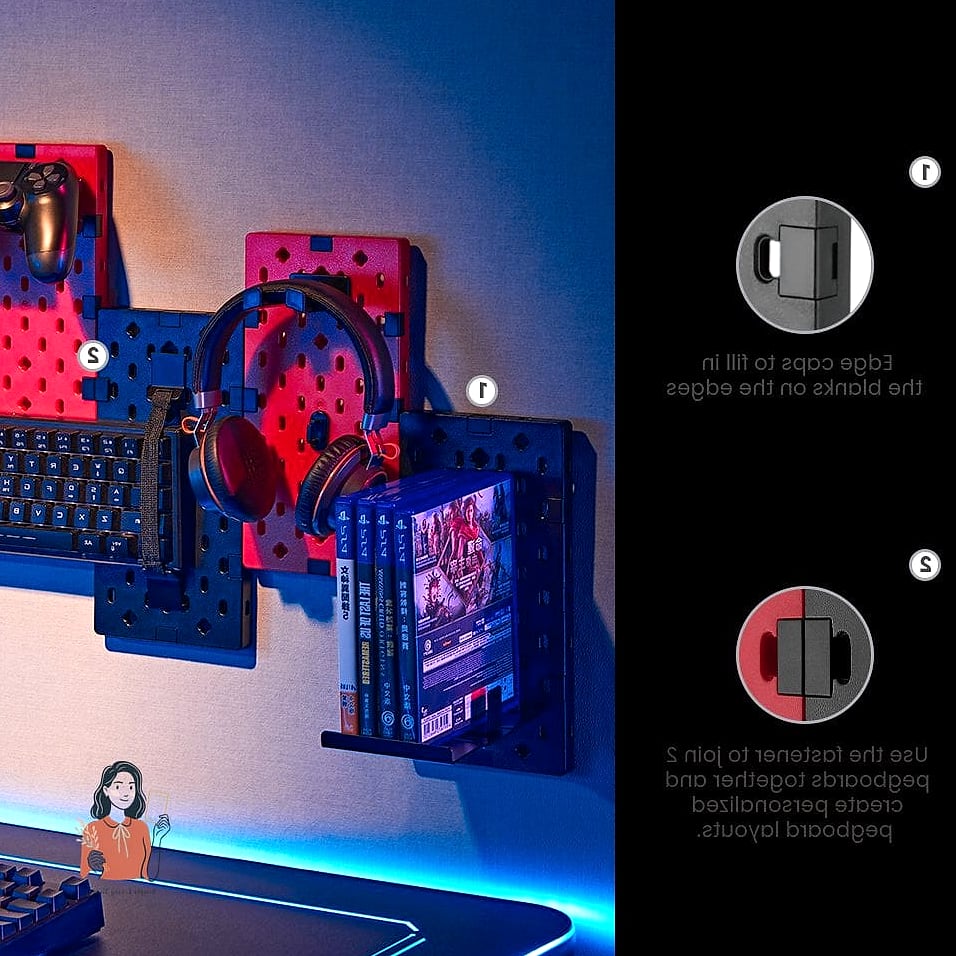
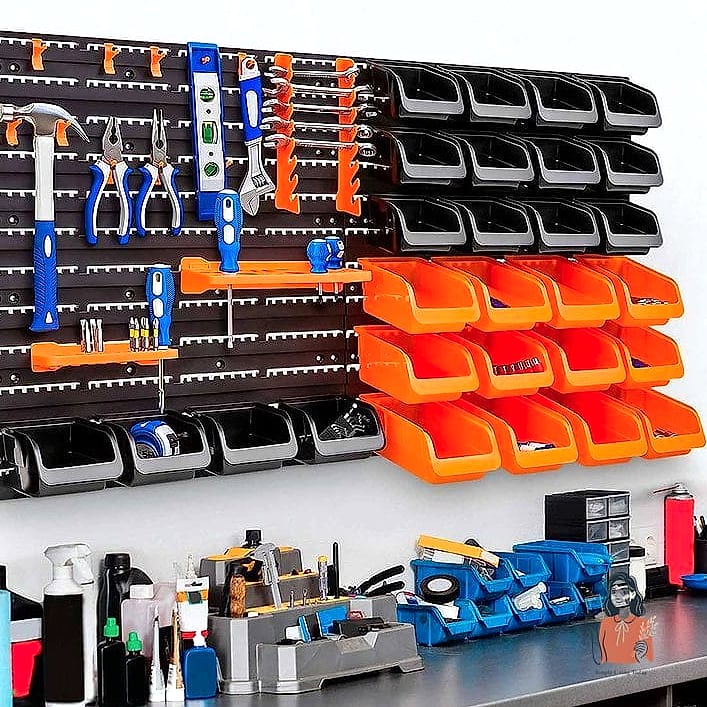
A pegboard mounted on an empty closet wall gives you total customization, since you can move hooks around as your collection changes. This is a great DIY project if you enjoy building your own systems rather than buying a fixed rack. Paint the pegboard to match your closet for a more finished look, and add a few extra pegs for hats or bags while you’re at it.
Belt Hangers That Clip to a Closet Rod
These small clip-style hangers attach directly to your existing closet rod, so there’s no installation at all. Each hanger typically holds several belts looped through slots, which is a smart option if you’re renting and can’t drill into walls. They’re inexpensive and easy to find, making this one of the simplest fixes if you need a solution today rather than next weekend.
Vertical Belt File System
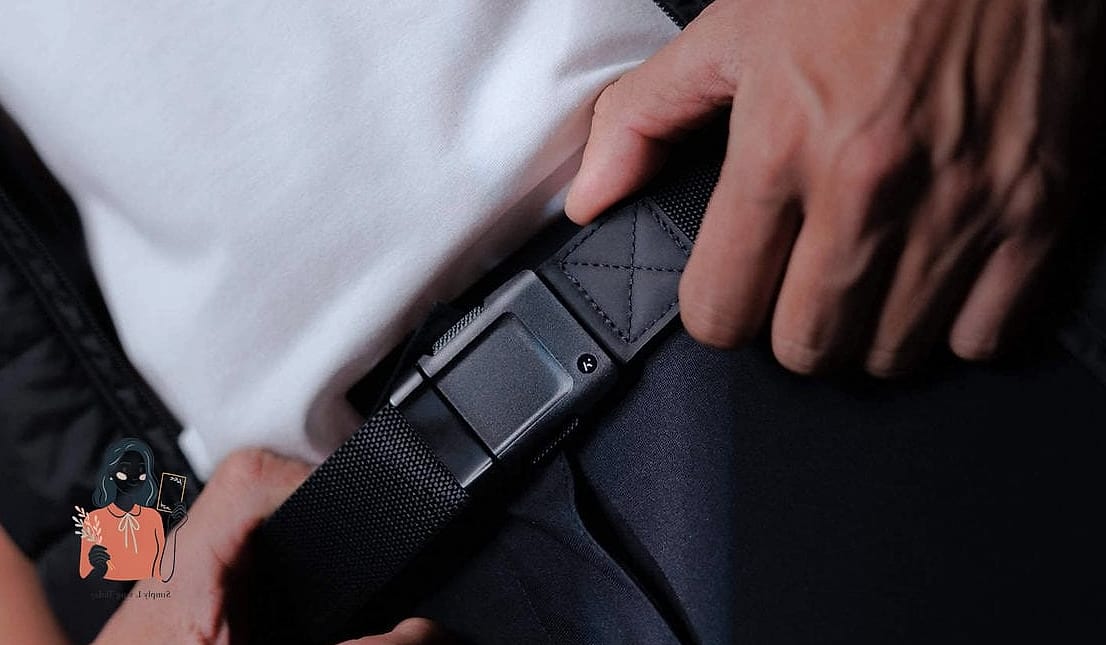
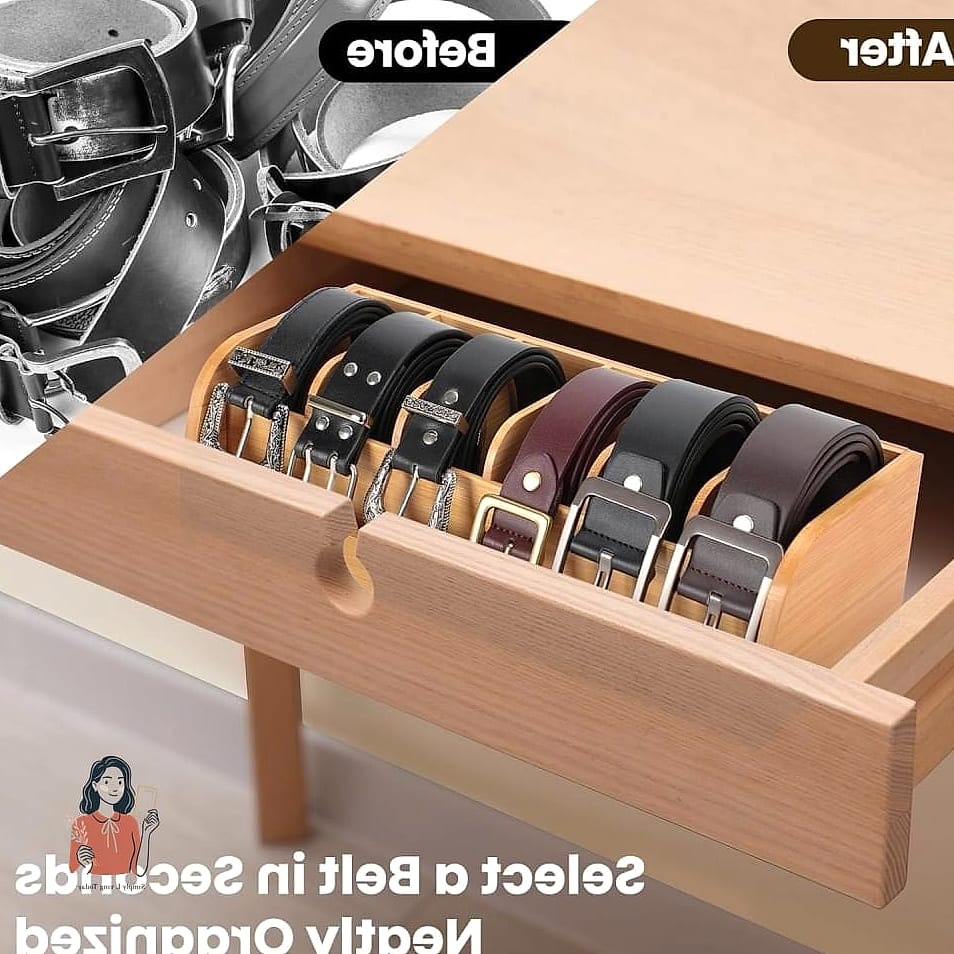
Borrowed from the same idea as a filing cabinet, this method stands belts upright in narrow vertical slots inside a drawer or basket. It keeps buckles from scratching each other and makes it easy to flip through belts the way you’d flip through folders. This works particularly well for anyone with a large collection of dress belts that need to stay in pristine condition.
Hook Strip Under a Shelf
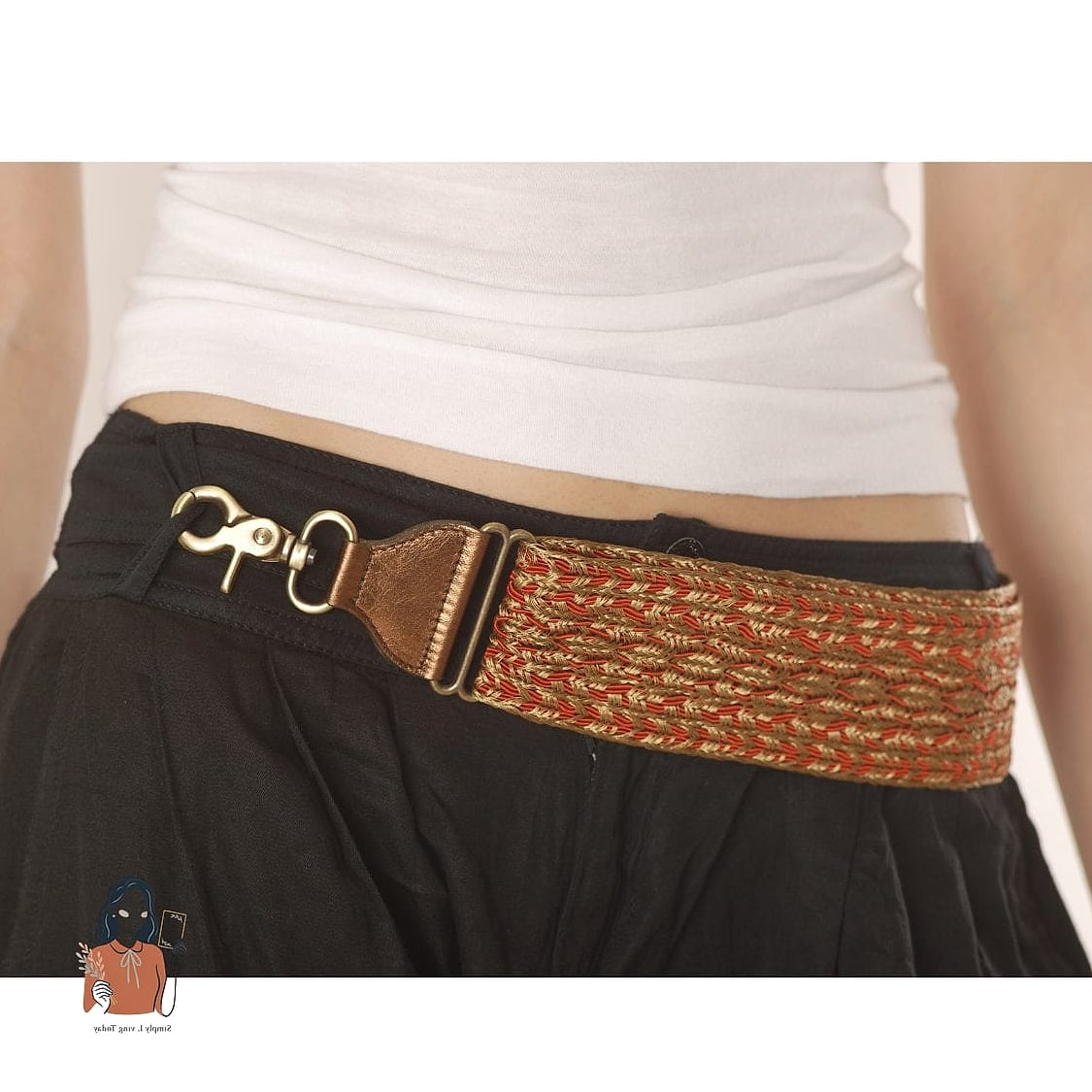
If your closet has a shelf with open space underneath, a hook strip mounted to the underside of that shelf uses space that would otherwise go to waste. Belts hang down without taking up any additional footprint. This is a nearly invisible storage solution once belts are hanging, which keeps the closet looking uncluttered even with a full collection.
Woven Basket With Rolled Belts
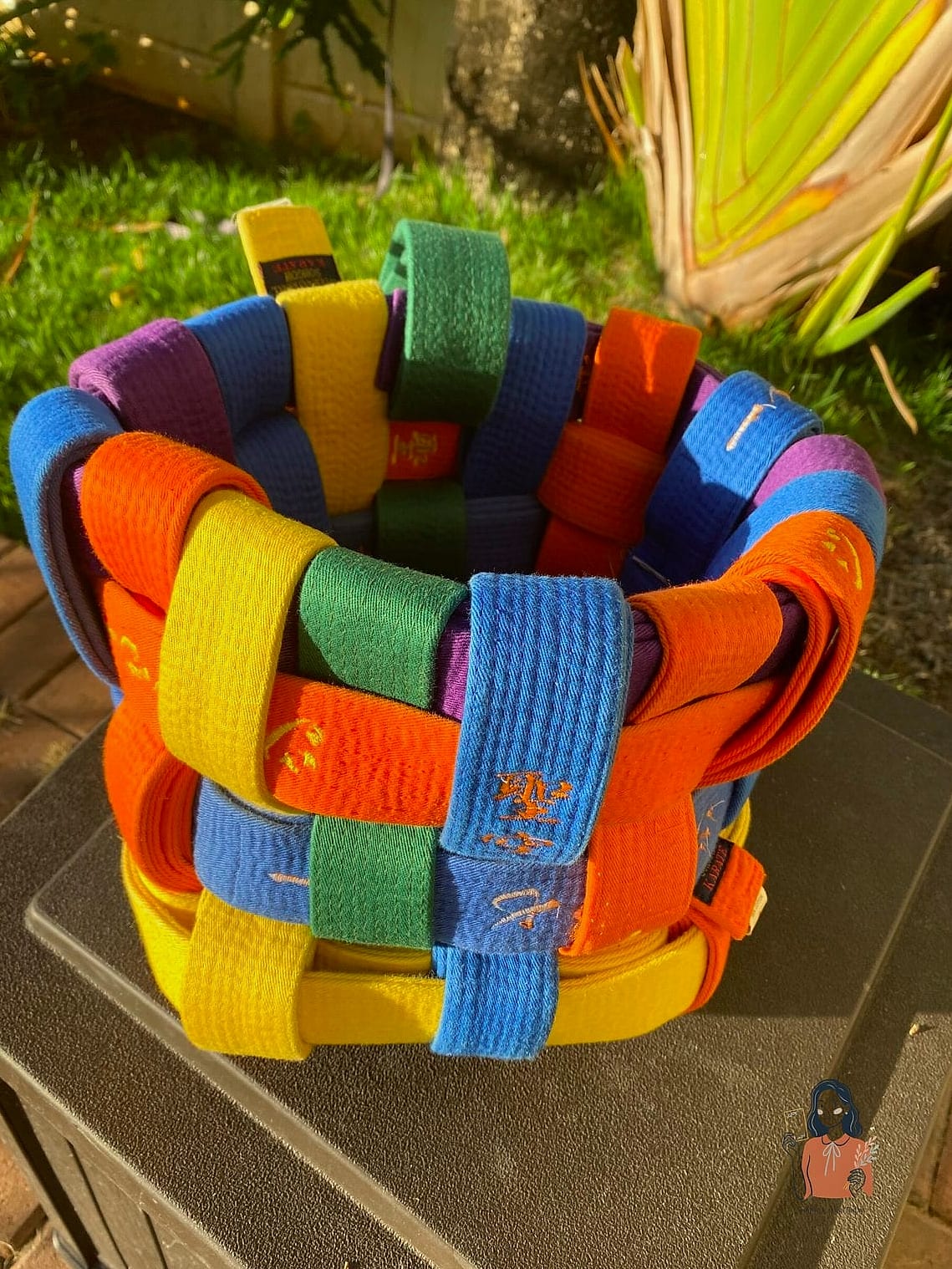
For a softer, more decorative look, a woven basket on a closet shelf or bench holds rolled belts while blending into a more relaxed, textured aesthetic. This suits closets that lean toward a natural or lived-in style rather than sleek and modern. It’s budget-friendly and doubles as general catch-all storage if you ever downsize your belt collection.
Modular Closet Cubbies
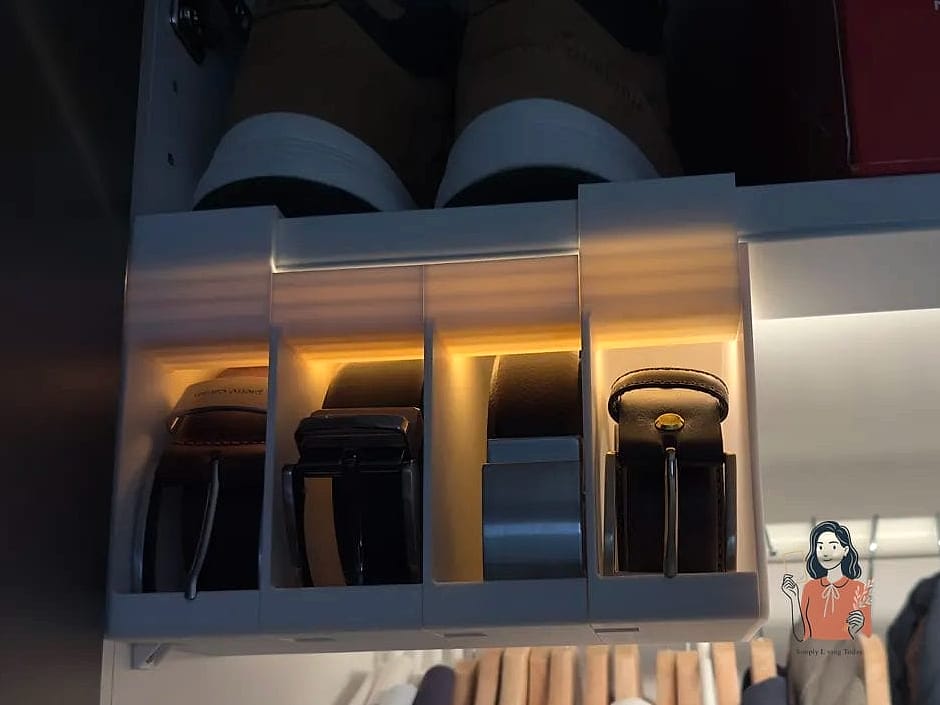
Small cube inserts, the kind often used for shoes or folded shirts, work just as well for coiled belts when divided by cubby. This is a good option if you’re already installing a modular closet system and want belt storage built into the same unit rather than added separately. It keeps everything in one cohesive system instead of scattered add-ons.
Belt Storage in a Repurposed Jewelry Organizer
Hanging jewelry organizers with rows of pockets or loops can double as belt storage, especially for thinner or dressier belts. This is a clever, low-cost swap if you already have one sitting unused. It hangs on a closet rod or door hook and keeps belts separated by pocket instead of piled together.
Belt Rack With Adjustable Arms
Some racks feature swing-out arms rather than fixed hooks, letting you fan belts out for a full view before pulling one down. This design reduces wear on leather since you’re not sliding belts off over a row of others. It’s a solid mid-range option for anyone who wants both function and a slightly more polished, boutique-style presentation in their closet.
Belt Roll-Up Travel Case
For belts you take on the road, a padded roll-up case keeps them from creasing or scuffing inside a suitcase. This isn’t for everyday closet storage, but it solves a real problem for frequent travelers who’ve had a favorite belt damaged in transit. Look for one with individual straps or loops so belts stay coiled and don’t unravel mid-trip.
Custom Built-In Belt Drawer
If you’re already renovating a closet, a built-in drawer with molded belt grooves is the most seamless option available. Each groove holds one belt in place so nothing shifts or tangles, and the drawer closes completely out of sight. This is a splurge-worthy choice, best suited for a full closet remodel rather than a quick fix.
Command Hook Cluster
A cluster of adhesive hooks arranged on a closet wall is one of the most budget-friendly options on this list, since it requires no drilling and can be removed without damage. This works well in rental units or dorm rooms where permanent installation isn’t an option. Space the hooks a few inches apart so belts don’t overlap and buckle against each other.
Belt Storage Inside a Hanging Shoe Organizer
A fabric shoe organizer with individual pockets isn’t just for shoes. Each pocket comfortably holds one or two rolled belts, and the whole thing hangs on a closet rod without taking up shelf space. This is a practical dual-purpose solution if you’re short on distinct storage zones and want to consolidate accessories in one hanging unit.
Freestanding Valet Stand With Belt Hook
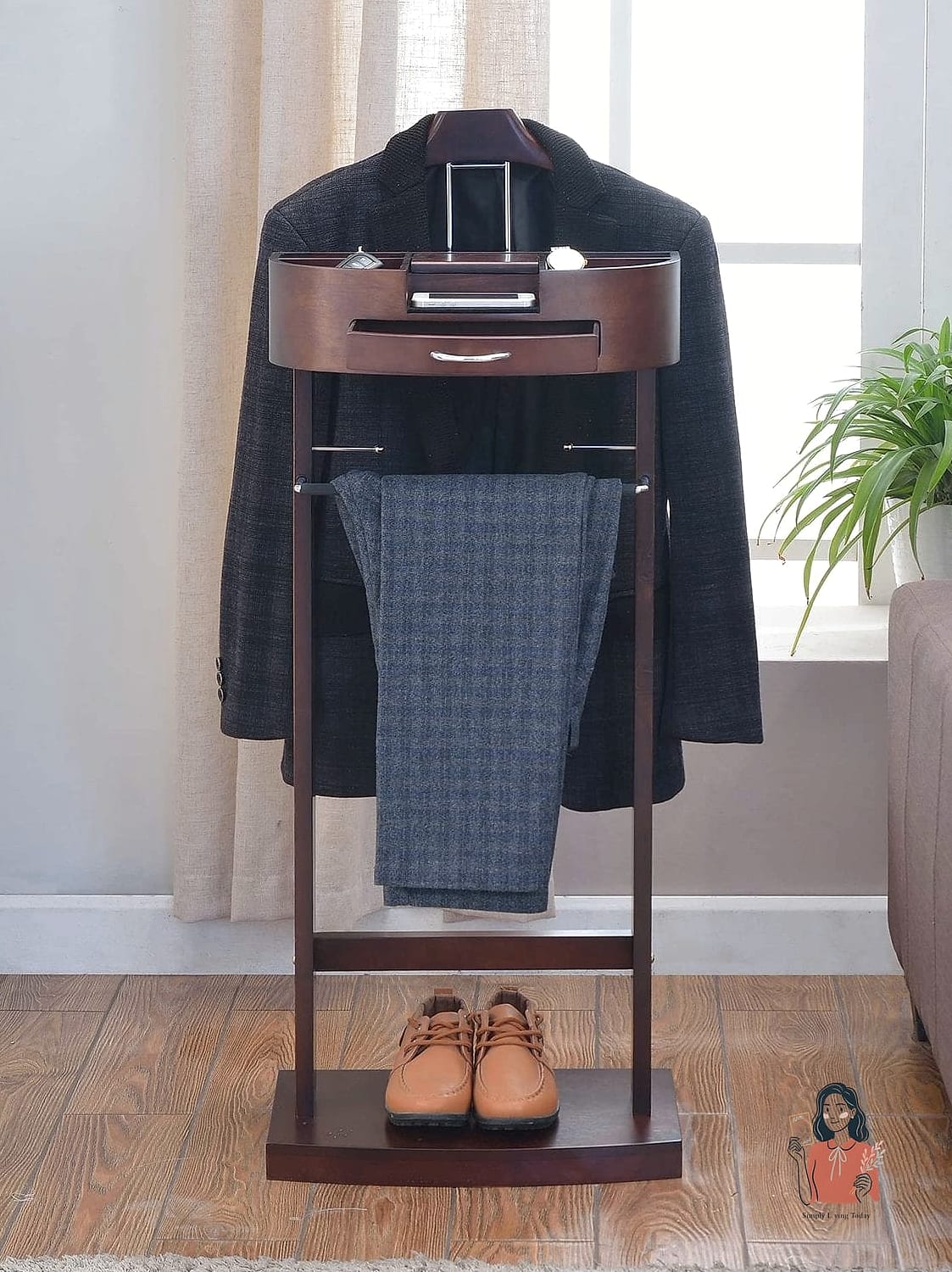
A valet stand designed for next-day outfits often includes a small hook or bar specifically for a belt, alongside space for a jacket, tie, and watch. This isn’t built for storing an entire collection, but it’s genuinely useful for keeping tomorrow’s belt separate from the rest so you’re not searching for it in a rush. It works especially well in a bedroom rather than inside the closet itself.
Belt Storage Tray on a Closet Island
If your closet includes a center island or dresser top, a shallow tray designated just for belts keeps them from sliding into other trays meant for watches or jewelry. This is a small, simple addition rather than a full system, but it solves the everyday problem of belts ending up wherever there’s open surface space. Line the tray with felt to keep buckles from scratching the surface underneath.
Belt storage is one of those small closet problems that’s easy to ignore until it starts slowing you down every morning. The right system really just depends on how many belts you own, how much space you’re working with, and whether you’d rather see everything at a glance or keep it tucked away. Start with whichever option matches your current setup, and don’t be afraid to combine two, like a rack for daily belts and a bin for the rest you rotate through less often.