21 Clever Diy Bookshelf On a Budget
- Cinder Block and Wood Plank Shelf
- Ladder Bookshelf
- Floating Crate Shelves
- Pipe and Wood Shelving
- Repurposed Wooden Crate Bookshelf
- Old Door Bookshelf
- Floating Wall-Mounted Shelves
- Bookshelf Made from an Old Dresser
- Cardboard Tube Shelving
- Suitcase Bookshelf
- Wine Crate Bookshelf
- Bookshelf Room Divider
- Pallet Wood Bookshelf
- Milk Crate Bookshelf
- Floating Corner Shelf
- Bookshelf from Stacked Vintage Suitcaseless Trunks
- Rope and Board Hanging Shelf
- Bookshelf Built into a Window Seat
- Bookshelf from Repurposed Shutters
- Bookshelf Made from Stacked Tires
- Modular Cube Bookshelf
Thought for 2s
21 Clever Diy Bookshelf On a Budget
If your books are stacked on the floor or crammed two-deep on a sagging shelf, you’re in the right place. Building your own bookshelf isn’t just cheaper than buying one — it’s a chance to get exactly the size, style, and storage you actually need.
Below are 21 genuinely different ways to build or repurpose a bookshelf without spending a fortune. Some take an afternoon, others a weekend, but all of them are achievable even if your tool collection is modest.
Cinder Block and Wood Plank Shelf
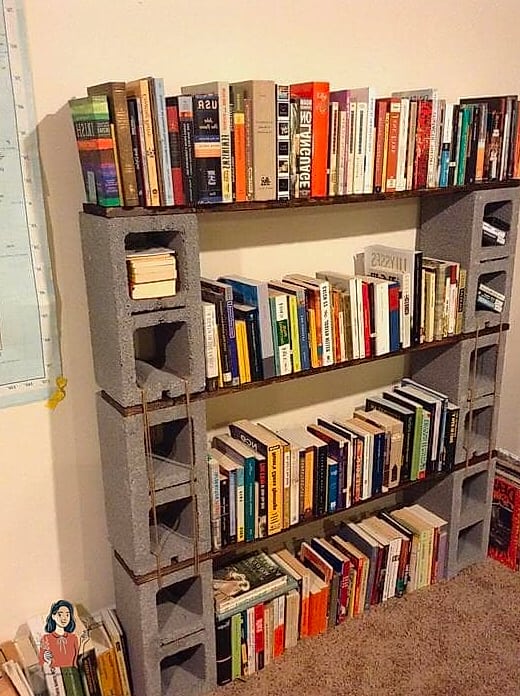
This is the classic dorm-room hack for a reason — it works. Stack painted or wrapped cinder blocks and lay wood planks across them to build a shelf as tall or short as you want.
It’s ideal for a garage, studio apartment, or a casual reading nook where you don’t need a polished look. Paint the blocks in a bold color or wrap them in rope for a more finished appearance. Total cost usually stays under the price of a single retail bookshelf.
Ladder Bookshelf
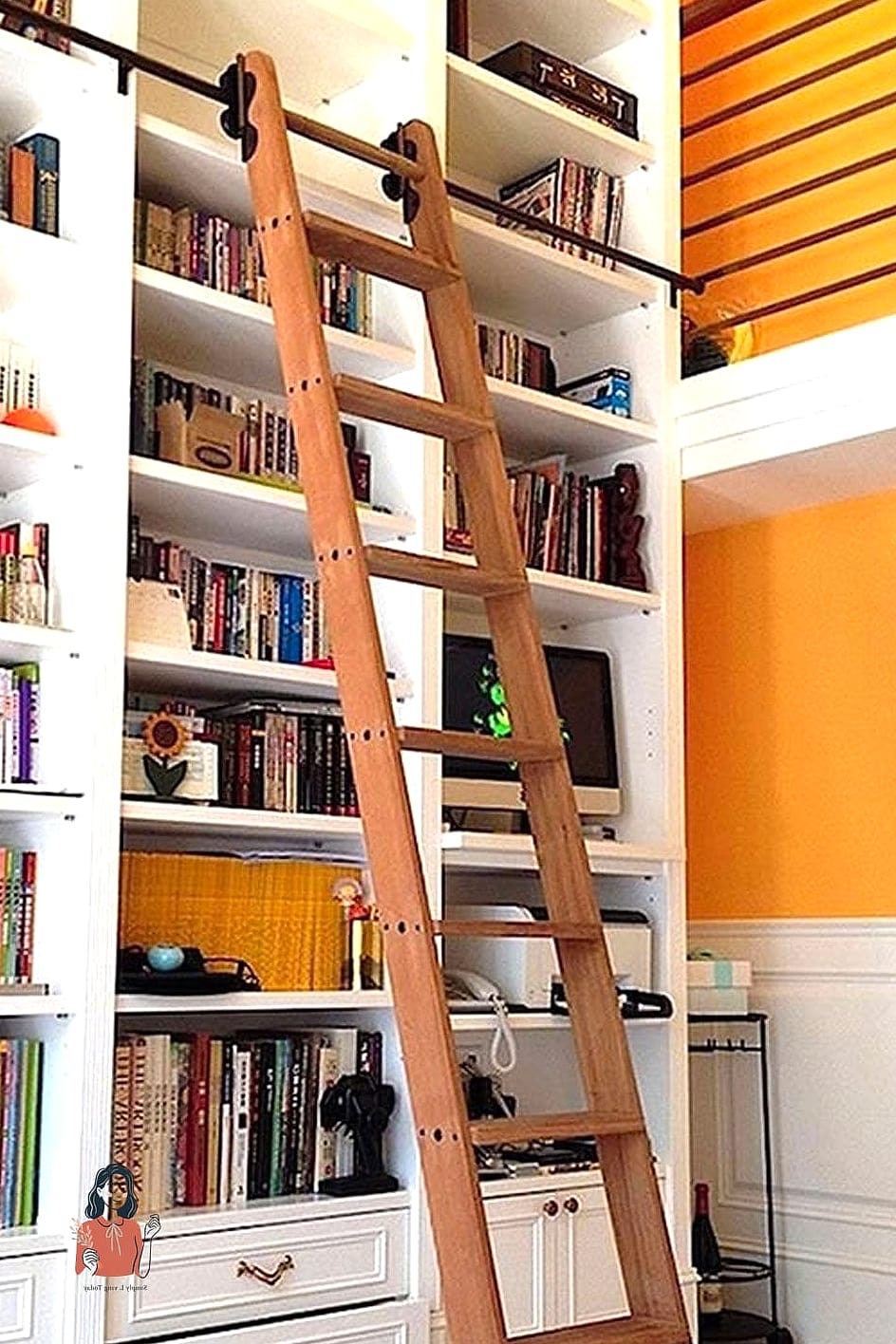
An old wooden ladder leaned against a wall instantly becomes a rustic, tiered bookshelf. Each rung holds a row of books, magazines, or small decor pieces.
This works especially well in a farmhouse or cottage-style room. Look for a secondhand ladder at a flea market or reuse one collecting dust in the garage. Sand it down and add a coat of stain or leave it weathered for character.
Floating Crate Shelves
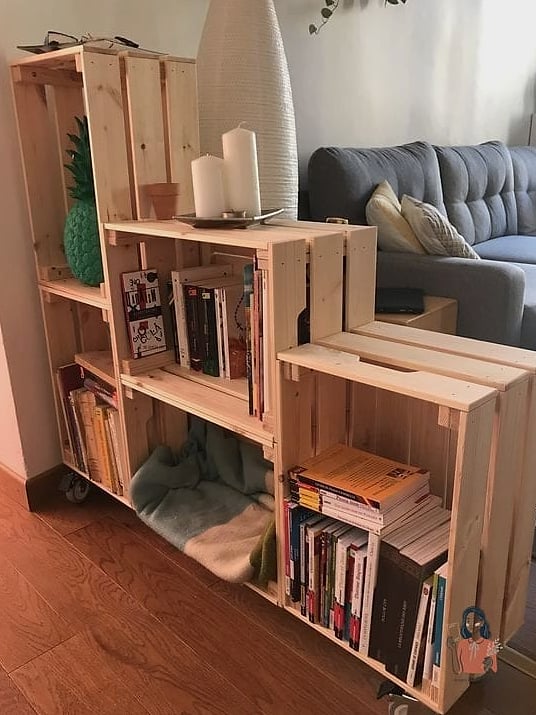
Wooden crates mounted directly to the wall create a modern, modular shelving system. Arrange them in a grid, staircase pattern, or scattered layout depending on your space.
Crates are inexpensive at craft stores or can be built from scrap plywood. This is a great option for a nursery, home office, or living room accent wall, and you can add or remove crates as your book collection grows.
Pipe and Wood Shelving
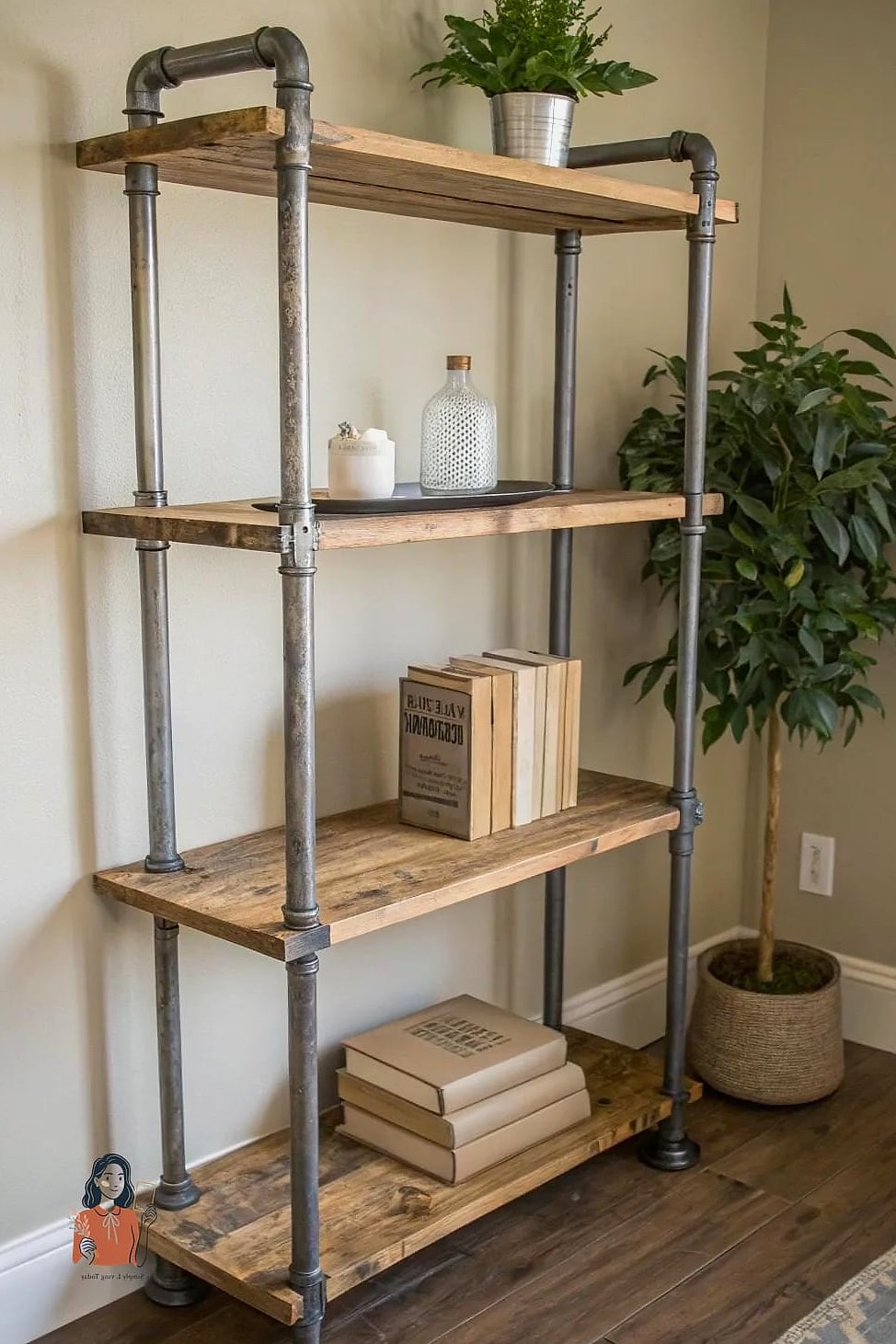
Combine wood planks with metal pipe brackets for an industrial-style shelf that looks far more expensive than it is. The exposed pipe adds visual interest while keeping the structure sturdy.
This suits a loft apartment, home office, or exposed-brick living room. Pipes and fittings are sold individually at hardware stores, so you only buy what the design calls for.
Repurposed Wooden Crate Bookshelf
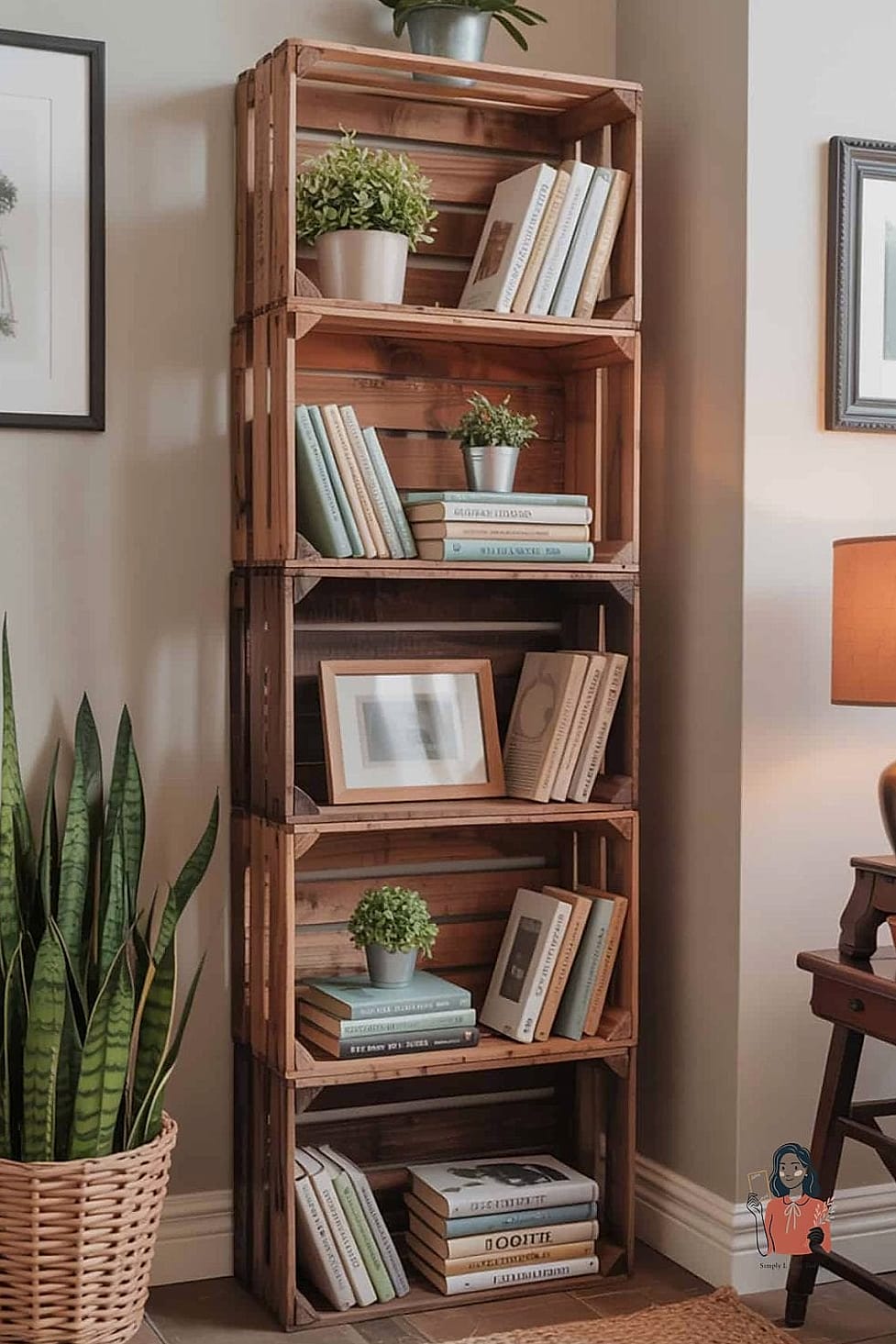
Stack several wooden crates on their sides and secure them together for an instant modular bookshelf. No mounting required, which makes this a renter-friendly option.
Paint each crate a different shade for a playful look, or keep them natural wood for something more understated. This works well in a kid’s room, entryway, or as a low shelf behind a couch.
Old Door Bookshelf
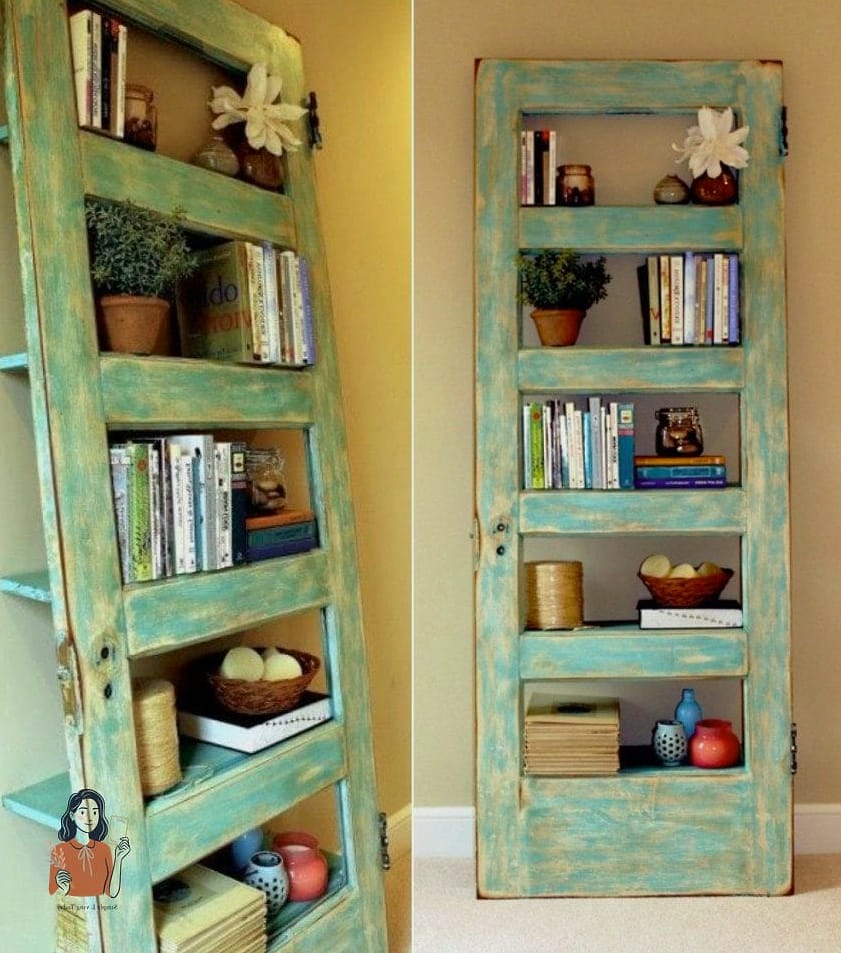
An old hollow-core or paneled door can be cut down and fitted with shelf brackets to create a tall, narrow bookshelf with real character. Salvage yards and demolition sales often sell doors for very little.
This idea suits a hallway, reading corner, or small apartment where floor space is limited. The natural paneling on many older doors adds detail you’d otherwise pay extra for.
Floating Wall-Mounted Shelves
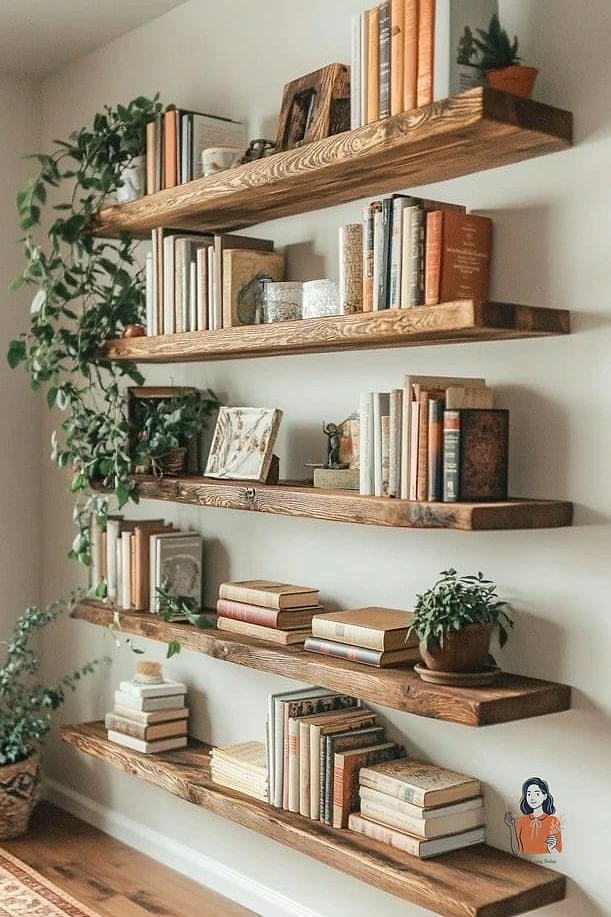
Simple floating shelves, cut from plywood or pine and mounted with hidden brackets, give you a clean, minimal bookshelf without any bulky frame. They’re one of the most beginner-friendly builds on this list.
Space them evenly for a gallery-style wall, or vary the spacing for a more organic look. This is a strong option for small bedrooms, offices, or anywhere floor space is tight.
Bookshelf Made from an Old Dresser
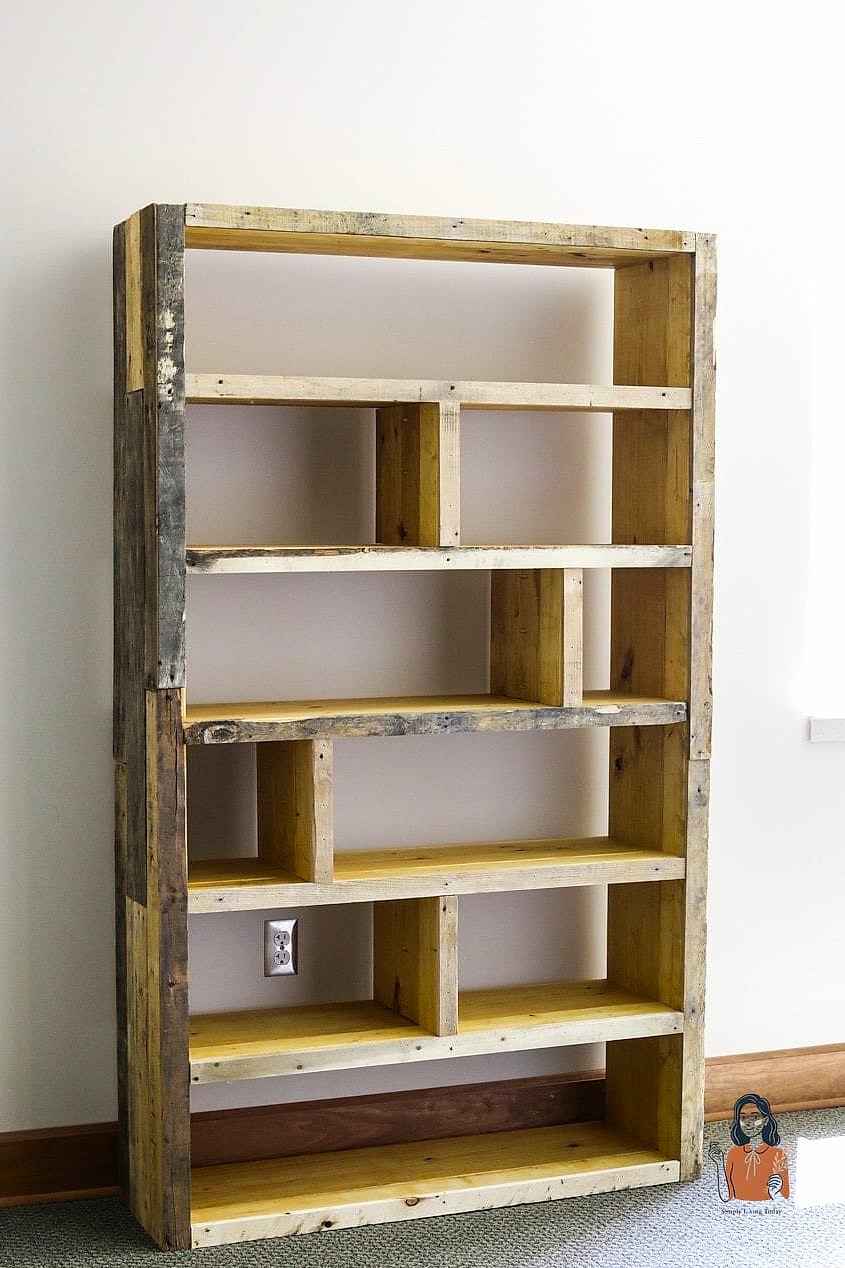
Remove the drawers from a secondhand dresser and add shelf inserts, or simply stand the drawers upright and stack books inside them. Either approach turns furniture headed for the curb into functional storage.
This works well in a bedroom or living room where you want storage with more visual weight than open shelving. Sand and repaint the dresser to match your room’s color palette.
Cardboard Tube Shelving
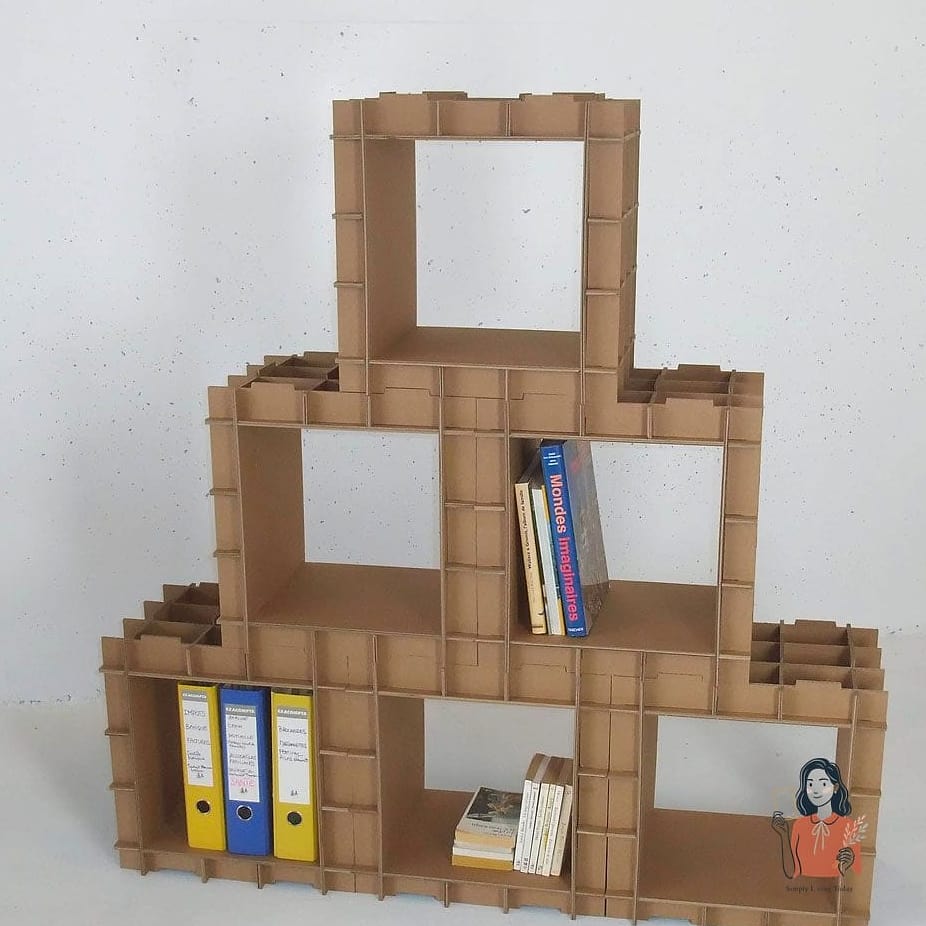
Large cardboard shipping tubes, cut to size and stacked horizontally, create a honeycomb-style bookshelf that’s surprisingly sturdy for lightweight books and paperbacks. Reinforce with wood glue at the joints.
This is a fun, low-cost project for a kid’s room or reading nook, and it’s easy to personalize with paint or contact paper on the inside of each tube.
Suitcase Bookshelf
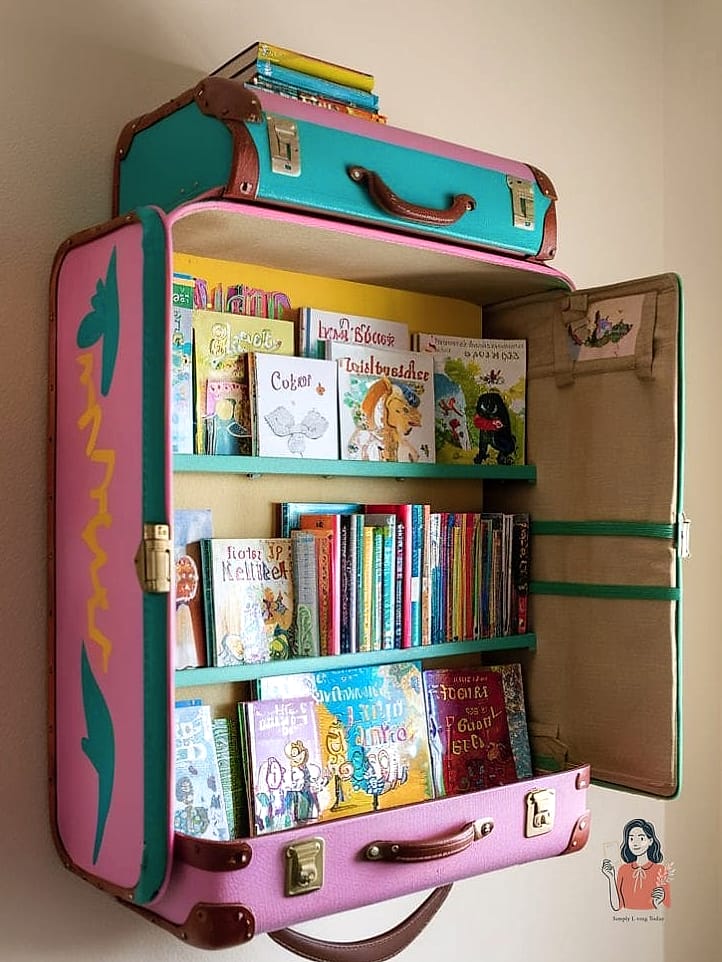
Vintage suitcases stacked and secured together make a charming, nostalgic bookshelf with built-in personality. Open the lids partway to display books or keep them shut for a sculptural stacked look.
This idea suits a boho or vintage-styled room. Thrift stores and estate sales are good places to find inexpensive suitcases in varying sizes.
Wine Crate Bookshelf
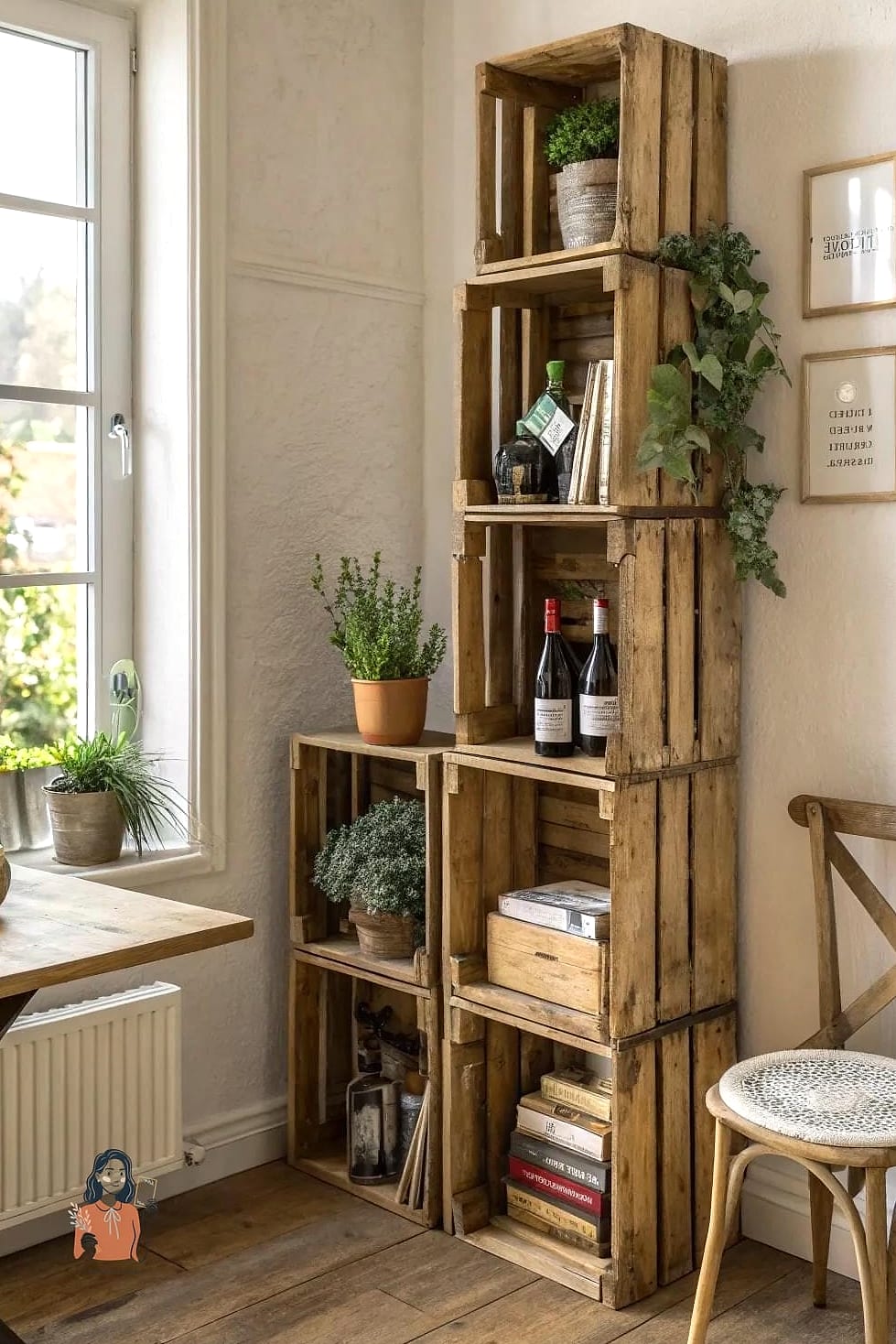
Wooden wine crates, often free or cheap from local wine shops, stack neatly into a rustic bookshelf with almost no assembly required. Some crates already have the shop’s branding stamped on the side, which adds character.
This works nicely in a kitchen, dining nook, or casual living room where you want storage that doesn’t feel too formal.
Bookshelf Room Divider
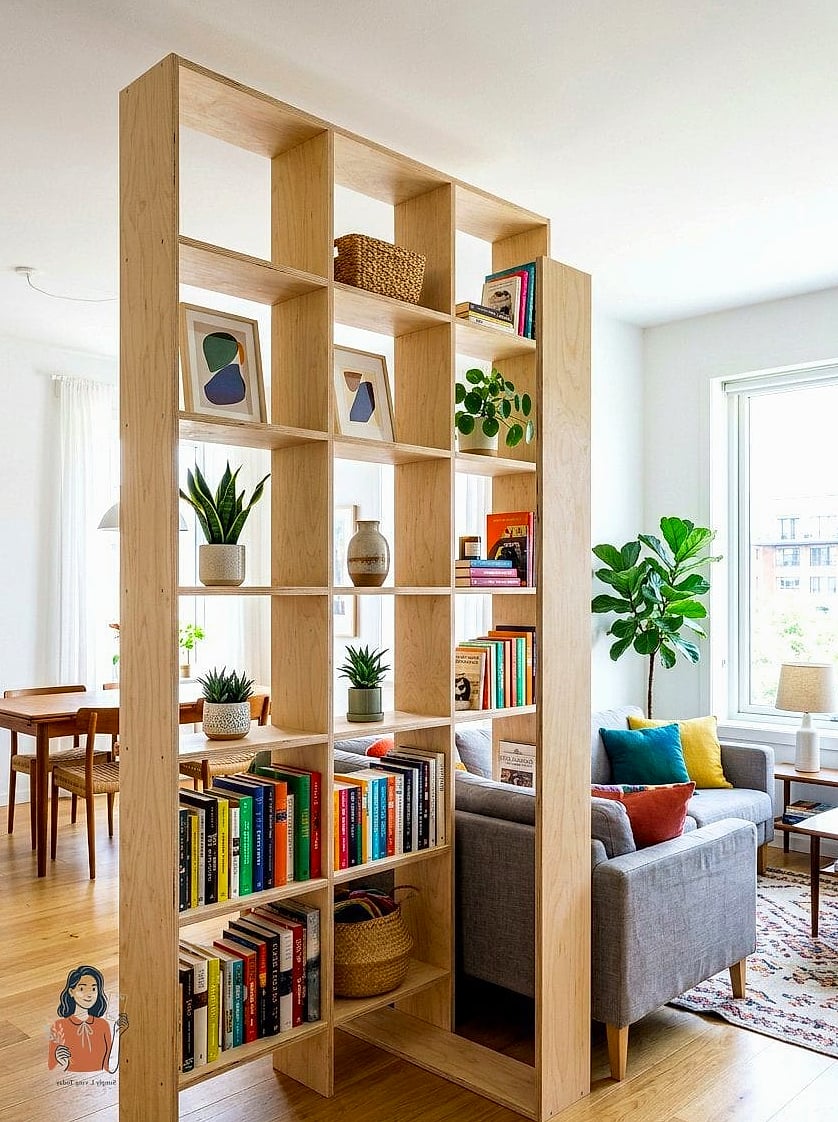
Build a double-sided shelving unit using plywood and simple wood supports to divide a studio apartment or open floor plan while adding storage on both sides. This solves two problems with one project.
Keep the design open-backed so light passes through, or add a solid back for more privacy between the two sides. This is especially useful for studio living or a shared kids’ room.
Pallet Wood Bookshelf
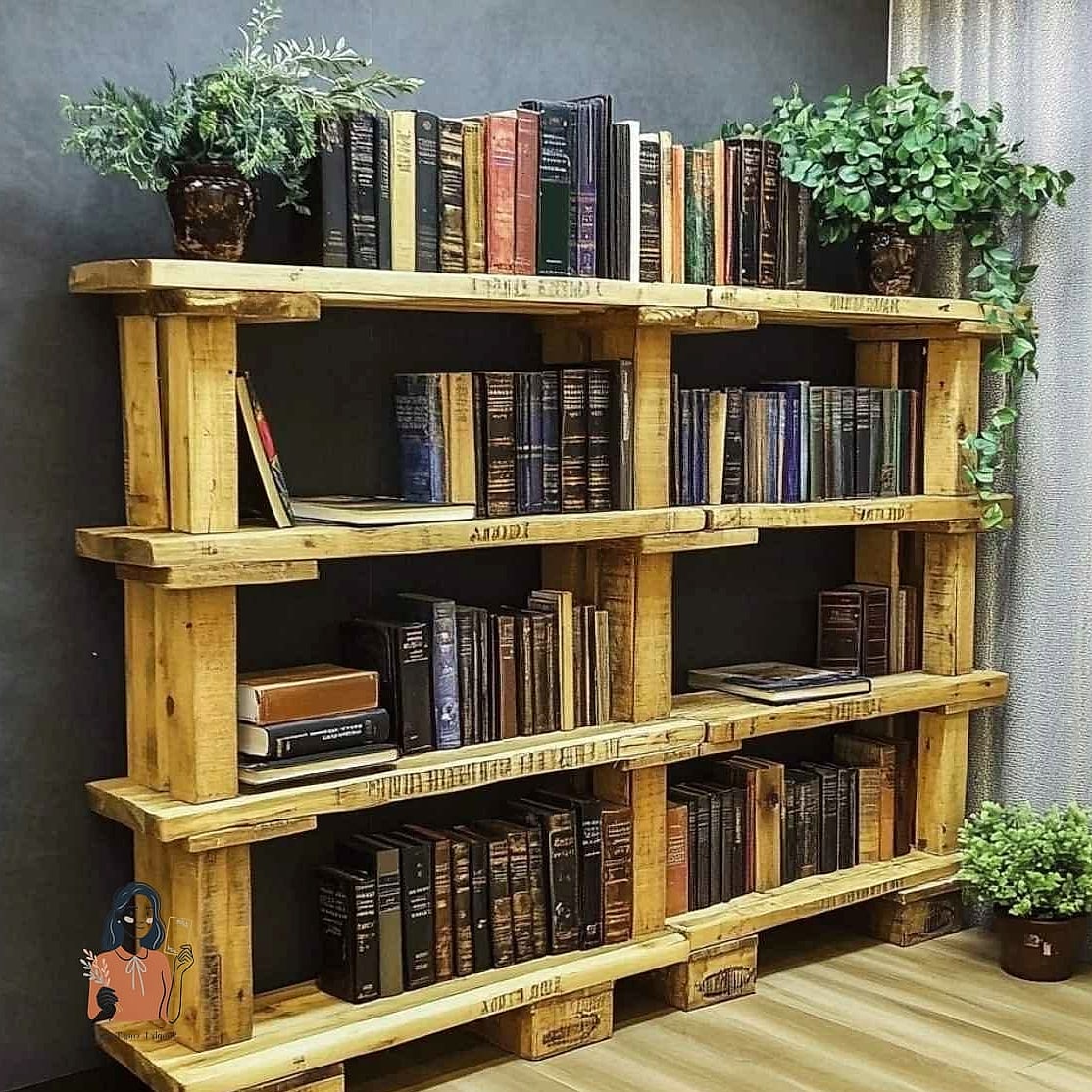
Reclaimed wooden pallets, broken down and reassembled, make a sturdy, rustic-style bookshelf for very little money. Many hardware stores and warehouses give pallets away for free if you ask.
Sand the wood well before building, since pallets can be rough or splintered. This is a great weekend project for a garage workshop or farmhouse-style living room.
Milk Crate Bookshelf
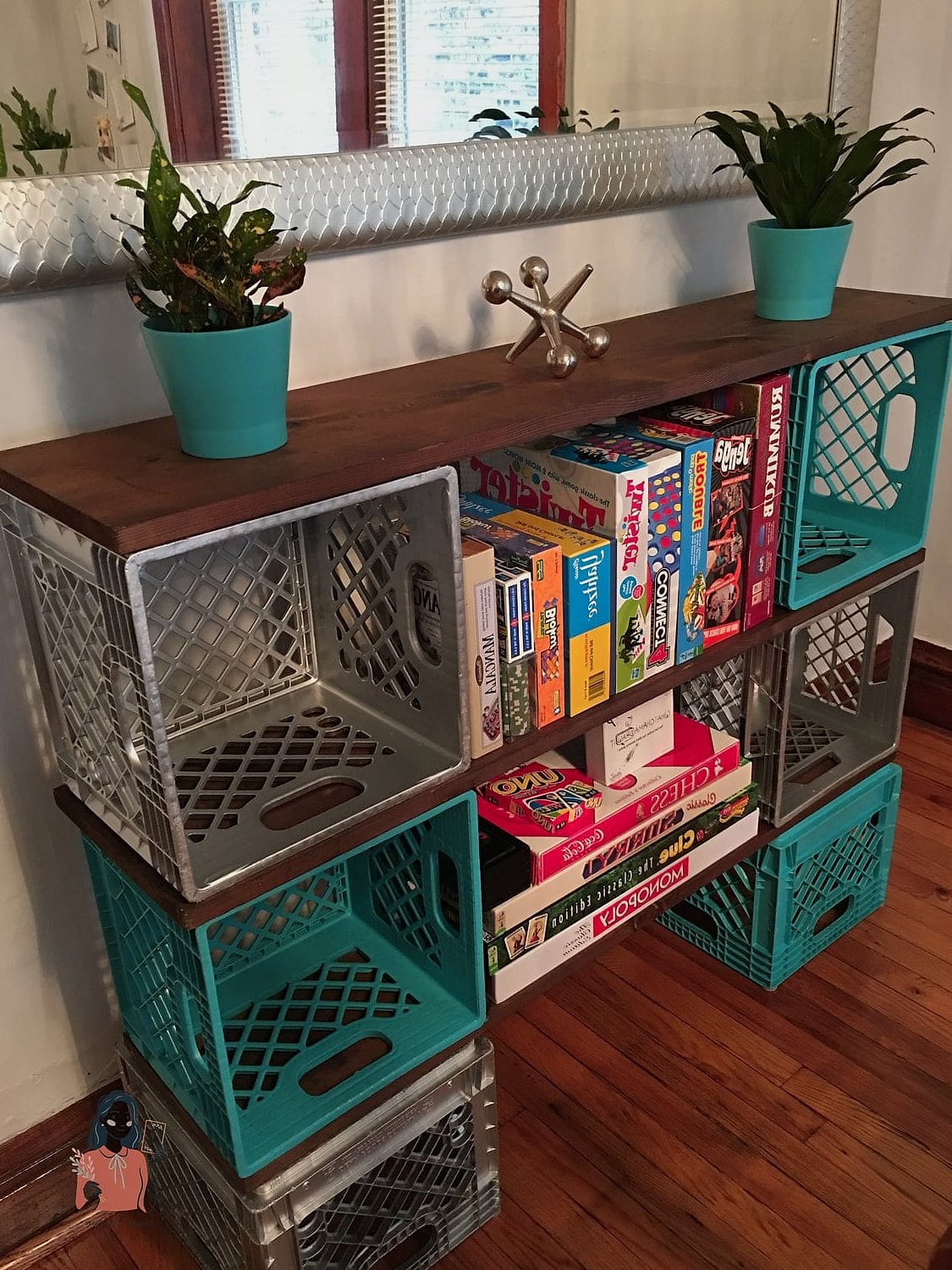
Plastic or wooden milk crates stacked and zip-tied or screwed together create an easy, no-tools-required bookshelf. This is one of the fastest builds on the list and works well for temporary or renter setups.
Turn crates sideways so the opening faces out, then stack them in a pyramid or grid pattern. Great for a dorm room, home gym, or garage reading corner.
Floating Corner Shelf
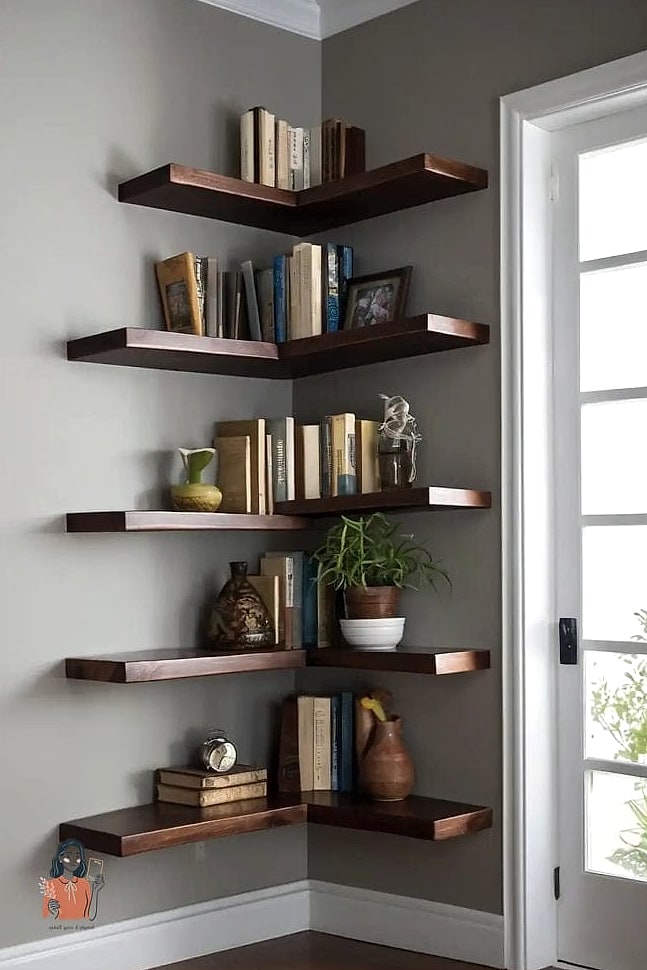
Corner space often goes unused, but a few angled floating shelves can turn it into valuable book storage. This is especially helpful in small bedrooms or apartments where wall space is limited.
Cut plywood into triangular shapes to fit the corner, then mount with L-brackets. This works well paired with a reading chair tucked into the same corner.
Bookshelf from Stacked Vintage Suitcaseless Trunks
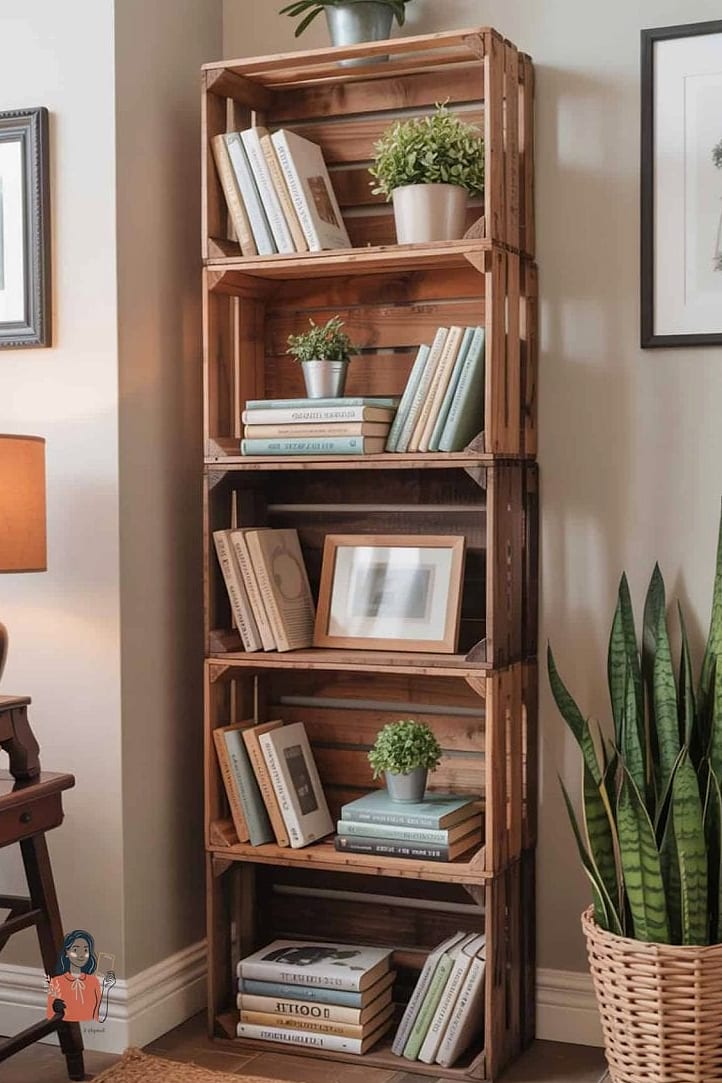
Old wooden trunks stacked at varying heights create a sturdy, rustic bookshelf with hidden storage inside each trunk for extra books, blankets, or off-season items. This dual-purpose design is especially useful in smaller homes.
Secure trunks together with strong furniture straps for stability, particularly if kids or pets are around. This suits a farmhouse, cottage, or eclectic-style living room.
Rope and Board Hanging Shelf
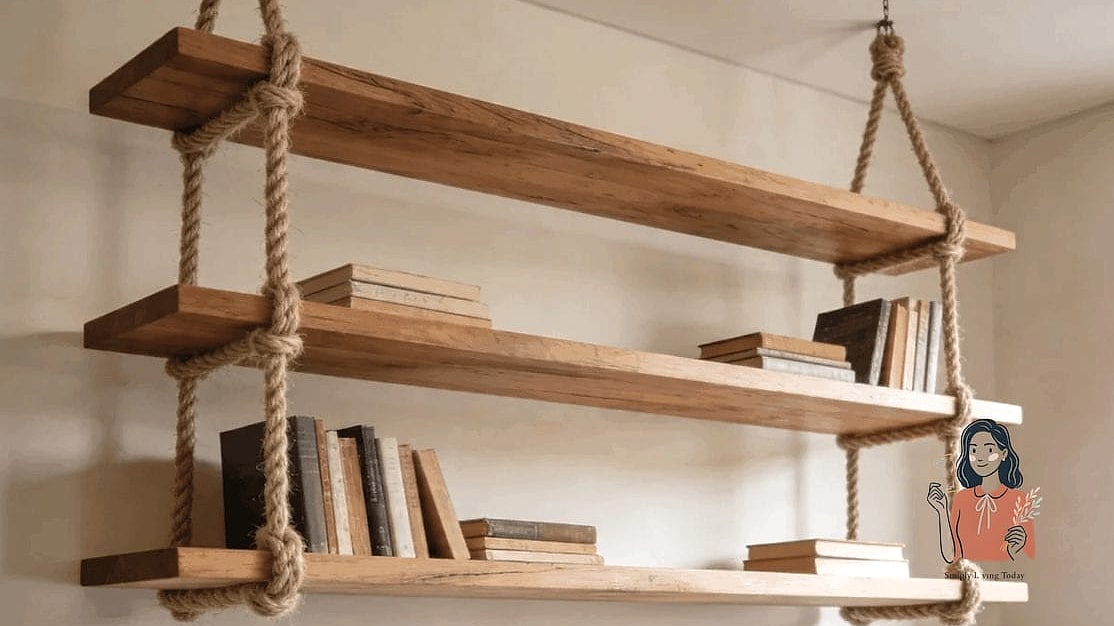
Thick rope threaded through drilled holes in wood planks creates a hanging shelf suspended from the ceiling or a wall bracket. It has a relaxed, coastal feel and takes up very little visual space.
This is a nice option above a desk or reading chair. Keep the load light, since hanging shelves aren’t meant for heavy hardcover collections.
Bookshelf Built into a Window Seat
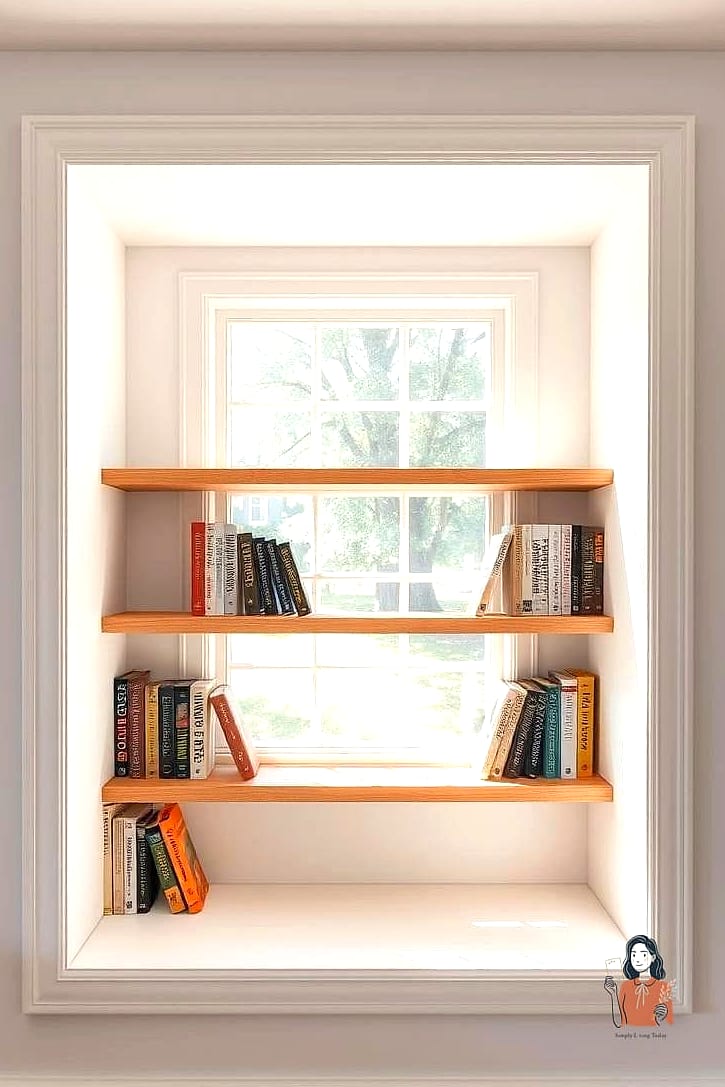
If you have an underused window nook, framing it with simple built-in shelving on either side turns dead space into a cozy reading spot with storage. This is more of a weekend carpentry project but pays off in both function and charm.
Use plywood and basic lumber, then finish with paint or stain to match your trim. This works especially well in older homes with deep window sills.
Bookshelf from Repurposed Shutters
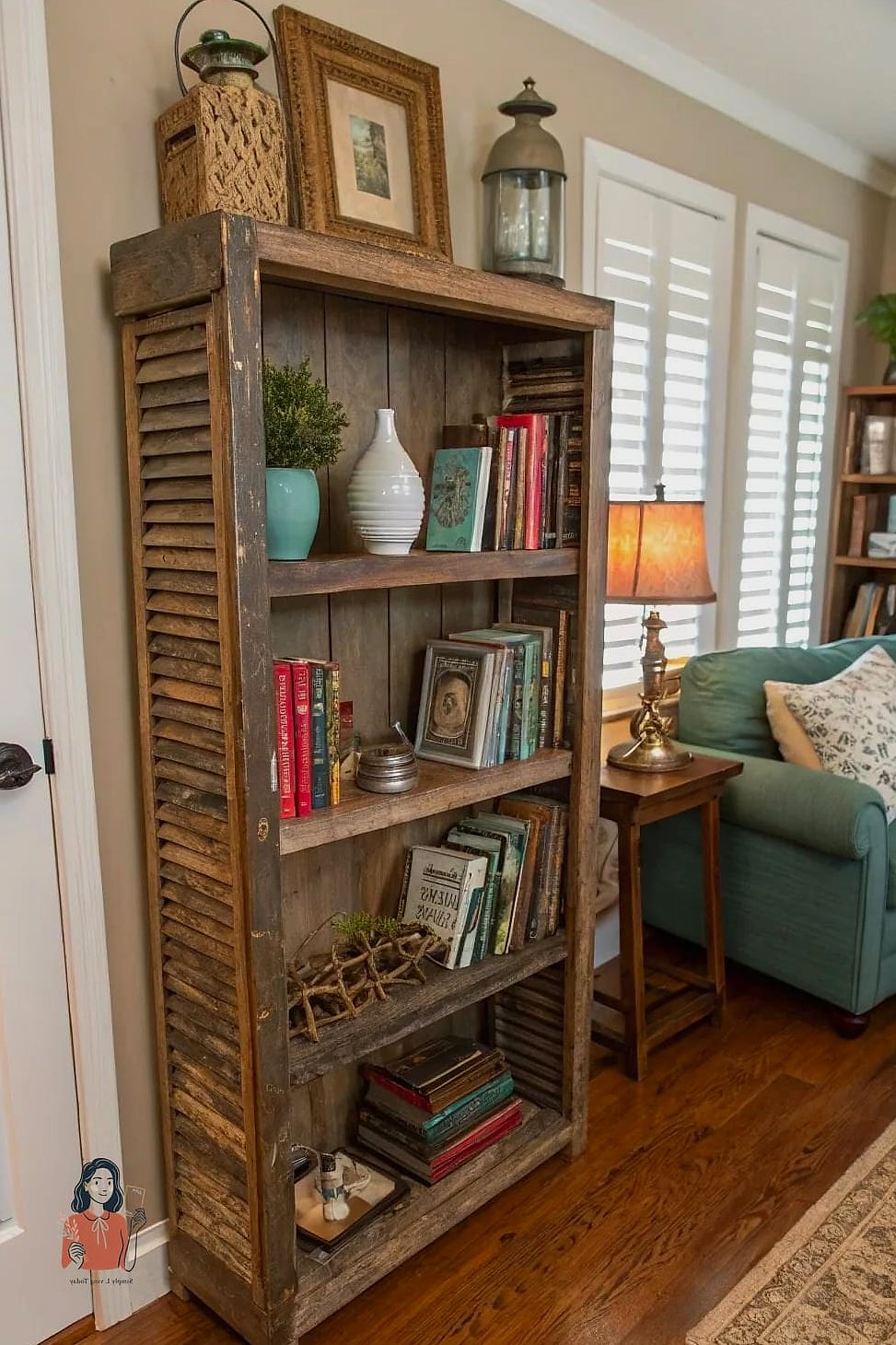
Old wooden shutters, hinged together and mounted to the wall, create angled shelving with a distinct farmhouse or coastal look. The slats also add a bit of visual texture that flat shelving doesn’t have.
Salvage yards often carry mismatched shutters for very little. This idea works nicely in an entryway, mudroom, or sunroom.
Bookshelf Made from Stacked Tires
Painted tires, stacked and topped with a round or square piece of wood, create an unexpected but sturdy side-table-style bookshelf. This is a fun, budget-conscious option for a garage, kids’ playroom, or outdoor covered patio.
Clean and paint the tires thoroughly before bringing them indoors. Layer two or three for a low shelf, or stack more for a taller unit.
Modular Cube Bookshelf
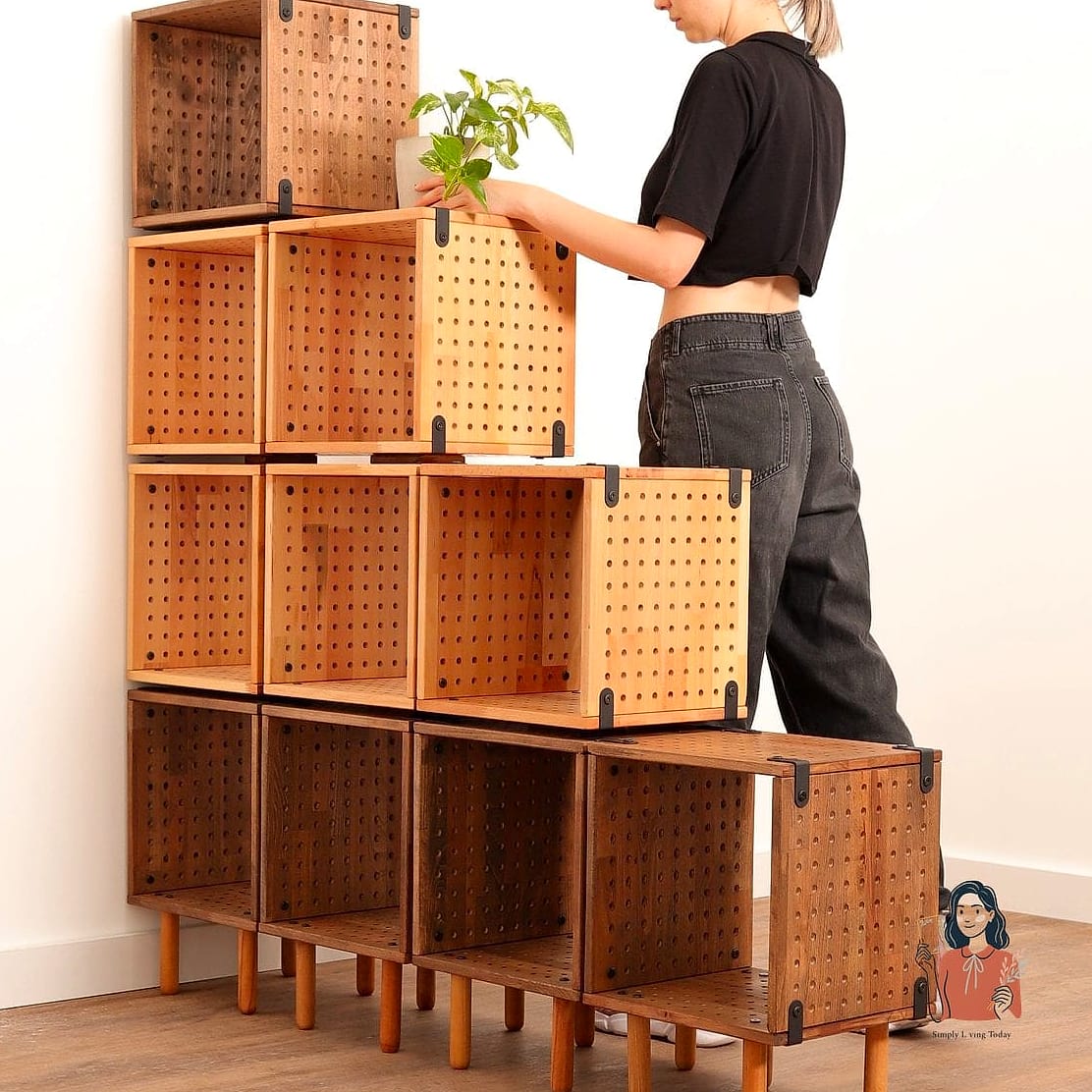
Build simple open cubes from plywood and stack or arrange them in a grid pattern for a customizable, apartment-friendly bookshelf. Each cube can be painted a different color or left uniform depending on your style.
This is one of the most flexible builds on the list, since cubes can be rearranged as your space or collection changes. It suits nearly any room, from a nursery to a home office.
Whatever style you land on, the real advantage of a DIY bookshelf is that it fits your space and your budget instead of the other way around. Start with materials you already have on hand, browse a local salvage yard or thrift store for the rest, and don’t be afraid to mix a few of these ideas together. A shelf built from pallet wood with a few floating crates above it, for example, can look completely intentional while costing next to nothing. The best bookshelf is the one that actually gets built, so pick the project that matches your tools and your weekend, and get started.