24 Smart Fabric Storage That Actually Work
- Clear Plastic Bins Sorted by Color
- Comic Book Boards for Folded Fabric
- A Repurposed Bookshelf
- Hanging Fabric on Skirt Hangers
- Rolling Fabric on Cardboard Tubes
- A Fabric Storage Cart on Wheels
- Vacuum-Sealed Bags for Bulk Fabric
- Pegboard With Fabric Bolts
- A Dedicated Fabric Closet With Shelving
- Under-Bed Storage Bins
- A Fabric Bolt Bookcase
- Drawer Dividers for Small Cuts
- Fabric Storage in Magazine Files
- A Fabric Wall With Floating Shelves
- Woven Baskets for a Softer Look
- A Rolling Fabric Bolt Rack
- Fabric Storage Boxes With Lids
- A Closet Door Fabric Organizer
- A Fabric Stash Binder With Swatches
- Labeled Yardage Cubbies
- A Fabric Scrap Bag System
- Vintage Suitcases as Fabric Storage
- A Fabric Storage Ottoman
- A Digital Inventory With Physical Bin Numbers
Thought for 6s
24 Smart Fabric Storage That Actually Work
If your fabric stash has taken over the closet, the guest room, and possibly a corner of the garage, you’re not alone. Fabric has a way of multiplying quietly until one day you can’t find that perfect quilting cotton you bought two years ago. The good news is that smart fabric storage doesn’t require a total sewing room renovation. Most of these ideas use furniture, containers, or systems you can set up in an afternoon, and they’ll actually keep your stash organized instead of just moving the mess around. Here are 24 fabric storage solutions worth trying, whether you’re working with a full craft room or a shared corner of the living room.
Clear Plastic Bins Sorted by Color
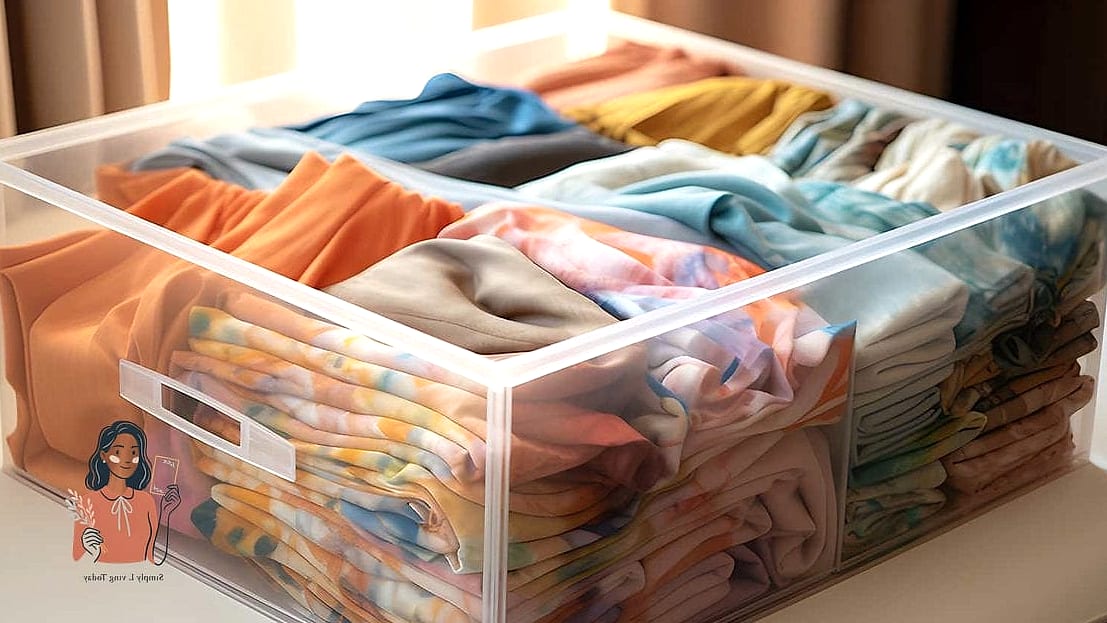
Sorting fabric by color instead of type makes it so much easier to grab what you need when you’re planning a project. Clear bins let you see everything at a glance without digging, and stackable options save floor space. This works well for quilters and garment sewers who think in color palettes first. Label each bin loosely, since colors will shift as your stash grows, and keep a donation bin nearby for scraps too small to use.
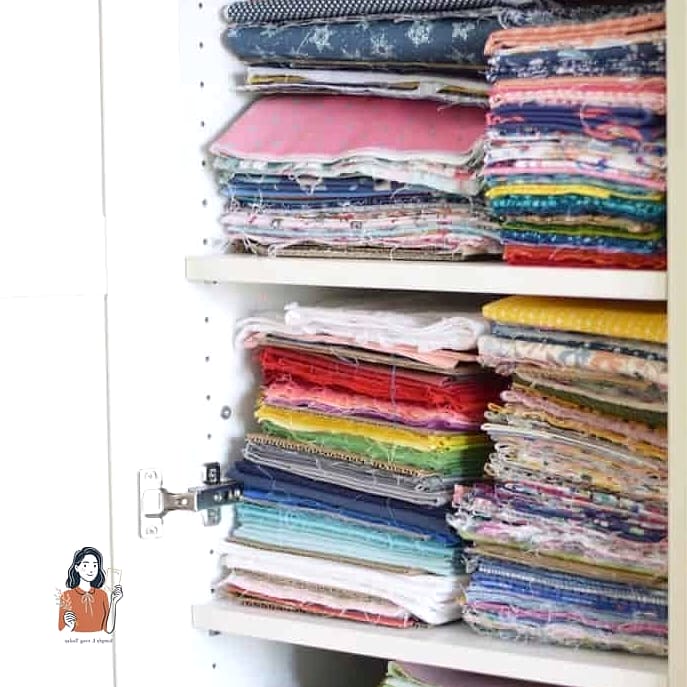
Comic Book Boards for Folded Fabric
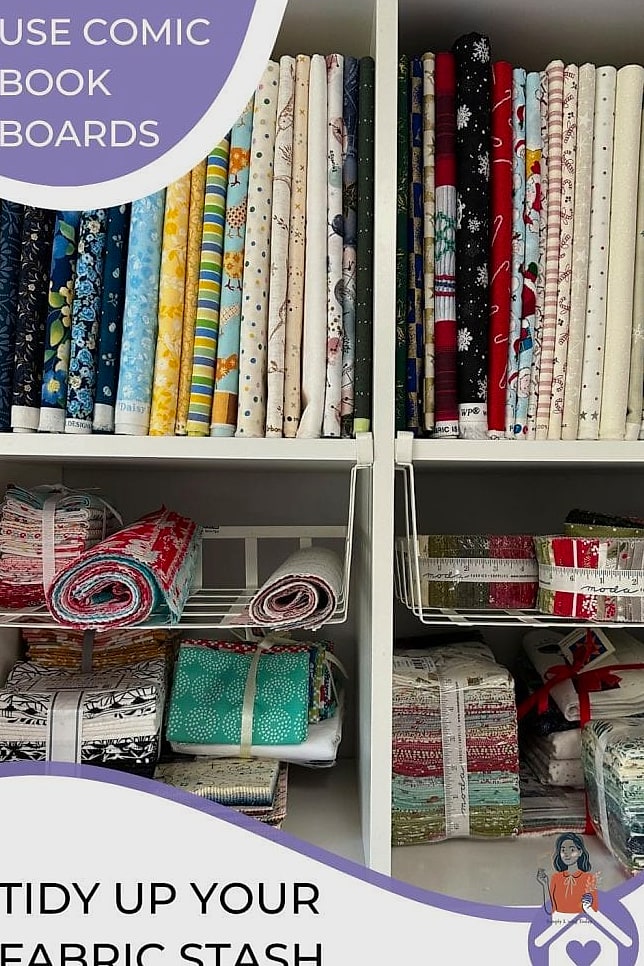
Quilters have used comic book boards for years, and it’s genuinely one of the best tricks out there. Wrapping fabric around a rigid board keeps folds crisp and prevents that slouchy, wrinkled look you get from just stacking cuts. It also makes shelf storage look tidy and bookstore-like. This is a lower-cost option since boards are inexpensive in bulk, and it works especially well for fat quarters and yardage under two yards.
A Repurposed Bookshelf
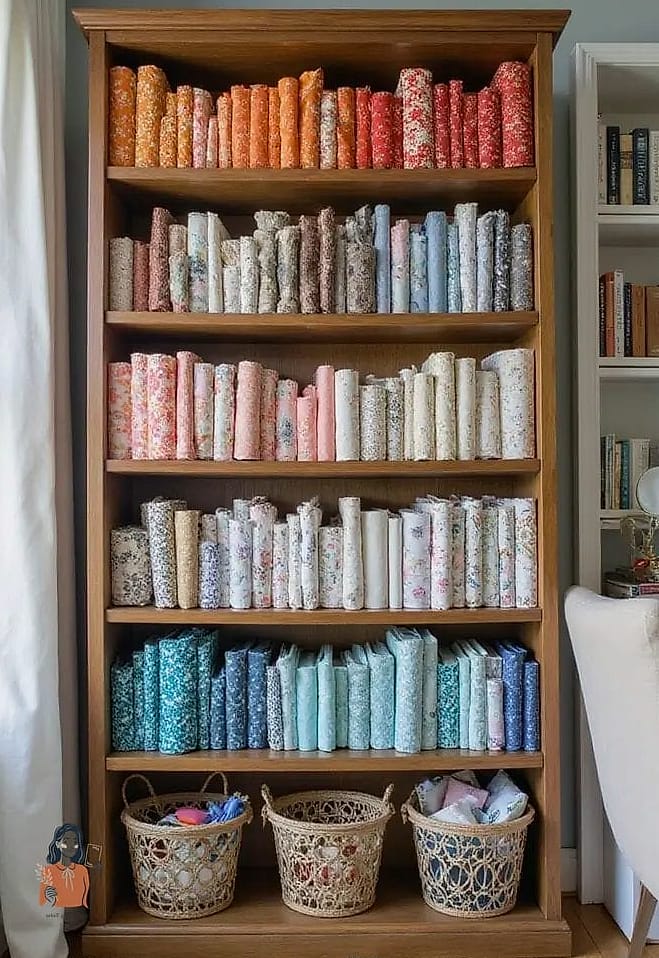
An old bookshelf, whether thrifted or already sitting in your house, turns into fantastic fabric storage with almost no effort. Fold fabric into uniform rectangles and shelve it like a library, spine-out so you see the pattern. This suits sewers with a dedicated craft nook rather than a closet setup. Add baskets on the lower shelves for scraps, notions, or works in progress to keep the whole area from feeling cluttered.
Hanging Fabric on Skirt Hangers
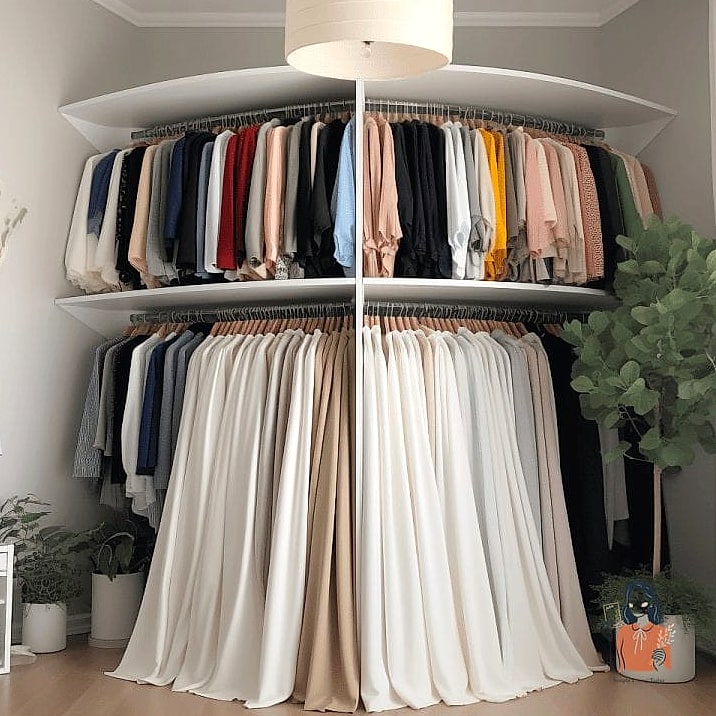
For larger cuts of fabric, especially quilting cotton or apparel fabric bought by the yard, skirt hangers with clips let you hang pieces vertically in a closet. This prevents the deep creases that come from folding heavy fabric repeatedly. It’s a good option if you have closet space to spare but limited shelving. Group hangers by fiber type, since natural fibers and synthetics often need different care.
Rolling Fabric on Cardboard Tubes
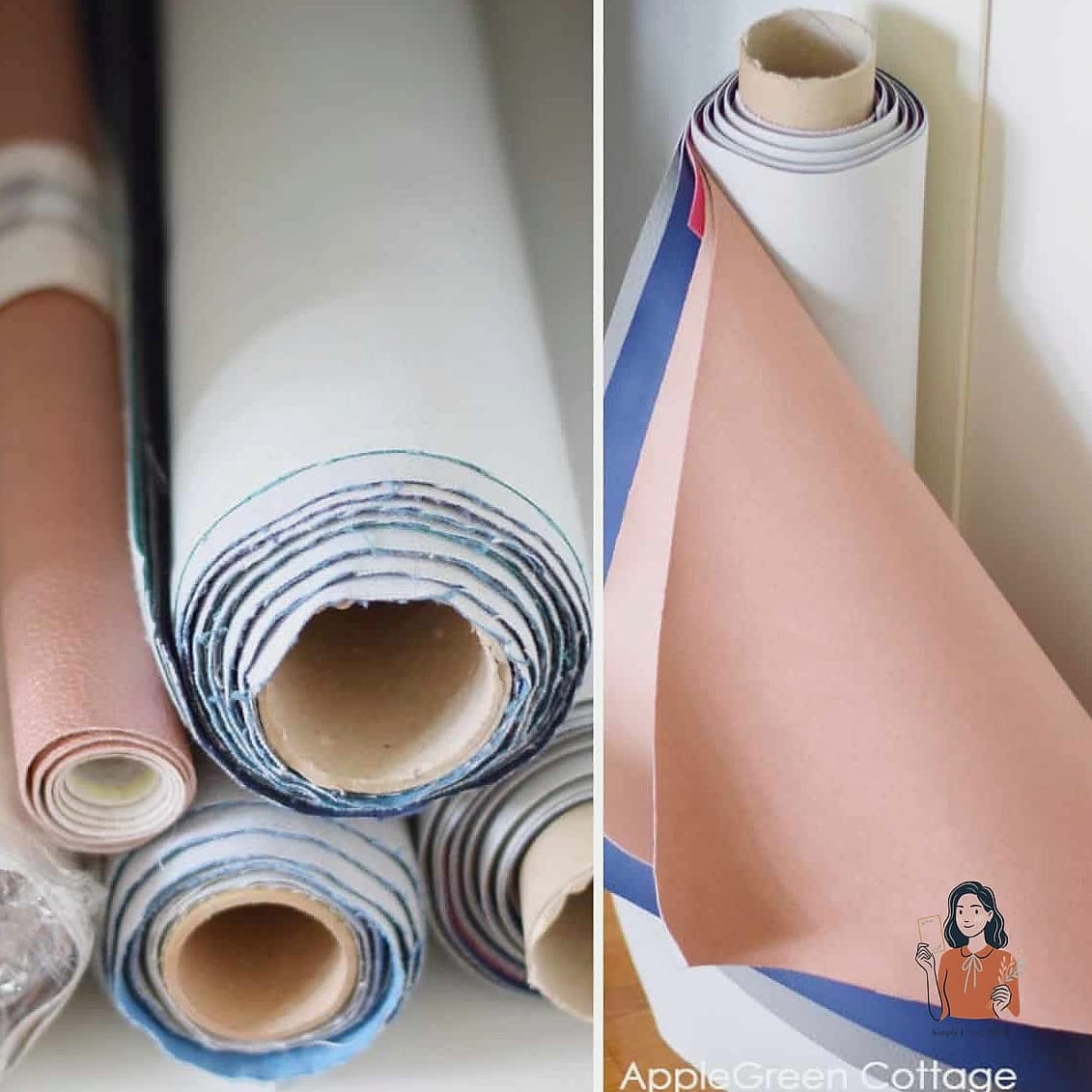
Rolling fabric around cardboard tubes, the kind from wrapping paper or fabric bolts, keeps yardage wrinkle-free and easy to unroll when you’re cutting. This method suits sewers working with delicate fabrics like silk or fabrics prone to permanent creasing. Store rolled fabric horizontally in a bin or vertically in a tall basket. It takes more space than folding, so it works best if you have a generous storage area.
A Fabric Storage Cart on Wheels
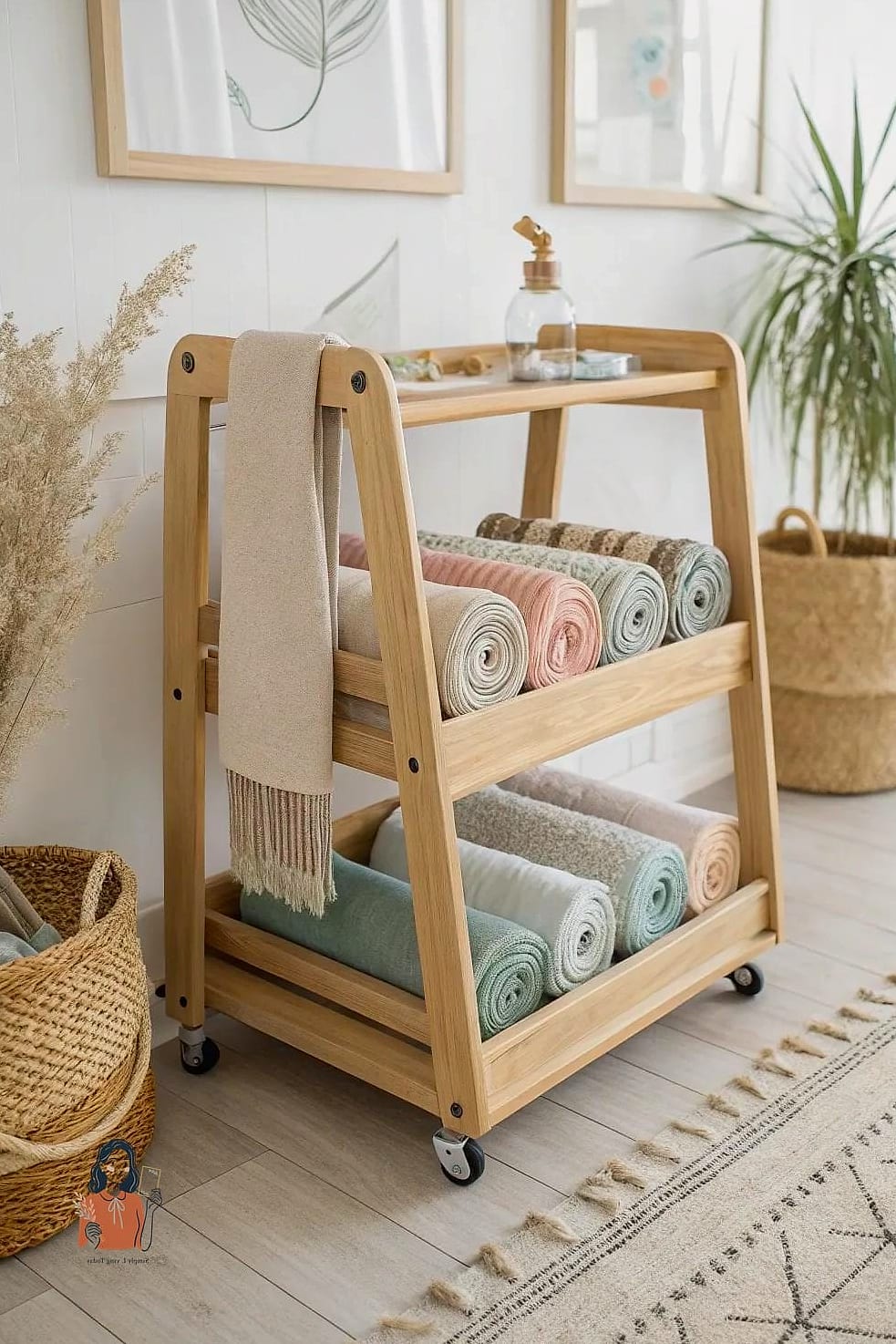
A rolling cart with drawers or baskets is ideal for anyone who doesn’t have a dedicated sewing room and needs to tuck their stash away between projects. Wheels mean you can move the whole setup to wherever you’re working and roll it back into a closet when you’re done. This is a practical pick for apartment sewers or anyone sharing space with family. Look for a cart with a flat top surface so it can double as extra cutting space.
Vacuum-Sealed Bags for Bulk Fabric
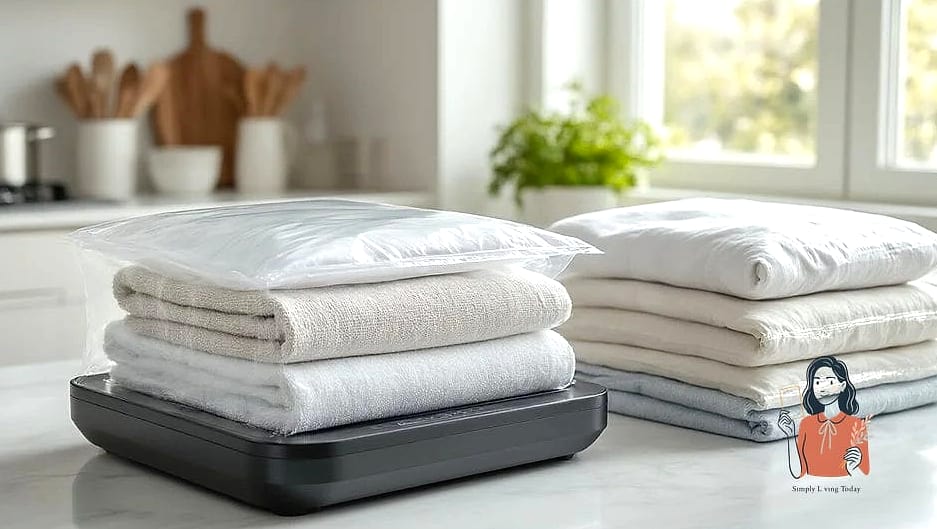
If you have fabric you’re not using anytime soon, like backup yardage or fabric earmarked for a future project, vacuum-sealed bags compress it down to a fraction of the size. This is especially useful for storing fabric long-term in an attic, basement, or under-bed space. It’s not ideal for fabric you access often, since sealing and unsealing takes time, but it’s a smart way to free up shelf space for your active stash.
Pegboard With Fabric Bolts
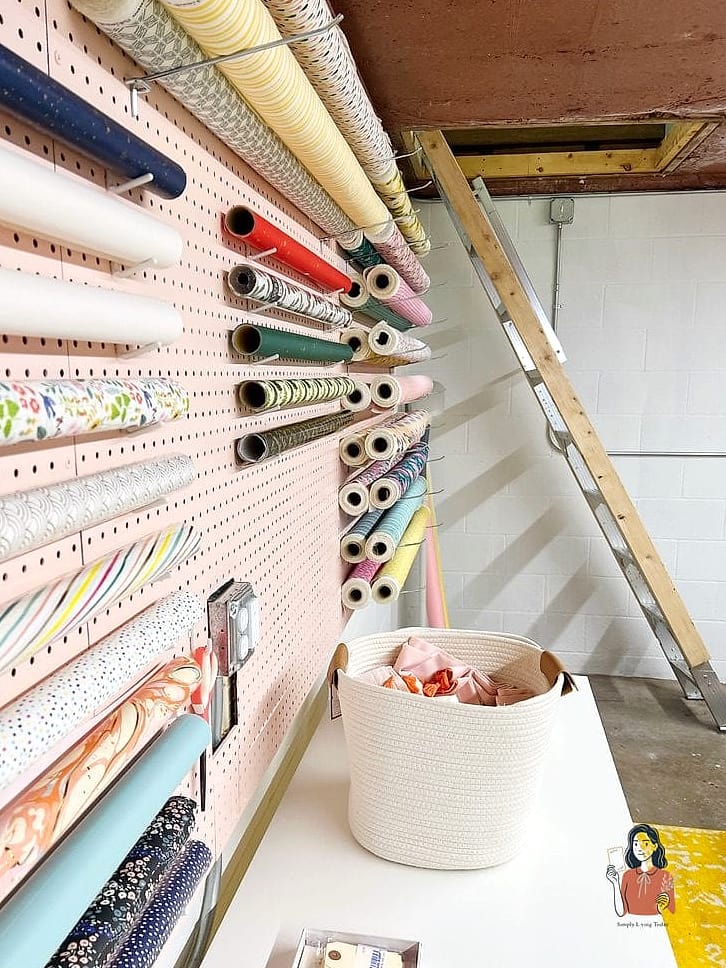
Mounting a pegboard on the wall and hanging small dowels or hooks lets you display mini bolts of fabric like a fabric shop. This works particularly well for sewers who like seeing their whole stash at once for inspiration. It also keeps fabric completely off the floor and out of drawers, which is great in small craft rooms. Add a few pegboard baskets for thread, scissors, and notions to keep everything in one visual system.
A Dedicated Fabric Closet With Shelving
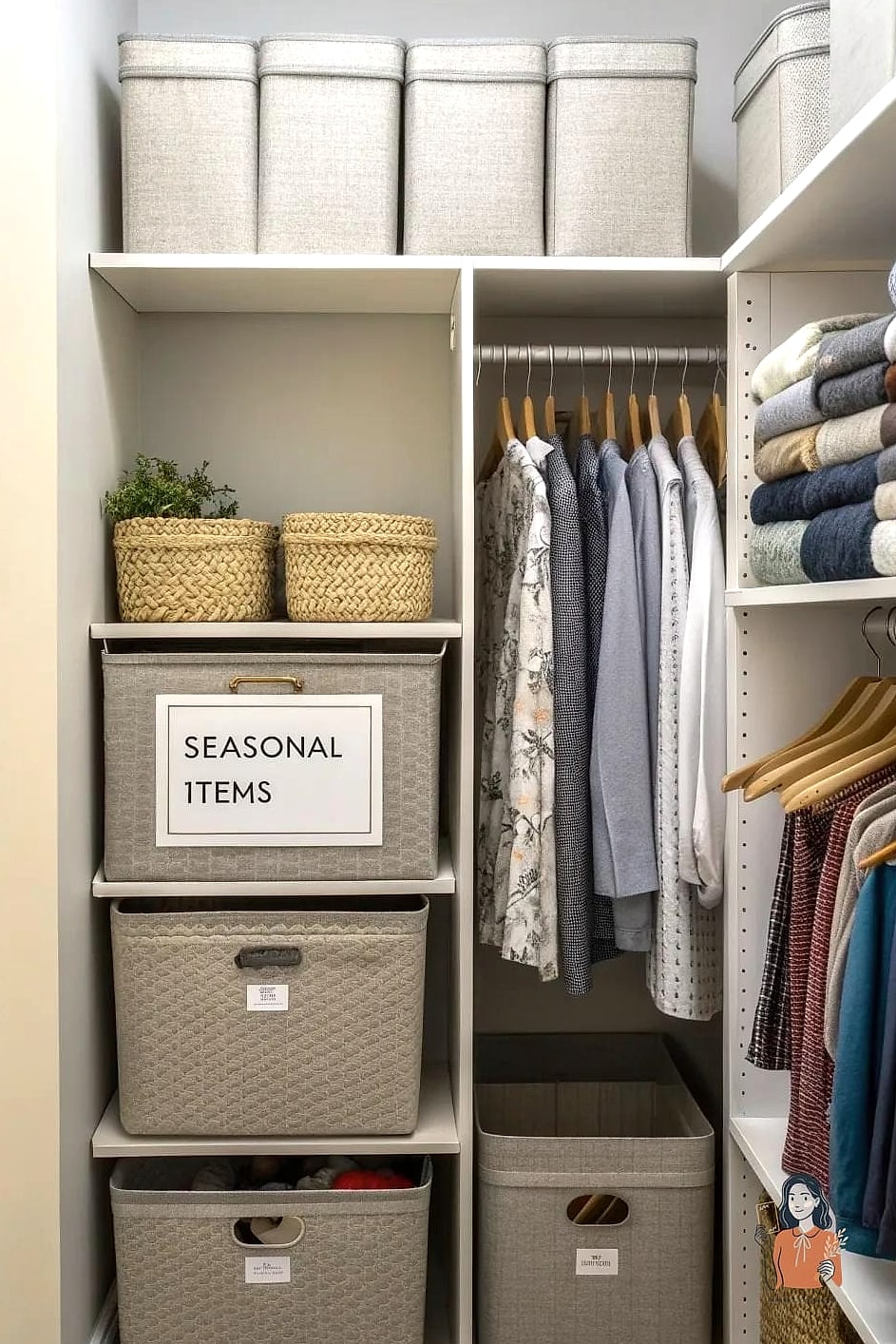
If you have an entire closet to spare, installing adjustable wire or wood shelving turns it into a genuine fabric storage room. Group fabric by weight, with quilting cottons on one side and heavier fabrics like denim or canvas on the other. This suits serious sewers or small business owners who need to see and access a large stash daily. A closet door organizer can hold notions, patterns, and small tools to keep everything centralized.
Under-Bed Storage Bins
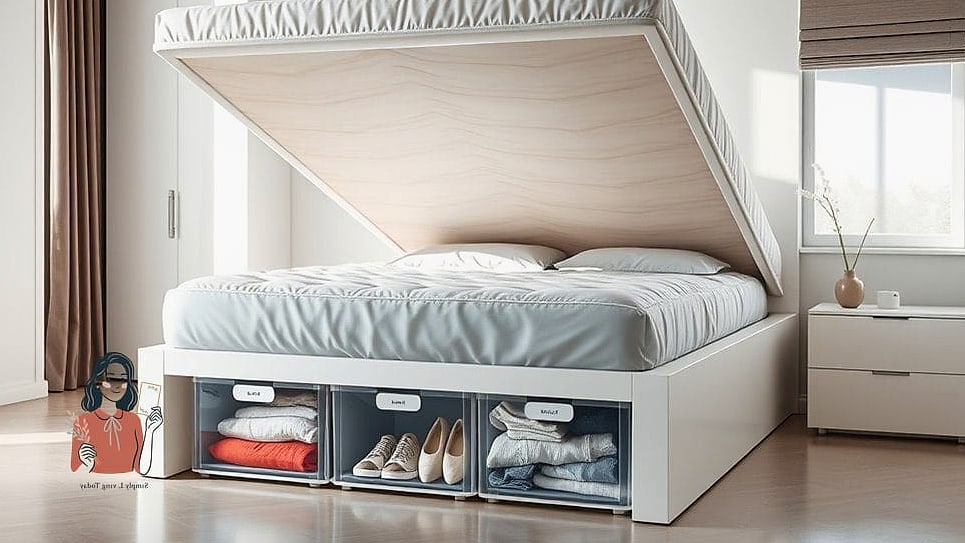
Low, flat bins designed to slide under a bed are an underrated option for sewers without a spare room. Fold fabric into stacks and sort bins by project type, like current works in progress versus stash you’re saving for later. This is a budget-friendly solution since these bins are widely available and inexpensive. Add casters to bins that don’t already have them so they’re easier to pull out.
A Fabric Bolt Bookcase
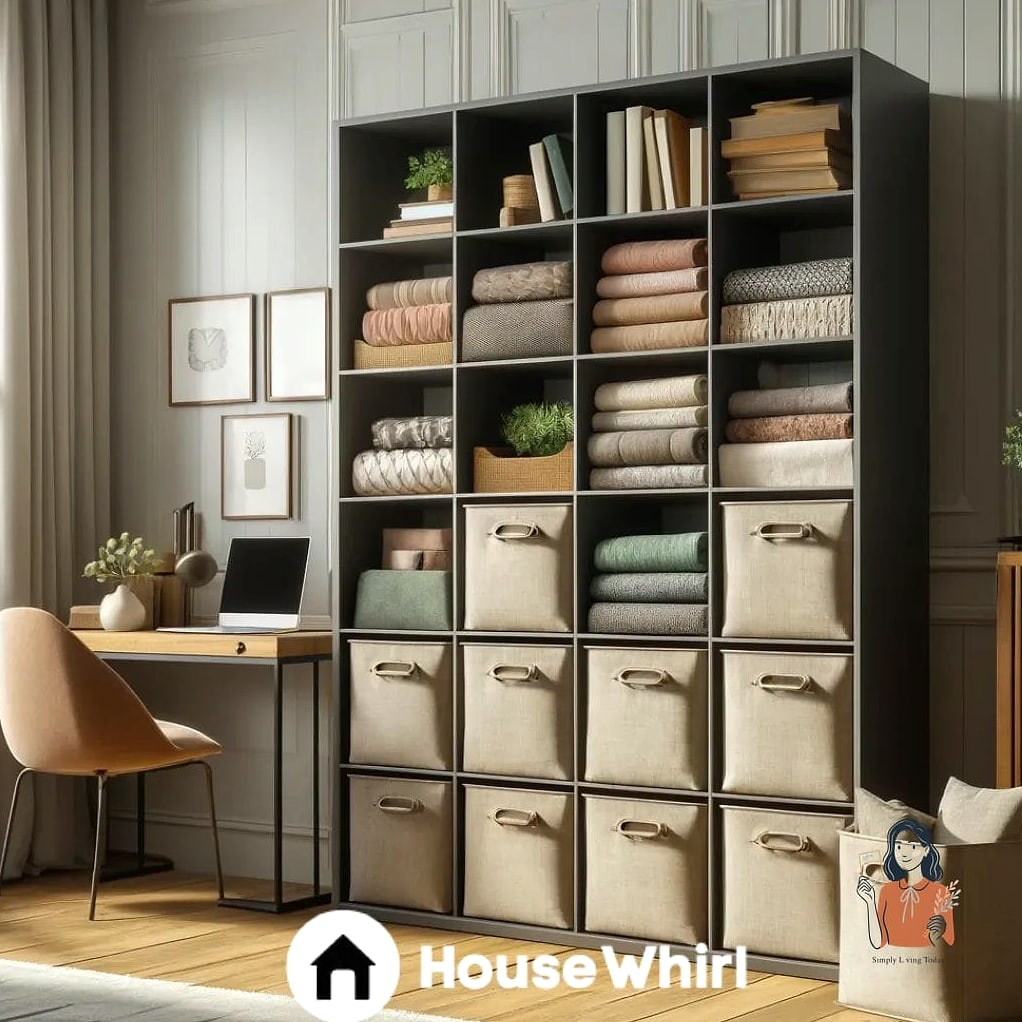
Similar to a repurposed bookshelf but built specifically for fabric bolts, this option keeps larger uncut pieces upright and easy to browse. It mimics the way fabric stores display their stock, which makes it satisfying to shop your own stash. This works best for sewers who buy fabric by the bolt rather than in small cuts. Group bolts loosely by color family for a shelf that looks intentional rather than chaotic.
Drawer Dividers for Small Cuts
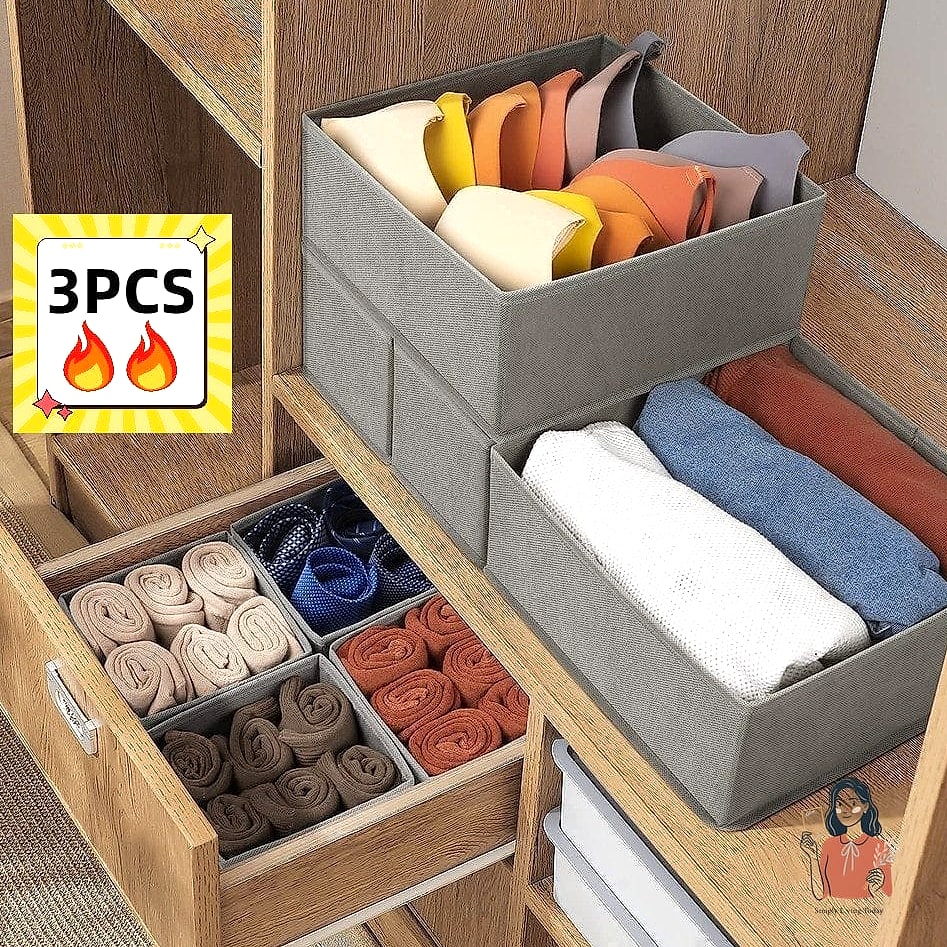
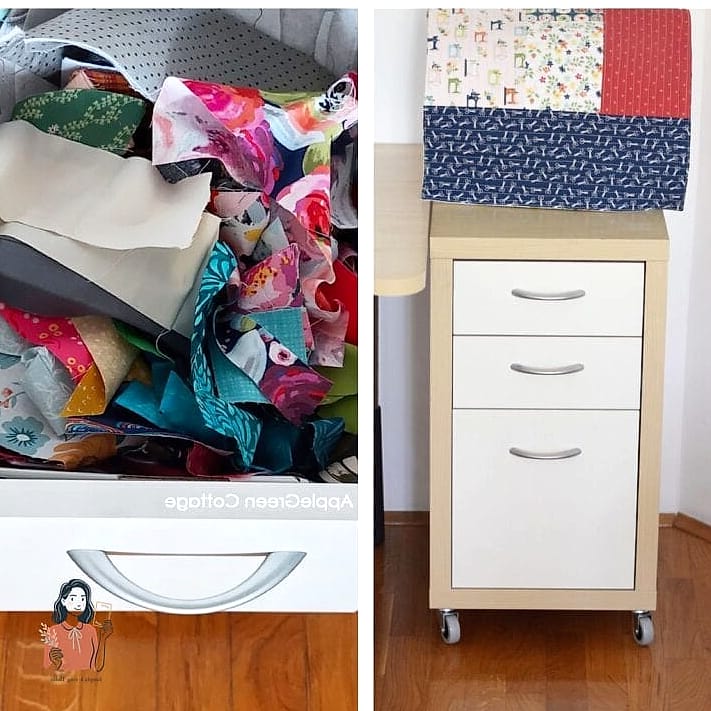
If most of your stash is fat quarters or smaller remnants, a dresser with drawer dividers keeps everything upright and visible instead of piled in a heap. This is a great option for scrap fabric, since dividers prevent small pieces from getting buried and forgotten. It works well in shared spaces since a dresser blends into a bedroom or living area without looking like craft storage. Label drawer fronts by fabric type or project use.
Fabric Storage in Magazine Files
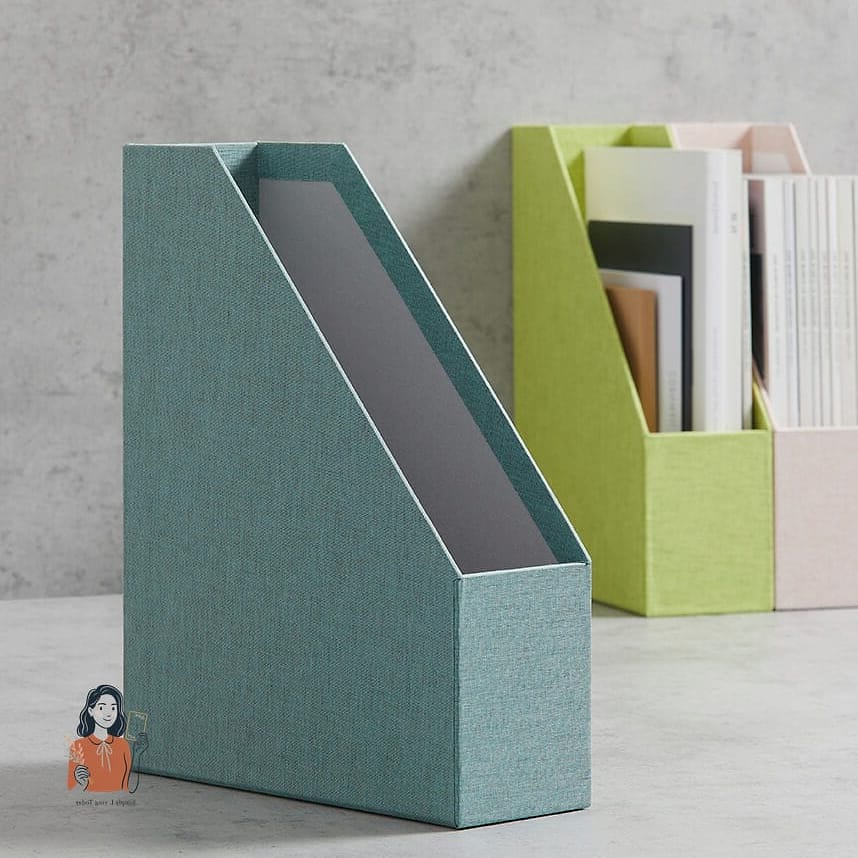
Magazine files, whether cardboard or plastic, are a surprisingly good size for folded fat quarters and half-yard cuts. Line them up on a shelf like a small library, and you can flip through fabric the same way you’d flip through files. This is an affordable option since magazine files are cheap and widely available. It’s best suited for sewers with limited shelf depth, since the files keep fabric contained without taking up much room.
A Fabric Wall With Floating Shelves
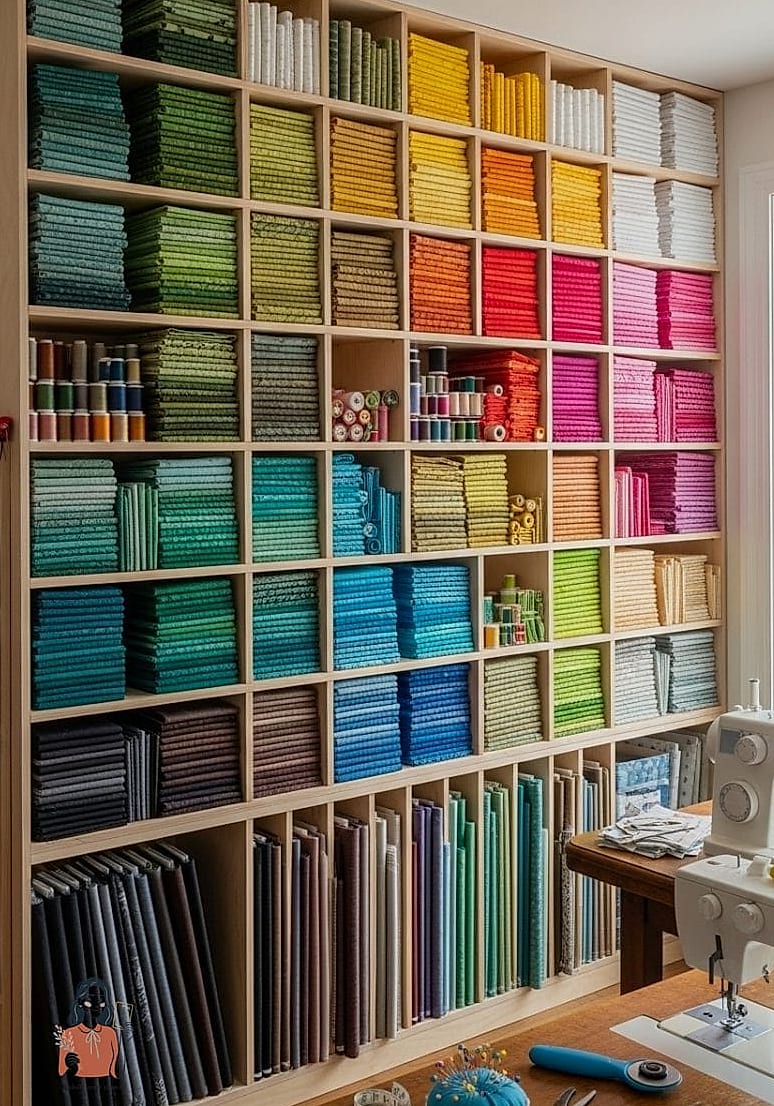
Floating shelves mounted directly on a wall create an open display for folded fabric stacks, almost like a boutique display. This works well in a dedicated craft room where you want your stash visible for inspiration while you sew. Keep stacks low, around six to eight pieces per shelf, so they don’t topple. This is more of a splurge-worthy setup if you’re buying custom shelving, but it can also be done affordably with basic floating shelf kits.
Woven Baskets for a Softer Look
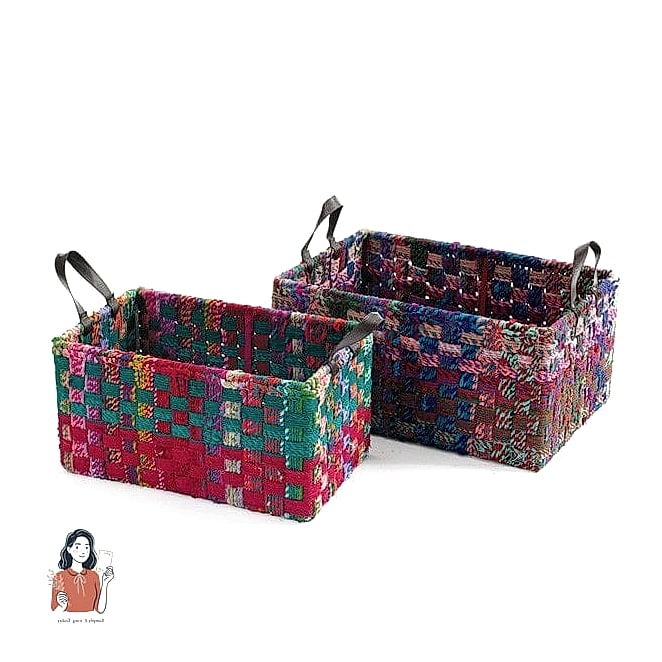
If your sewing space doubles as a living area, woven baskets keep fabric organized without looking overly utilitarian. They’re great for scraps, works in progress, or fabric you’re actively using for a current project. This option suits sewers who want their storage to blend into home decor rather than look like a workshop. Choose baskets with handles so you can carry a project’s fabric from room to room easily.
A Rolling Fabric Bolt Rack
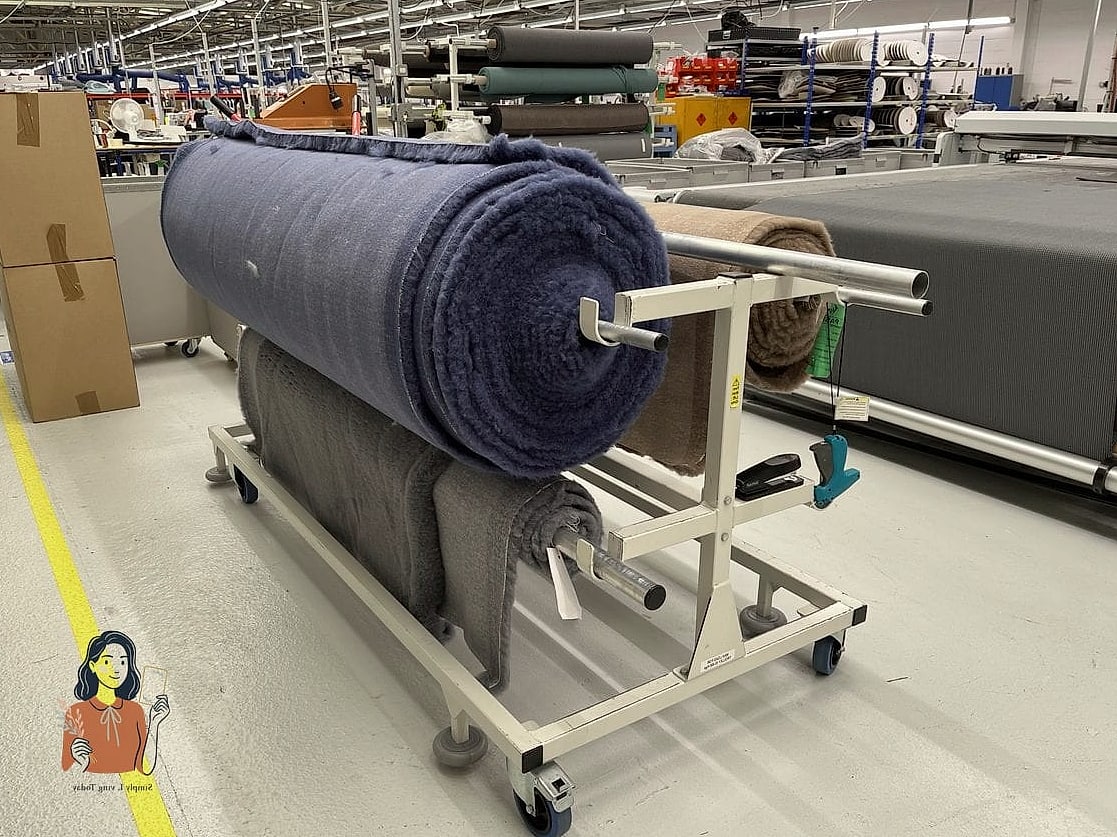
For sewers with a larger stash of full or partial bolts, a rolling rack designed to hold bolts horizontally keeps them organized and easy to browse without unrolling everything. This is a practical choice for anyone selling fabric or teaching classes from home. It takes up meaningful floor space, so it’s best suited to a dedicated studio rather than a shared room.
Fabric Storage Boxes With Lids
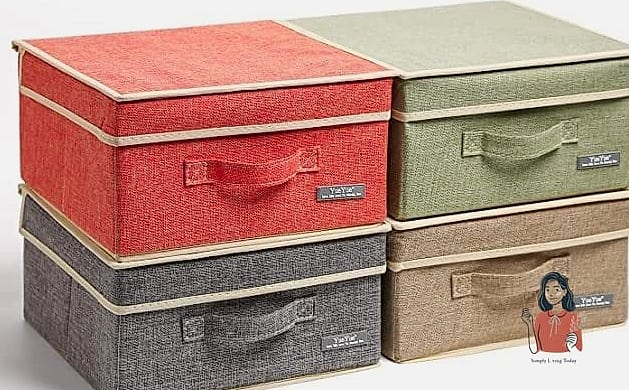
Stackable fabric boxes with lids protect fabric from dust, sunlight, and pets while keeping your shelves looking neat and uniform. This is especially useful if your storage area gets any natural light, since prolonged sun exposure can fade fabric over time. Label the short end of each box so you can read labels even when boxes are stacked. This works for almost any budget, since options range from basic cardboard to sturdier fabric bins.
A Closet Door Fabric Organizer

Over-the-door organizers with pockets, usually meant for shoes, work surprisingly well for smaller fabric cuts, fat eighths, and precut bundles. This is a smart solution if you’re working with very limited square footage, since it uses vertical door space that would otherwise go unused. Sort pockets by color or collection so bundles stay together. It’s an affordable, low-commitment option if you’re not ready to invest in furniture.
A Fabric Stash Binder With Swatches
For sewers who like to plan projects digitally or on paper, keeping a binder of fabric swatches alongside your physical stash makes planning easier without pulling everything out. Cut a small swatch from each fabric, tape or sew it into the binder, and note the yardage you have on hand. This works well alongside any physical storage method above and saves time when you’re deciding what a new project needs.
Labeled Yardage Cubbies
Cube storage units with fabric bins are a flexible option that adapts as your stash grows. Assign each cube a category, like knits, quilting cotton, wool, or home decor fabric, and add or remove bins as needed. This modular setup works for both small and large collections, and it’s easy to expand by adding more cubes later. It’s a mid-range investment upfront but tends to last for years.
A Fabric Scrap Bag System
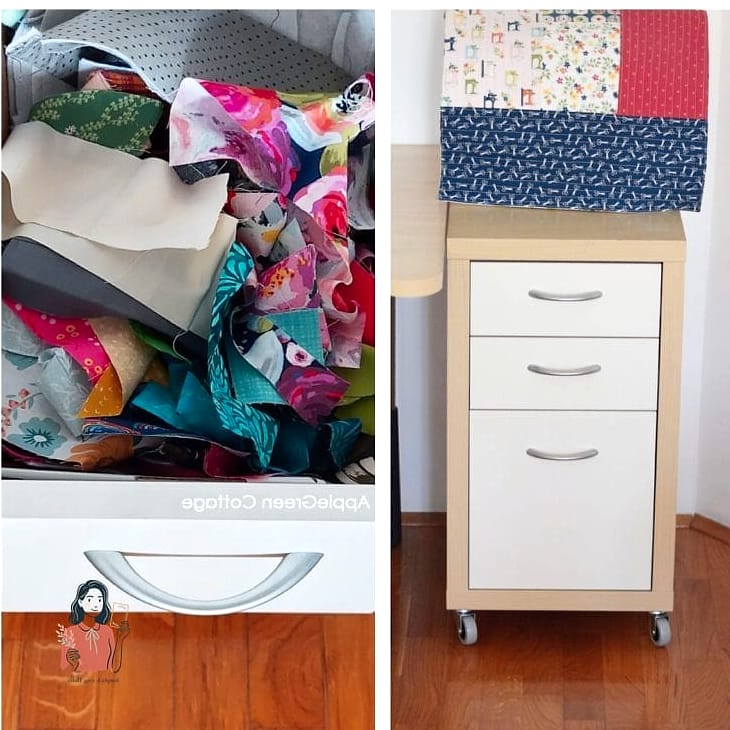
Scraps deserve their own system since they pile up fast and rarely get used if they’re buried under larger cuts. Hang a set of mesh laundry bags or fabric totes, each one designated by scrap size, like strips, small squares, or usable remnants. This keeps scraps visible and accessible for smaller projects like quilting blocks or appliqué. It also makes it much easier to see when it’s time to actually use them up.
Vintage Suitcases as Fabric Storage
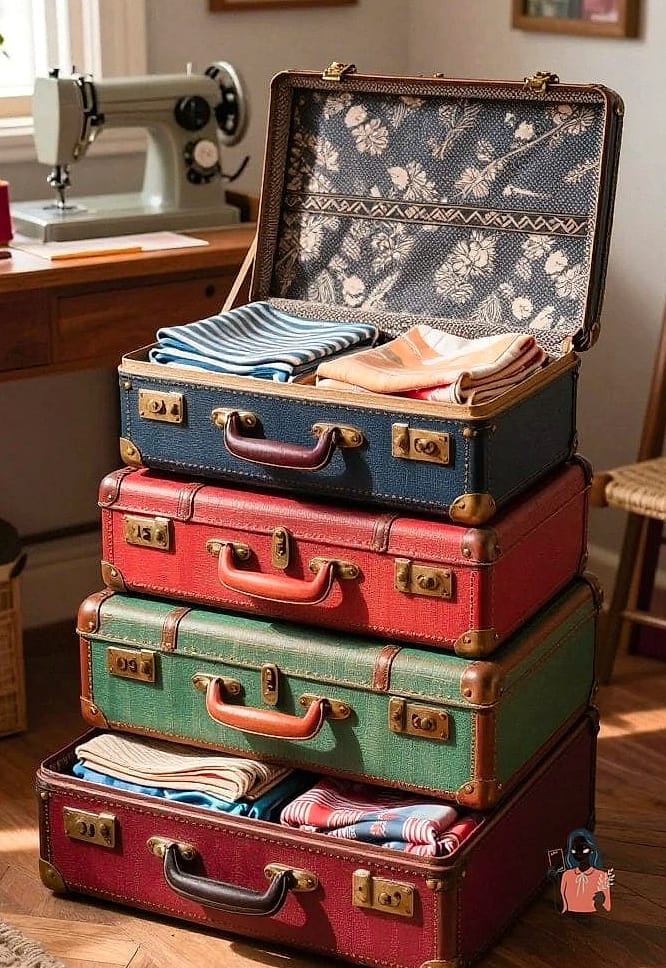
If you like a more eclectic, decorative look, stacked vintage suitcases make charming fabric storage that doubles as a design feature in a craft room or bedroom corner. Fold fabric flat inside each case, and use different suitcases for different fabric categories. This is a fun option for sewers who enjoy thrifting and want their storage to have some personality rather than looking purely functional.
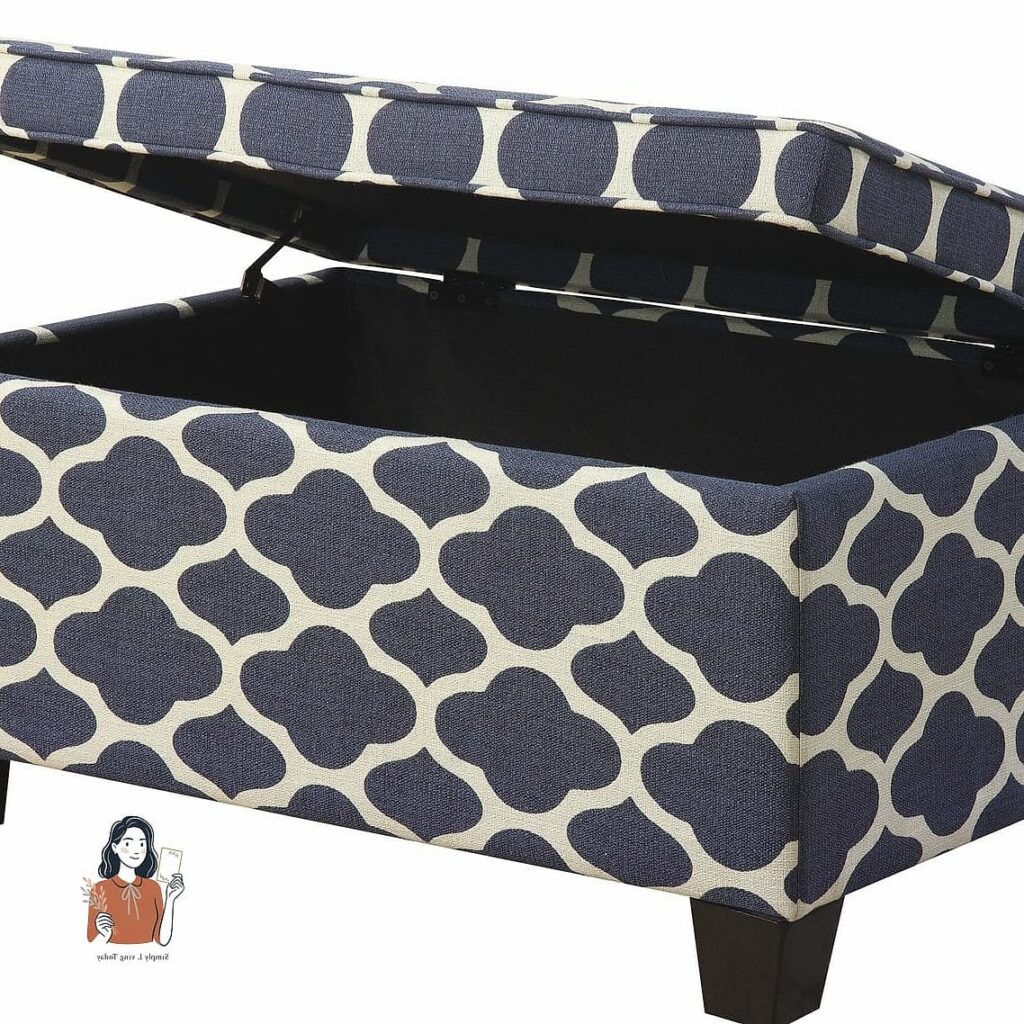
A Fabric Storage Ottoman
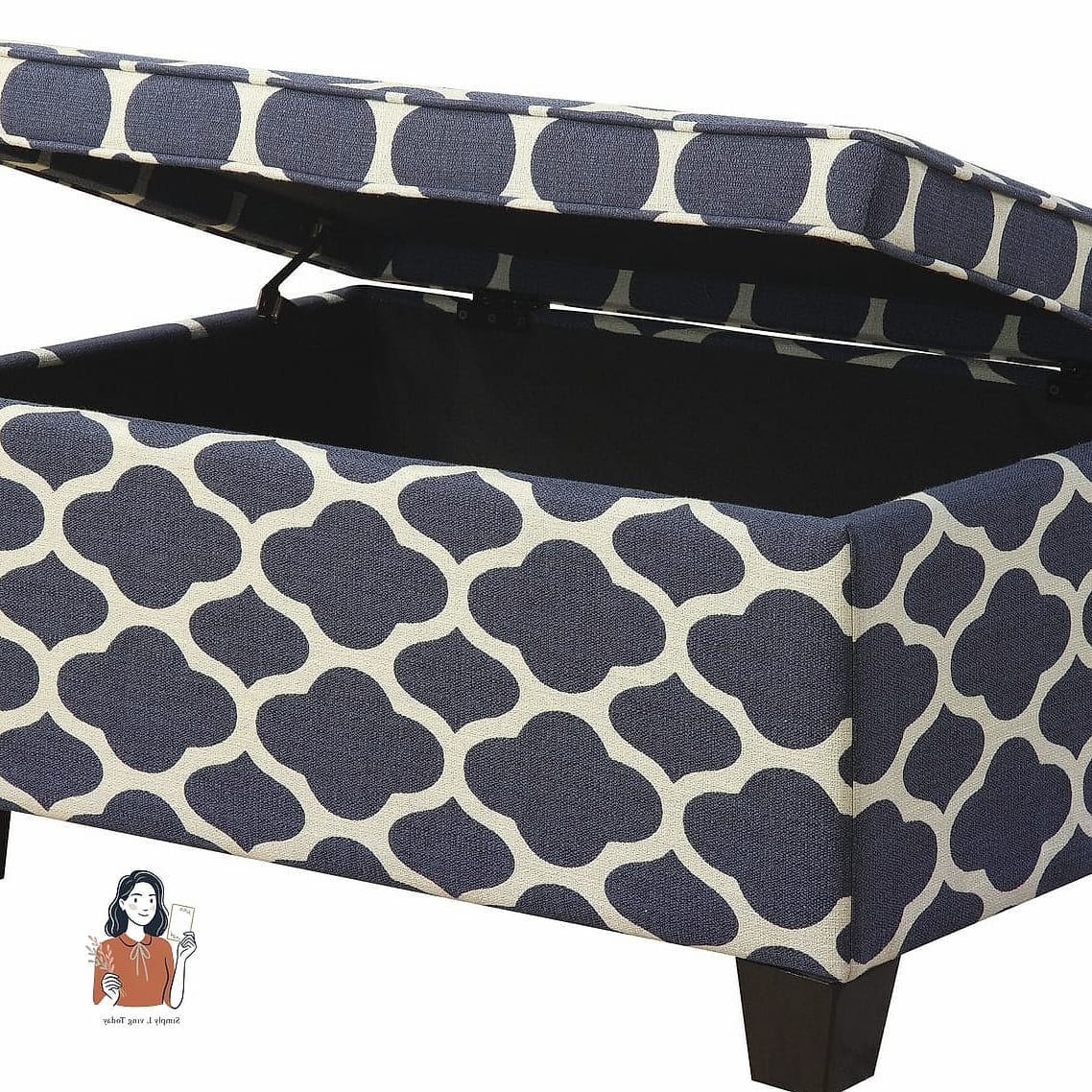
An ottoman with hidden storage inside is a clever dual-purpose option for anyone sewing in a shared living space. It provides extra seating or a footrest while quietly holding fabric, patterns, or notions inside. This works particularly well for smaller stashes or for storing current project fabric separately from your main collection. It’s also a good way to keep supplies out of sight when guests come over.
A Digital Inventory With Physical Bin Numbers

For sewers with a genuinely large stash, pairing numbered bins with a simple spreadsheet or app inventory saves enormous time. Instead of digging through bins to find a specific print, you search your list, find the bin number, and go straight to it. This is more of a system than a storage container itself, but it pairs well with almost any method on this list, especially bins, boxes, or cubbies where labels alone aren’t specific enough.
Whatever combination of these methods you land on, the real goal is making your stash something you actually use instead of something you avoid dealing with. Start with whichever idea matches the space you already have, whether that’s a spare closet, a corner of a bedroom, or a rolling cart you can tuck away. A little bit of sorting now means a lot less searching later, and that’s really what good fabric storage comes down to.